Bank of England to Hold Interest Rates Amid Middle East War Uncertainty
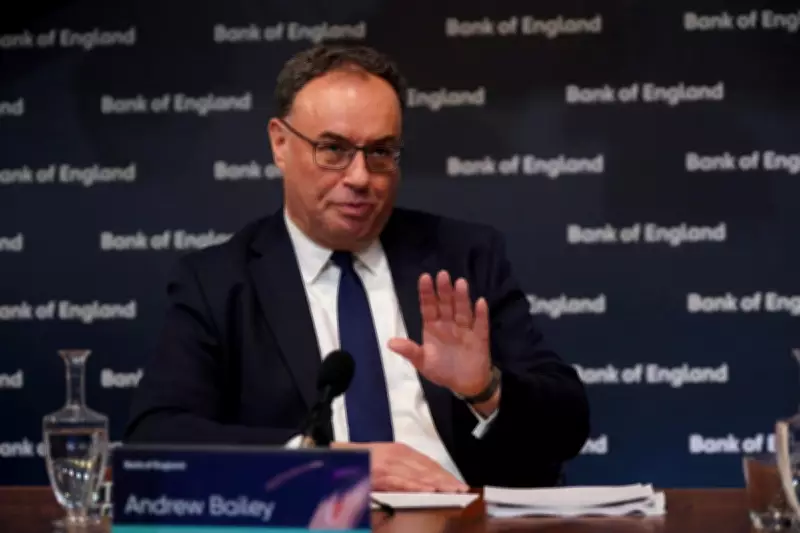
The Bank of England is poised to maintain interest rates at a crucial decision this afternoon, with policymakers opting for what economists describe as a "defensible strategy" in response to mounting uncertainty stemming from the ongoing war in the Middle East. Financial markets have largely anticipated a pause in interest rate cuts on Thursday, with most members of the Monetary Policy Committee (MPC) expected to emphasize the inflationary threats posed by a prolonged conflict.
Defensible Strategy in the Face of Energy Shocks
Economists at Pantheon Macroeconomics have argued that holding rates steady represents a defensible strategy, given that Bank officials are keen to observe how a significant spike in oil prices will impact household and corporate price expectations over the coming months. Analysts noted that five years of near-continuously above-target inflation, coupled with elevated household surveys of expectations, mean the MPC cannot be confident that an energy shock will result in merely a transient rise in inflation.
Rate-setters are also determined to avoid repeating past mistakes, such as the Ukraine error, where the Bank admitted it failed to predict the persistence of inflation after 2022 due to underestimating the stickiness in wage growth. Since the start of the Middle East war, the Brent Crude oil price has surged by over 40 percent, while the European gas benchmark price, the Dutch Title Transfer Facility (TTF), has spiked by approximately 70 percent.

Inflation Dynamics and Oil Price Impact
Inflation dropped to three percent in the year to January, with pre-war forecasts suggesting it would fall to two percent by April, when policies stripping energy subsidies from household bills take effect. Pantheon Macroeconomics' rule-of-thumb analysis on the impact of market prices, which mirrors similar calculations conducted by the Treasury, indicates that each 10 percent rise in oil prices adds around 11 basis points to inflation after about two months.
Second-Round Effects and Labour Market Weaknesses
Interest rate cuts are heavily dependent on the so-called "second-round effects," where wage growth surges could push inflation higher. Some economists suggest that the risks of such effects have decreased since 2022, given weaknesses in the UK labour market. Rising unemployment and falling vacancies may reduce the likelihood of workers demanding higher salaries in response to rising prices, thereby minimizing the risk of second-round effects, as referred to by the Bank of England.
Deutsche Bank's Sanjay Raja stated that MPC members would require more evidence that the risk of these effects would be muted over the coming months. Conversely, ING's James Smith noted that a growing number of MPC members believe the risk of second-round effects is much diminished compared to 2022.
Future Guidance and Prolonged Pause
Smith added that the Bank would likely "play for time," especially since no press conference is planned for Thursday. Future guidance on interest rates is expected to reference the evolution of energy prices and their impact on expectations. He suspects the Bank will wait to see how firms react in surveys through the summer, particularly regarding questions like wage growth expectations.
This approach points to a prolonged pause in rate adjustments, though Smith anticipates further easing could occur later in the autumn and into winter, depending on economic developments and inflationary pressures.