California's 'Unprecedented' Toxic Mushroom Outbreak Sparks Public Health Alert
A wet winter in California has triggered a dramatic surge in wild fungi, but this 'shroom boom' has turned deadly with an alarming rise in poisonings from death cap mushrooms. State health officials report an unprecedented outbreak between late November 2025 and early February 2026, resulting in four deaths and 40 hospitalizations linked to toxic mushroom consumption. This figure starkly contrasts with the state's typical average of fewer than five mushroom-poisoning cases annually, highlighting a severe public health crisis.
Victims and Impact of the Mushroom Poisonings
The affected individuals span a wide age range, from a 19-month-old child to a 67-year-old adult, including a seasonal farm worker couple from Oaxaca, Mexico. Several victims have required liver transplants due to the severe toxicity of the mushrooms. Rudy Diaz, the resident mycologist of the Los Angeles Mycological Society, notes that the illnesses have heightened public anxiety. He recounted an incident where a stranger criticized him for examining mushrooms on a trail, warning of recent poisonings, reflecting widespread fear among the general populace.
Identification Challenges and Risks of Death Cap Mushrooms
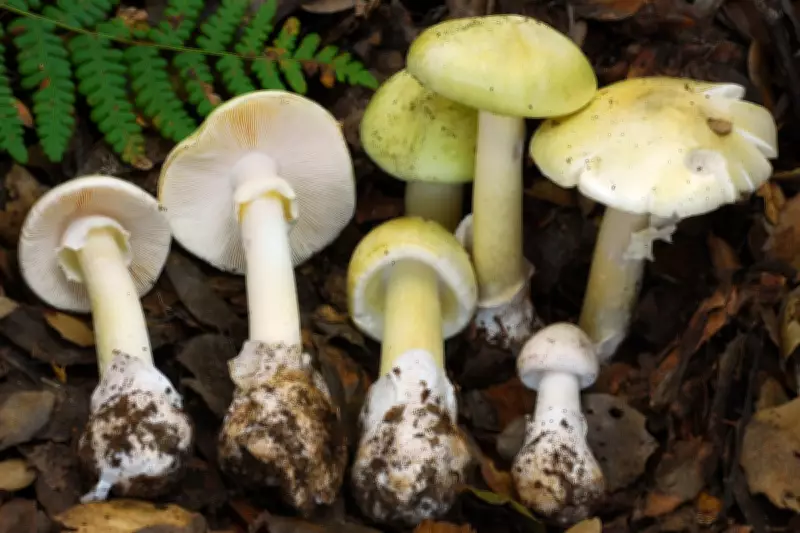
Death cap mushrooms, scientifically known as Amanita phalloides, pose significant identification challenges. They closely resemble edible varieties like puffballs, typically growing up to 6 inches across and tall with a greenish-gray cap and white gills. Jess Starwood, an herbalist and foraging educator, emphasizes that novice foragers can easily mistake them for safe species, especially as these deadly fungi become more common. Consuming even half a cap can be fatal, with mortality rates reaching 50%, and the mushrooms are also lethal to dogs, adding to the urgency of public awareness.
Cultural and Climatic Factors Driving the Outbreak
The epicenter of the initial 35 incidents was Salinas, a central coast town with a large population from central Mexico, where mushroom foraging is a strong cultural tradition. Diaz speculates that immigrants may have confused death caps with edible Amanita species familiar from their home countries. The outbreak has affected speakers of multiple languages, including English, Mandarin, Mixteco, Russian, and Ukrainian, prompting the state's department of public health to release advisory flyers with QR codes in nine languages. Additionally, climate change is exacerbating the issue, with wet winters fostering the growth of nontypical species like death caps in new areas, alongside other toxic mushrooms such as the western destroying angel (Amanita ocreata).
Expert Advice for Safe Foraging Practices
As the death cap season concludes in southern California but continues in the north, experts urge caution. Inexperienced mushroom hunters are advised to seek guidance from local mycological societies or foraging groups to learn from experienced experts. Starwood warns against relying on identification apps, which are prone to errors, and recommends hands-on field training. The state health agency also advises purchasing mushrooms only from trusted grocery stores, noting that death caps remain poisonous even after cooking, boiling, freezing, or drying. Immediate medical attention is crucial if poisoning is suspected, with symptoms including stomach pain, cramping, fatigue, nausea, and diarrhea, potentially leading to liver damage within days.
This crisis underscores the need for increased education and vigilance in wild mushroom consumption to prevent further tragedies.