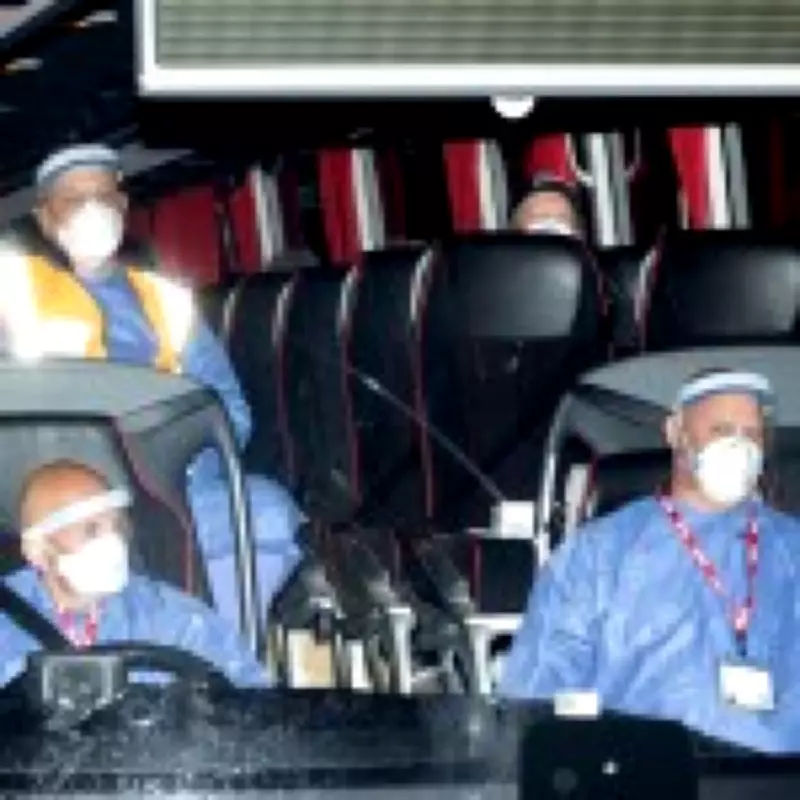
Twenty British passengers and crew evacuated from a cruise ship hit by the hantavirus have arrived at a Merseyside hospital. The group flew into Manchester Airport on a chartered flight from Tenerife after the HV Hondius docked yesterday morning. They were photographed arriving by coach at Arrowe Park Hospital in Wirral, with the driver seen wearing a face mask and a clear face shield.
Testing and Isolation
The 20 passengers, along with one German national who is a UK resident and one Japanese passenger, have tested negative for hantavirus. The UK Health Security Agency confirmed that the patients had been ‘safely transferred’ to the hospital just after 8.40pm. They will now isolate for 72 hours in a dedicated accommodation block to determine if they can complete a 45-day isolation at home.
Passenger Welfare
Janelle Holmes, CEO of Wirral University Teaching Hospital Trust, said the passengers will be able to phone their friends and family. She told the BBC: ‘What we’ve learnt from past experience is they’re going to be absolutely shattered. They’ve probably felt quite traumatised by the whole experience so the thing for us to do is to make sure that they’re here, they’re safe, they’re welcome.’
Background of the Outbreak
The Ministry of Defence says that the risk to the public remains very low. At least two people aboard the HV Hondius sailing the Atlantic Ocean died of the hantavirus earlier this month. They include Leo Schilperoord, 70, an ornithologist who had rejoined the cruise after visiting a landfill to birdwatch in Argentina. He was the first person to die, with his wife Miriam dying a few days later while trying to board a flight back home to the Netherlands from South Africa. Another death is suspected to have been caused by hantavirus, while the World Health Organization says four other ship-goers are sickened with it. There are also two suspected cases, including a British man who is on the tiny British archipelago of Tristan da Cunha in the South Atlantic.
Understanding Hantavirus
Hantavirus is a rare disease often caused by breathing in particles of dried droppings or urine from infected rodents. Its flu-like symptoms, such as fever, chills, and body aches, can take as long as eight weeks to show. As the disease develops, patients can experience shortness of breath and then lung or heart failure. Officials say the risk of the virus becoming a pandemic is low. The current outbreak involves the Andes strain of hantavirus, which struggles to move between people as the virus burrows deep in the lungs. Those at highest risk of person-to-person transmission are people who have been in close quarters for a long time with an infected person.
Healthcare and agricultural workers are at the highest risk, as are people who may come into contact with mice and rodent droppings. This includes people who travel to places where the virus is common and go hiking or visit rural areas. Health officials recommend wearing gloves and an N95 face mask and using a bleach solution to wet surfaces when cleaning them. They advise against sweeping or vacuuming, as this could whip up particles into the air that could be inhaled.