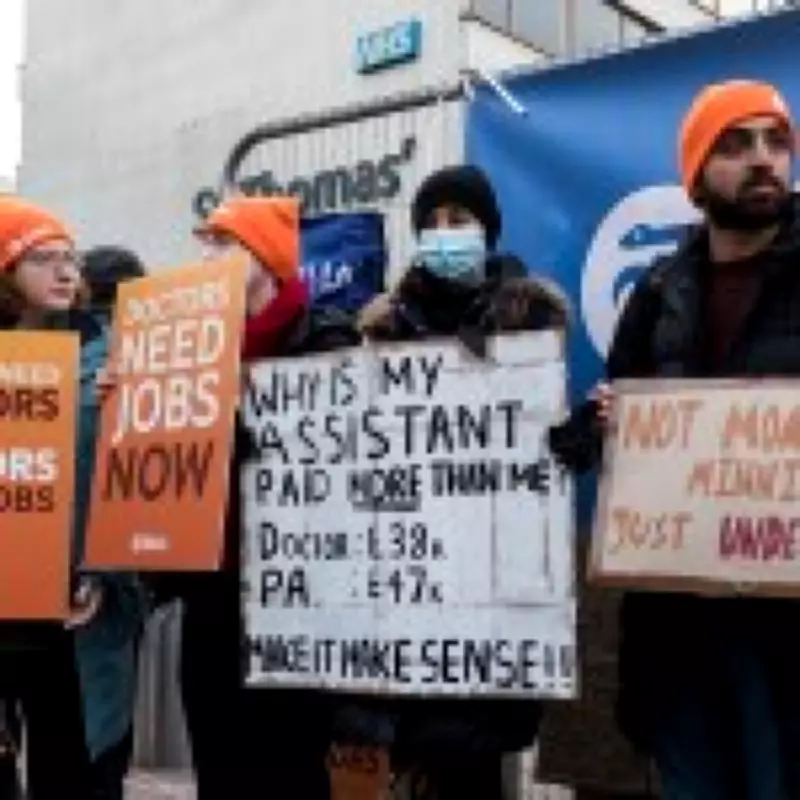
NHS England has issued a critical warning to patients across the country, urging them not to postpone seeking medical care in anticipation of a demanding six-day strike by doctors set to commence this week. Health officials emphasize that individuals should continue to come forward for treatment, attend scheduled appointments, and seek urgent or emergency care exactly as they would under normal circumstances during the upcoming period.
Strike Details and Timing
This industrial action marks the 15th installment in an ongoing dispute concerning pay and career opportunities for medical professionals. The strike is scheduled to begin at 7 a.m. on Tuesday, April 7, and will conclude just before 7 a.m. on Monday, April 13. Tens of thousands of resident doctors, formerly referred to as junior doctors, are expected to participate in the walkout.
Notably, the timing of this strike follows immediately after the Easter bank holiday weekend, a factor that health authorities describe as potentially making the situation "particularly challenging" for healthcare delivery.

Impact on Healthcare Services
While NHS England has expressed confidence in maintaining the vast majority of services for patients during the strike period, officials acknowledge that there will be a reduced number of doctors available. This scarcity may necessitate prioritization of life-saving care, potentially resulting in longer wait times for less urgent medical cases.
Professor Ramani Moonesinghe, the national clinical director for critical and perioperative care, provided reassurance during an interview with BBC Radio 4's Today programme. "The NHS is still open for business and there are still plenty of people there available to care for you," she stated. "If you have a planned appointment – unless you have been specifically told that it has been postponed or cancelled – you should attend as you normally would."
Despite characterizing this round of industrial action as "difficult," Professor Moonesinghe strongly encouraged the public to "come forward as normal and attend any appointments unless they are contacted otherwise." She further emphasized emergency protocols, advising, "As ever, please call 999 or come to A&E in an emergency, and use 111 online first if you need urgent but not life-threatening help."
Government and Union Perspectives
Health Secretary Wes Streeting described the impending strike as "disappointing," while underscoring that the current priority remains "protecting patients and staff." He pointed to historical data, noting that the NHS successfully delivered nearly 95% of planned activity during similar strikes in December, expressing optimism that the health service would continue to function effectively throughout this period.
The British Medical Association (BMA), representing the striking doctors, has acknowledged that the walkout "would bring disruption" but maintains that the action is necessary. This strike occurs three years into an ongoing dispute, with negotiations breaking down in March after the government withdrew portions of its proposal to doctors. The retracted elements included plans for 1,000 additional training positions and accelerated pay progression through the five salary bands that span medical training.
Underlying Dispute and Demands
The BMA is advocating for a pay increase that exceeds the currently offered 3.5%, arguing that this figure effectively represents a reduction when adjusted for inflation. Dr. Jack Fletcher, chair of the union's resident doctors committee, criticized the government's approach, stating, "The health secretary may well be 'disappointed,' but he is failing to acknowledge a deal was taking shape until his government quietly watered it down, reducing the money on the table, then stretching what was left over too many years to make it worthwhile."
Dr. Fletcher further explained, "Resident doctors are as keen as he is to bring an end to the strikes, but his government needs to put an offer on the table that we can accept and which doesn't change at the last minute." He also highlighted concerns about senior doctors covering for striking colleagues, noting, "Many senior doctors will be covering for us and whilst that benefits patients, we know they are also exhausted and as demoralised as we are."

Patient Guidance and System Preparedness
NHS England continues to stress that patients should not delay seeking necessary medical attention during the strike period. The health service has implemented contingency plans to manage the reduced staffing levels, with senior medical professionals expected to provide coverage in many areas. However, authorities acknowledge that the combination of post-holiday demand and industrial action may create additional pressures on the healthcare system.
Patients are advised to keep their scheduled appointments unless specifically notified of cancellations, utilize emergency services appropriately for life-threatening situations, and employ the NHS 111 service for urgent but non-emergency medical concerns. The overarching message from health officials remains clear: the NHS is open for business, and patients should continue to access care as needed throughout this challenging period of industrial action.