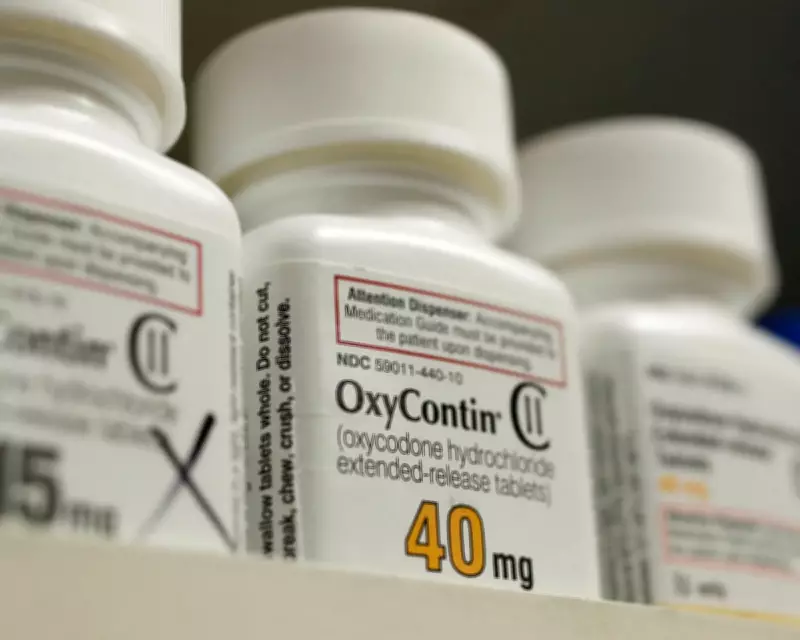
Purdue Pharma, the manufacturer of the prescription painkiller OxyContin, is set to dissolve and be replaced by a new company focused on public health by the end of this week. This development follows the approval of a criminal sentence by a federal judge on Tuesday, which resolves a U.S. Department of Justice investigation and clears the path for a sweeping legal settlement addressing thousands of lawsuits related to the opioid crisis.
Background of the Case
The opioid crisis has been linked to more than 900,000 deaths in the United States since 1999. Many victims and their families have expressed frustration with the settlement, arguing that it does not deliver true justice. During the hearing, impact statements were delivered by individuals affected by opioids, including mothers who lost sons to overdose, a teenager born into withdrawal, and others who struggled with addiction after being prescribed OxyContin.
Details of the Sentence
In 2020, Purdue Pharma reached a deal with the Department of Justice to resolve criminal and civil investigations. The company admitted to failing to implement an effective program to prevent its powerful prescription painkillers from being diverted to the black market, despite claiming otherwise to the U.S. Drug Enforcement Administration. It also acknowledged paying doctors through a speakers program to prescribe its drugs and compensating an electronic medical records company to send physicians information that encouraged more opioid prescriptions.
Notably, only the company was charged, not individual executives. The guilty plea and civil settlement included $8.3 billion in forfeitures, fines, and penalties, but the federal government agreed to collect only $225 million, contingent on Purdue reaching a separate settlement of thousands of lawsuits from state, local, and Native American tribal governments. The guilty plea did not include restitution to victims. After years of legal proceedings and over $1 billion in legal fees, the broader sentence was approved by a bankruptcy judge in November.
Victims' Reactions
U.S. District Judge Madeline Cox Arleo heard emotional testimony from victims and their families. Many urged her to reject the negotiated sentence. Alexis Pluis, a mother from upstate New York who lost her son to opioids in 2014, stated, "We still deserve justice. And this isn't it." She noted that she cannot locate her son's 23-year-old medical records to prove he was prescribed OxyContin, which would be necessary to receive compensation.
More than 54,000 individuals with personal injury claims voted to accept the settlement, while about 200 opposed it. Michele Wagner, whose son died of an overdose, expressed a desire to see Sackler family members criminally charged, saying, "Justice to me looks like more than just money." Conversely, Kara Trainor, who is in recovery from an addiction that began with an OxyContin prescription in 2002 and served on a settlement committee, supported the approval, stating that closure is essential for her recovery.
Sackler Family Contributions
The settlement, which could take effect as soon as Friday, requires members of the Sackler family, who own Purdue Pharma, to contribute up to $7 billion over 15 years. Most of this money will go to government entities to combat the opioid crisis. Judge Arleo questioned why the family was allowed to pay over such a long period, suggesting they would rather pay from future income than from current assets. A Purdue lawyer noted that specific financial claims in the lawsuits totaled over $40 trillion in damages.
This settlement is among the largest in a series of recent agreements with drugmakers, wholesalers, and pharmacies, and it is the only major one that includes payments for individual victims or their survivors. Individual payouts are expected to range from about $8,000 to $16,000. Overall, the settlements are worth more than $50 billion, with most funds allocated to addressing the overdose epidemic.
Future of Purdue Pharma
Under the deal, Sackler family members will be shielded from future opioid-related lawsuits from those who agree to the payments. The family received approximately $10.7 billion from Purdue between 2008 and 2018, though they claim nearly half went to taxes. Purdue itself will cease to exist and be replaced by a new company, Knoa Pharma, which will have a board appointed by states and a mission to combat the opioid crisis. Millions of internal Purdue documents are to be made public. Additionally, Sackler family members have agreed not to object if their names are removed from museums and other institutions they have supported.