Junior Doctors' Strike Persists as Pay Negotiations Collapse Over Government U-Turn
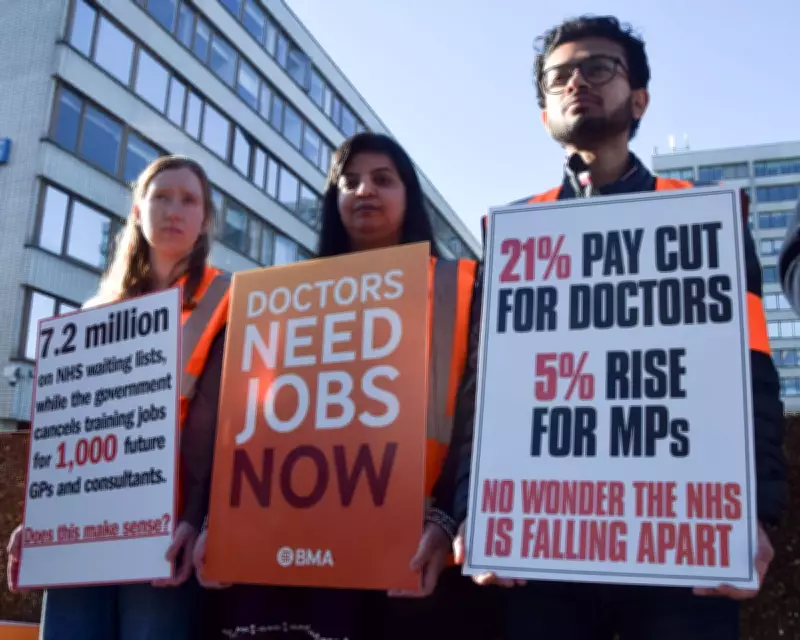
Junior doctors in England have extended their industrial action after a sudden reduction in the government's pay offer derailed weeks of intensive negotiations, according to the doctors' union leader. The strike, which began with picketing outside St Thomas' Hospital in London on April 7th, is scheduled to conclude at 7am on Monday morning, marking the 15th such action in this prolonged dispute.
Last-Minute Reduction Scuppers Peace Deal
Dr. Jack Fletcher, chair of the British Medical Association's Junior Doctors Committee, claims that government ministers "killed the chance to end strikes" when they unexpectedly reduced the financial package being offered to resolve the four-year conflict. Fletcher alleges that after two months of constructive talks in January and February, negotiators were on the verge of a breakthrough when ministers staged an unexpected U-turn.
"Over eight weeks we discussed a pay progression structure that could potentially work to end the dispute," Fletcher explained. "Then right at the last minute they not only reduced the total investment amount but stretched it over three years instead of two. Something happened that triggered this industrial action."
Financial Details of the Failed Agreement
The proposed deal would have seen junior doctors receive £700 million in additional pay over three years, with allocations of £150 million in 2026-27, £250 million in 2027-28, and £300 million in 2028-29. However, Fletcher maintains that earlier discussions involved a two-year arrangement with substantially larger annual amounts that would have brought doctors closer to their demand for 26% pay restoration to 2008 levels.
"You do not avoid industrial action by playing games like stretching deals to three years," Fletcher asserted, accusing the government of breaching what negotiators believed had been agreed upon.
Government Disputes BMA's Account
The Department of Health and Social Care has challenged Fletcher's narrative, stating that his remarks "misrepresent" what occurred during negotiations. A DHSC spokesperson responded: "It is disappointing that the BMA continues to misrepresent what happened during constructive talks conducted entirely in good faith. The deal – which would have seen junior doctors 35.2% better off, on average, than they were four years ago – was always intended to be a three-year arrangement."
The department expressed further disappointment that the BMA proceeded with strikes rather than presenting counterproposals, though they noted that Health Secretary Wes Streeting's door "remains always open" for further discussions.
Escalating Rhetoric and Public Perception
Fletcher has intensified his criticism of Streeting, accusing the health secretary of damaging public trust in doctors by portraying them as "bad people" and "a huge problem" due to their sustained industrial action. He warned that junior doctors would continue striking until their legal mandate expires in August unless their demands are met.
Public opinion has shifted significantly since the strikes began in 2023. While initial polling showed support for the doctors' pay claim, recent surveys indicate growing opposition as the dispute continues. The 15 strikes have cost the NHS an estimated £3 billion and forced the rescheduling of hundreds of thousands of appointments and procedures.
Training Place Controversy Adds Complexity
Beyond pay restoration, the dispute involves competing for specialist medical training positions. Fletcher praised Streeting for addressing concerns about a medical "gig economy" through the Medical Training (Prioritisation) Act, which gives UK-trained doctors priority over overseas-trained peers for the 9,600 specialist training places created annually.
However, the BMA remains concerned that Streeting's withdrawal of an offer for 1,000 additional training places this year will maintain competition ratios higher than their target of 1.8:1, last achieved in 2018. The DHSC maintains that the new legislation, with its promise of up to 4,500 extra training positions, should reduce the competition ratio below 2:1.
Immediate Impact on NHS Services
As the strike continues, NHS trusts have struggled to maintain normal service levels, attempting to provide 95% of usual tests, treatments, and appointments despite significant staff absences due to pre-booked Easter holidays. Many hospitals have been forced to cancel elective procedures including hip and knee replacements.
NHS England chief Sir Jim Mackey has warned hospital bosses to prepare for the possibility of monthly strikes until August if no resolution is reached. Fletcher left open this possibility while expressing willingness to resume negotiations once the current walkout concludes.
The standoff represents one of the most protracted industrial disputes in NHS history, with both sides appearing entrenched in their positions as patients bear the consequences of continued service disruptions.