
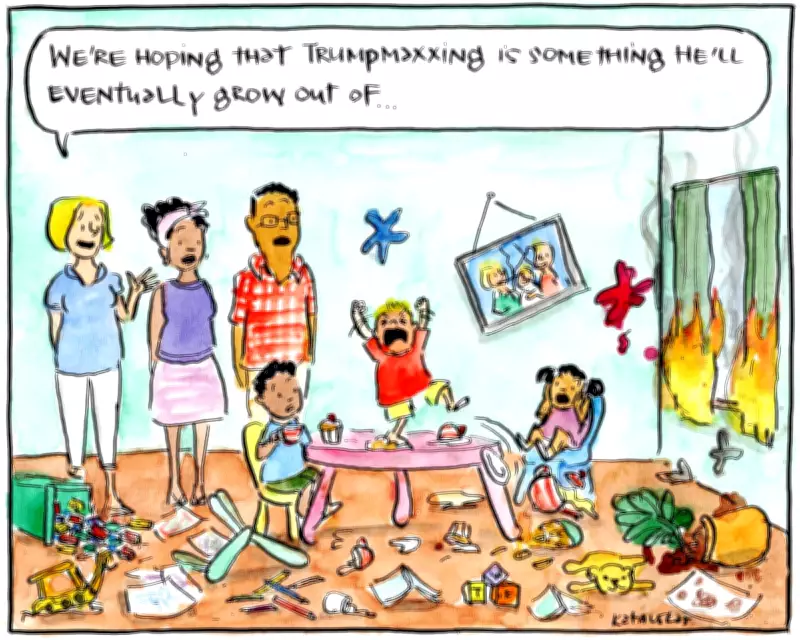
The Rise of 'Trumpish' Behavior in Toddlers
A concerning new trend is emerging in early childhood development, where toddlers are increasingly imitating aggressive political rhetoric and behavior, often described as 'Trumpish.' This phenomenon, observed by educators and child psychologists, is causing significant trouble in preschools and daycare centers, disrupting social interactions and challenging traditional disciplinary methods.
Impact on Social Development
Experts report that children as young as two or three are mimicking confrontational language and dismissive attitudes seen in political discourse. This behavior includes shouting over peers, refusing to share toys, and displaying a lack of empathy, which are atypical for this developmental stage. The imitation of such conduct is linked to increased exposure to media coverage of divisive political figures, where toddlers absorb and replicate these patterns without understanding the context.
Child development specialists emphasize that early childhood is a critical period for learning social skills like cooperation, empathy, and emotional regulation. The adoption of 'Trumpish' trends can hinder these processes, leading to longer-term issues in peer relationships and academic readiness. Studies indicate that toddlers exhibiting these behaviors are more likely to face social isolation and require intervention from educators to foster positive interactions.
Challenges for Educators and Parents
Teachers and caregivers are finding it increasingly difficult to manage classrooms where such behavior is prevalent. Traditional strategies, such as time-outs or gentle redirection, are often ineffective against the stubborn and assertive nature of this trend. Educators are now implementing specialized programs that focus on emotional literacy and conflict resolution, aiming to counteract the negative influences.
Parents are also grappling with this issue at home, as children bring these behaviors from school or mimic what they see on television. Psychologists advise limiting exposure to aggressive media and modeling respectful communication to help toddlers develop healthier social habits. Open discussions about feelings and consequences are recommended to guide children away from imitative aggression.
Broader Societal Implications
This trend reflects broader societal shifts where political polarization is seeping into everyday life, even affecting the youngest members of society. Researchers warn that if left unaddressed, these behaviors could normalize incivility and hinder the development of a cooperative and empathetic future generation. Early intervention is crucial to prevent the entrenchment of these patterns as children grow older.
In response, some communities are launching awareness campaigns to educate parents and educators about the impact of political rhetoric on children. By fostering environments that prioritize kindness and respect, stakeholders hope to mitigate the effects of 'Trumpish' trends and support the healthy development of toddlers in an increasingly complex world.




