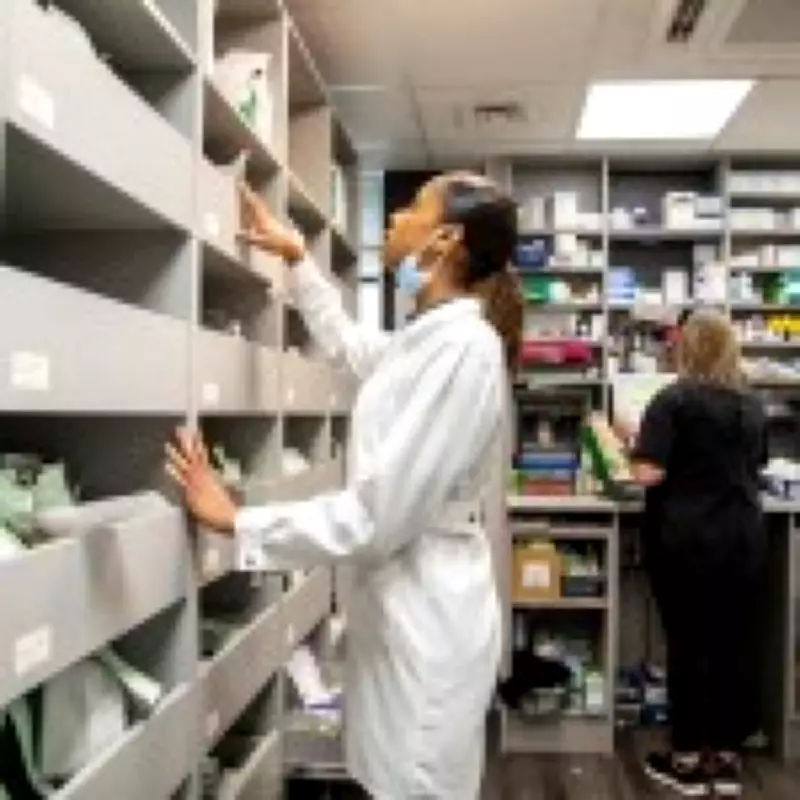
Long queues snaking through high street pharmacies are becoming a common sight in the UK, as the country faces a growing medicine shortage. The surprise war against Iran launched by the US and Israel in February has disrupted global supply chains, affecting everything from petrol prices to tropical fruit stocks – and now, the availability of medications.
Why is there a medicine shortage?
The conflict has led to the closure of the Strait of Hormuz, a critical channel linking the Persian Gulf to the rest of the world. Without this route, oil tankers and cargo ships cannot pass, driving up energy costs and making it harder to transport pharmaceutical ingredients. Drug prices have soared as manufacturers face shortages of key components or pay double to ship them by air.
The UK produces only about a quarter of its medicines domestically. A third comes from India, another third from the European Union, and the rest from other regions. Many medications, such as those for cancer, have short shelf lives, making lengthy alternative shipping routes impractical. Additionally, oil is essential for producing chemicals like methanol and ethylene, which are used in manufacturing medicines, syringes, vials, and tubes.
Medicine supply issues 'only likely to get worse'
Pharmacies must source medicines at a fixed price set by the NHS, known as the drug tariff. When the market price exceeds this tariff, pharmacies can request a price concession from the government. According to the National Pharmacy Association, some drug prices have increased tenfold since February. Community Pharmacy England reported a record 204 price concessions announced in April alone, up from 201 in March.
James Davies, director of research at Community Pharmacy England, explained: 'We have had a record number of price concessions recently, and while these indicate pricing issues rather than necessarily meaning there are medicine shortages, they show that the medicines supply chain is under increasing pressure, which is only likely to get worse in light of the conflict in the Middle East.'
Jim Mackey, head of NHS England, expressed deep concern about the situation. He told LBC: 'It depends what you’re talking about. In every area, we’ve got enough to get through for a reasonable period… so generally, a few weeks. Because things perish and it costs money to store and various other things go out of use, you can’t hold years and years of supply.'
Olivier Picard, chairman of the NPA, highlighted the financial strain on pharmacies. He told Pharmacy Magazine that pharmacists must either dispense at a loss or send patients to other pharmacies miles away. 'It is very difficult to quantify the losses but take Apixaban 5mg. My pharmacies dispense it approximately 300 times a month in each pharmacy. The price concession has been announced at £2.80. So, every time I dispense it, I lose £3.51. That’s over £1,000 in loss on this medication alone each month in every single one of my pharmacies.'
The number of pharmacies in the UK has been declining for years, falling below 10,000 for the first time in 20 years in 2025. Experts also note that some patients are on prescriptions they may no longer need, and 'de-prescribing' is a gradual process that many healthcare providers lack the resources to manage.
What medications have been impacted?
Among the drugs in short supply are methylphenidate (known as Ritalin), used for ADHD; propranolol, for heart problems and anxiety; and ramipril, a blood pressure medication. Officials have issued a 'serious shortage' notice for the capsule form of ramipril, limiting patients to one month's supply at a time. Apixaban, which prevents blood clots, is also affected. Without it, patients risk deep vein thrombosis.
The NHS continues to face shortages of aspirin and oxybutynin, used in hormone replacement therapy. Diabetes and epilepsy medications are also in short supply. The Epilepsy Society has identified at least three deaths in the last two years where a lack of medication was a contributing factor. One victim, David Crompton, was unable to obtain the anti-seizure drug Tegretol and fell down stairs in December.
Clare Pelham, executive officer of the Epilepsy Society, said: 'For many people with epilepsy, there is no plan B when their medication is not available.'
A Department of Health and Social Care spokesperson assured: 'The vast majority of the UK’s licensed medicines are in good supply, and we are working hard to keep it that way. We have established processes to respond to sudden market price increases of medicines. This includes adjusting reimbursement prices based on current market conditions, which helps ensure that pharmacies can continue to obtain medicines for their patients.'