Cornwall Landmarks and Communities Grapple with Storm Goretti's Aftermath
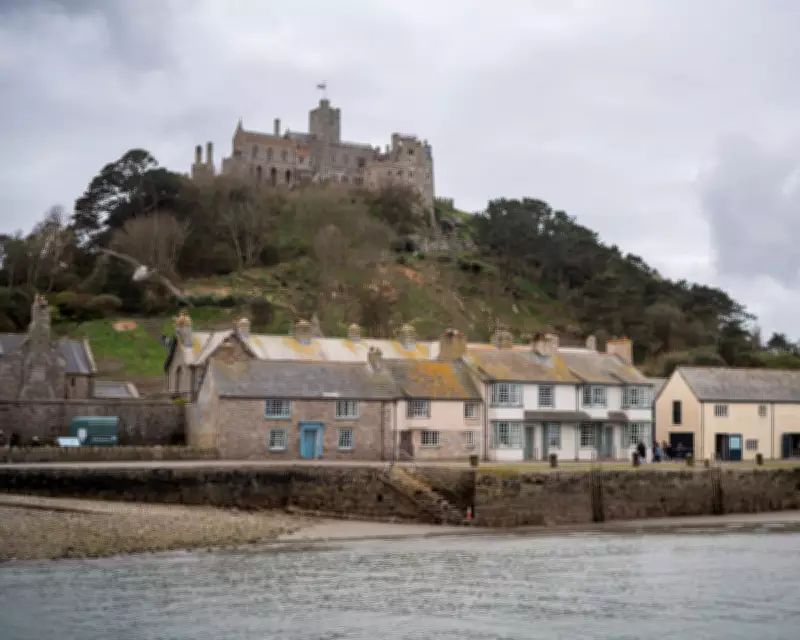
Three months after Storm Goretti unleashed 100mph winds across Cornwall, the physical and emotional scars remain deeply visible. The historic tidal island of St Michael's Mount suffered catastrophic damage, losing approximately 80% of its tree cover in a single devastating night. Uprooted Monterey pines that once reached four-story heights now lie in tangled piles, creating a landscape transformed by nature's fury.
Historic Gardens Face Uncertain Future
"We were shocked the morning after when we saw what had happened," said Jack Beesley, senior gardener at St Michael's Mount. "We had been caring for these trees for years and to see so many of them down was very sad. We've worked hard to get the place ready for the Easter visitors but it will still be a month or more until we're back straight."
The gardening team now faces difficult decisions about replanting. With climate change increasing the frequency of extreme storms, simply replacing the lost trees may not be the wisest approach. "We'll take time, think what the best plan is," Beesley explained. "There's also an opportunity to adapt, do things differently."
Ian Marsh, the National Trust's assistant director for the south-west, reported that thousands of trees had fallen across west Cornwall gardens and estates. "It can be good to get more light into wood. That's a good natural process – but you probably wouldn't wish for it in quite this extreme a way," he noted, highlighting the complex balance between natural regeneration and deliberate restoration.
Residents Endure Ongoing Hardships
Beyond the landmark sites, ordinary Cornish residents continue to struggle with the storm's consequences. Bridget Wagstaffe and her family have moved into their fourth temporary home after a tree smashed through their cottage roof in Goldsithney village. "It has been traumatic, to say the least," said Wagstaffe, a shop worker. The family faces months of displacement while navigating insurance claims, builder arrangements, and unexpected bills.
Adding insult to injury, Cornwall council suggested the family might be liable for emergency safety work costs. "That seems like a slap in the face," Wagstaffe protested. "It wasn't our tree that fell on the house." The council maintains it has powers to recover costs from property owners when emergency actions are necessary for public safety.
Power Infrastructure Failures Expose Vulnerabilities
Madge Christopher, an 86-year-old retired police civilian worker from Madron, endured 45 hours without electricity. "No heating, no hot drinks, darkness," she recalled. "I'm not sure we're prepared for anything any more." Hannah Derrington and her family from the same village lived in candlelight with no heating for four days, with teenage sons experiencing the "shock" of internet deprivation.
Compensation disputes have added to residents' frustrations. Many found themselves ineligible for payments because their electricity flickered back on briefly during the prolonged outage. National Grid Electricity Distribution explained that under Ofgem rules, Storm Goretti was classified as a "category 2" storm, meaning payments only applied after 48 continuous hours without power from the reported outage time.
Calls for Better Preparedness and Infrastructure
Juliet Line, a Cornwall councillor, has been fielding numerous complaints about the inadequate response. "Connectivity was a really big issue," she emphasized. "We need to do work to make sure that there's better infrastructure in place for next time." She suggested practical improvements like equipping community halls with generators to serve as warming centers during future crises.
Line also voiced concerns about Cornwall's peripheral status in national priorities. "It's always a struggle to keep Cornwall on the map and make sure that our situation is understood by the rest of the country because we're far away and we're surrounded by water," she said. "It's easy to forget us, isn't it?"
Community Resilience and Adaptation Efforts
Some residents are taking proactive measures. Sam Kirby, a digital marketing consultant and volunteer coastguard officer from the Lizard peninsula, invested in satellite broadband and substantial solar-chargeable power packs. "That would keep us at least lit and online for 48 hours without power," he explained, noting that many neighbors have switched to satellite internet services since the storm.
Community groups are organizing preparedness discussions. The Transition Constantine group plans a village meeting to evaluate their response and improve future readiness. "We were quite cut off for a couple of days," said organizer Zoe Rawlence. "This seems a good time to bring the village together and think about what we could have done better."
Finding Silver Linings Amid Destruction
At St Michael's Mount, learning manager Kerry Rice identified unexpected benefits from the devastation. Local schools have repurposed fallen wood into outdoor furniture, while visiting children receive twigs as historical souvenirs. "It's not any old wood – it's St Michael's Mount wood," Rice noted. "This is a very historic place and the storm was a new layer of history that people are experiencing."
As Cornwall continues its recovery, the region faces fundamental questions about climate adaptation, infrastructure resilience, and community support systems. The lessons from Storm Goretti's destruction will likely shape Cornwall's approach to future extreme weather events for years to come.