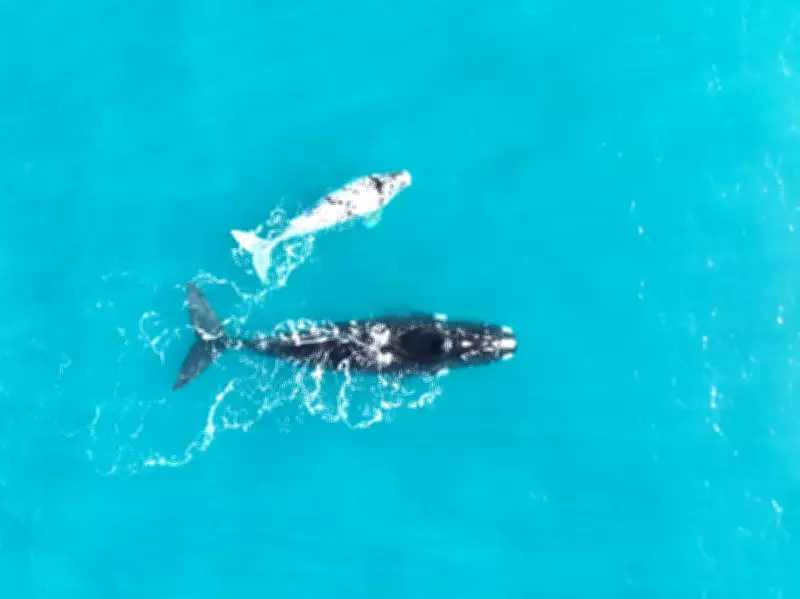
Climate Crisis Impacts Southern Right Whale Reproduction, Study Reveals
Southern right whales, which had shown remarkable recovery in recent decades after being hunted to the brink of extinction during the 19th and 20th centuries, are now experiencing a significant decline in birth rates linked directly to the climate crisis. This alarming trend has been identified by scientists who describe it as a critical warning signal about the broader environmental changes affecting the Southern Ocean.
Long-Term Monitoring Uncovers Breeding Slowdown
According to extensive research published in Scientific Reports, southern right whales have shifted from their typical three-year calving cycles to four or five-year intervals since 2017. This change has been documented through over three decades of photo identification data collected in the Great Australian Bight, where scientists track individual whales using unique callosity patterns.
Dr Claire Charlton, lead author of the study and director of Current Environmental, explains that these magnificent animals, which can live up to 150 years, are facing unprecedented challenges. They feed in Antarctic and sub-Antarctic waters during our summertime, and then migrate up to our coasts during winter, she said, highlighting their annual breeding and socialising patterns.

Climate-Driven Changes in Foraging Grounds
The research directly links the altered breeding cycles to climate-induced transformations in the whales' Antarctic foraging habitats. Key factors identified include:
- Rising ocean temperatures
- Melting sea ice
- Increased prevalence of marine heatwaves
- Reduced availability of krill and other prey
Dr Peter Corkeron, a marine ecologist at Griffith University, describes southern right whales as tractors of the ocean that typically feed by moving through dense zooplankton patches. The change in calving intervals suggests that conditions in the Antarctic are deteriorating, forcing these mammals to conserve energy by reducing reproductive frequency.
Broader Implications for Marine Conservation
The study's findings have significant implications beyond Australian waters. Similar breeding declines have been observed in southern right whale populations across South America and South Africa, indicating a widespread environmental issue. Other krill-dependent predators are also facing pressure from the same climate-driven changes.
Whale scientist Vanessa Pirotta emphasises the importance of continued monitoring: We need to continue to learn more about southern right whales given that we were responsible for so much of their loss. After commercial whaling ceased in Australia in 1979 and was internationally banned in the late 1980s, populations had recovered to between 2,346 and 3,940 individuals, representing approximately 16-26% of pre-whaling levels.
Dr Charlton concludes that this breeding slowdown serves as a clear indicator of how climate change is affecting marine ecosystems, underscoring the urgent need for coordinated global conservation efforts to protect these vulnerable species and their habitats.