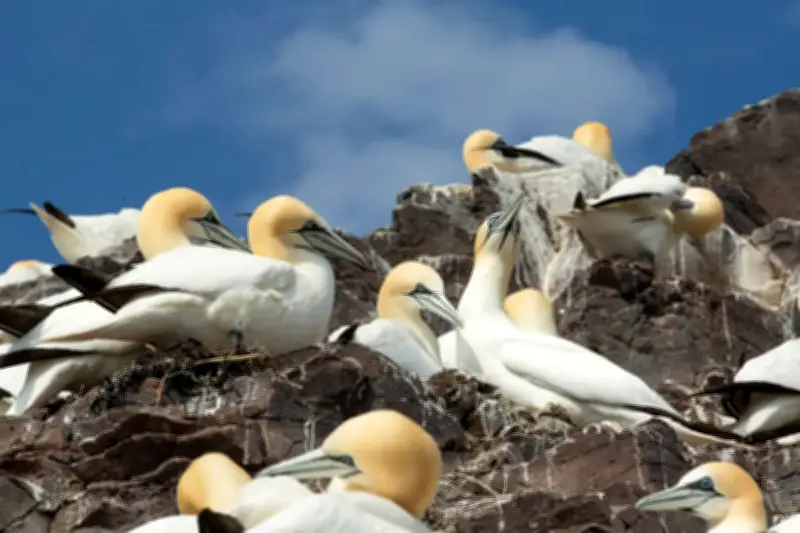
Bass Rock's gannet colony, once numbering around 100,000, is facing a slow road to recovery after bird flu struck in 2022. A recent study by the RSPB, now the island's owners, and Aarhus University estimates it will take at least 15 years for the population to rebound. The survivors show a strange remnant of the disease: their vivid blue irises turn black.
A Colony in Decline
The Bass Rock, a broad-shouldered icon in the Firth of Forth, has been home to gannets for centuries. Their scientific name, Morus bassanus, reflects this close association. However, since bird flu hit in 2022, the population has been denuded. The island's distinctive shape, speckled white with birds and guano, now hosts fewer of these seabirds.
According to the RSPB and Aarhus University's research, the recovery will be slow. The study's findings highlight the long-term impact of the disease on this iconic colony. For the surviving gannets, the blackening of their irises serves as a visible marker of the outbreak's toll.
Life Amidst the Ruins
Across the water, Tantallon Castle, perched on a promontory for 700 years, offers a contrasting scene. The red sandstone ruins, besieged by Oliver Cromwell and never repaired, are now home to dozens of house martins. Their national numbers are in shocking decline, but here they retain a stronghold. The birds build their mud cups—marvels of engineering held together with saliva and hope—raise their broods, and then wing back to Africa, their exact wintering location still largely mysterious.
The house martins slalom the ruins, metallic blue flashes in the morning sun. Occasionally one jinks up to the corner, disappears into the nest to meet the demands of demanding mouths, and emerges again. Their ancestors saw battles and banquets; now their summers play out to a gentle flow of tourists.
Hunting Skills and Survival
Across the water, gannets swarm Bass Rock like midges, wheeling round in broad arcs. Up, turn, pause, tuck wings, plunge—sleek bullets producing the merest splash. Around the castle, martins snap up invisible insects in midair. These hunting skills are virtually mystical to humans, second nature to them. Survival is hard, and getting harder, but given half a chance, these birds will rebound.
The sign at Tantallon asks visitors not to disturb the birds, a reminder of the delicate balance. The nests, often just a couple of feet above head height, are easy to miss until an incoming house martin parts your hair. The colony's resilience, both on the rock and at the castle, offers a glimmer of hope for the future.