
Sydney's Public Transport Deserts Leave Residents Stranded Amid Fuel Crisis
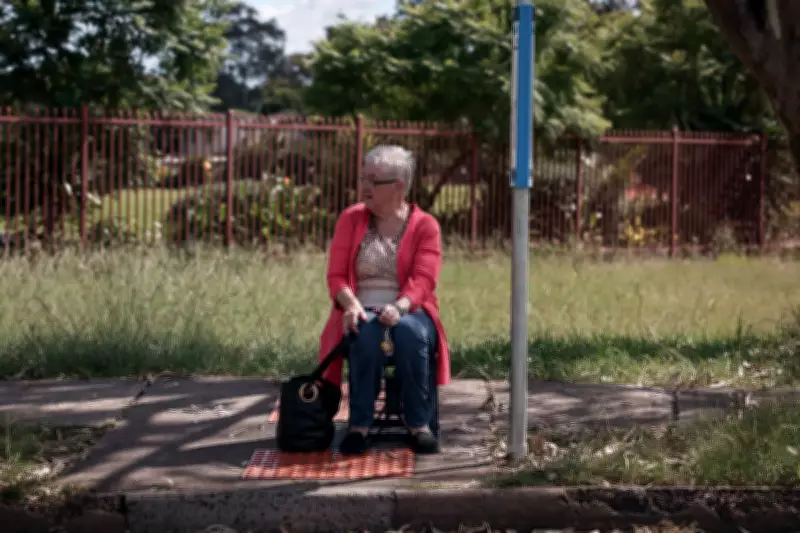
In the outer suburbs of western Sydney, such as Willmot near Mount Druitt, residents are grappling with a dire lack of reliable public transport, exacerbating social and economic hardships. Diane Griffiths, a 76-year-old pensioner, voices the frustration of many, stating, 'I don't think the government cares about us,' as she waits on a milk crate for a bus. Her experience highlights a broader issue across Australia, where areas dubbed 'public transport deserts' force reliance on cars, now unaffordable due to skyrocketing fuel prices.
Decades of Decline in Services
Griffiths has lived in Willmot for over fifty years, witnessing the stagnation and removal of essential services. She recalls a bus service that once ran along Discovery Avenue, which was discontinued after vandalism incidents, leaving residents to walk further for infrequent and unreliable buses. This decline is not isolated; from Melbourne's west to Brisbane's north, low-density suburbs suffer similar fates, creating barriers to jobs, education, and healthcare.
As petrol prices surge due to global conflicts, residents are caught in a bind. Delander Hayes, a program coordinator at Jesuit Social Services, reports that her charity received 18 requests for fuel assistance in just two weeks, exceeding their annual average. This crisis pushes vulnerable households, often on government support, to the brink, with little spare income for transportation.
Impact on Families and Communities
Eddie Bognet, a social worker in western Sydney, describes the constant pressure of balancing a household of four with limited transport options. After one car was destroyed, his family relies on a single vehicle, straining their weekly budget. Similarly, Belinda Oppy, a mother of four in public housing, notes that rising fuel costs restrict family visits and educational opportunities. Her daughter had to leave a selective high school due to an arduous bus commute, leading to a drop in grades.
Experts like Dr. Kurt Iverson from the University of Sydney criticize political calls for reduced car use as unrealistic. A recent study co-authored by Iverson found that up to one-quarter of bus services in Mount Druitt's outer suburbs did not arrive on time in 2024, with cancellation rates five times higher than Sydney's average. Journeys that take 15 minutes by car can exceed 90 minutes by bus, involving multiple changes.
Systemic Inequalities and Historical Neglect
Steve Pederson of The Hive non-profit links infrastructure gaps to deep-seated disadvantage, noting local folklore about fertile soil being removed from Willmot, symbolizing a sense of abandonment. Professor Jago Dodson of RMIT University explains that decades of urban planning prioritized car ownership over public transport, leaving suburbs vulnerable to economic shocks. He emphasizes the need for equitable access to transport to bridge social divides.
Hayes, a Dharug woman, points out that Indigenous communities are disproportionately affected, with public transport deficiencies widening the 'Closing the Gap' metrics. Relocation policies have moved disadvantaged groups to poorly serviced areas, limiting their access to essential services.
Government Response and Community Hopes
A Transport for New South Wales spokesperson acknowledged community feedback and expressed commitment to improving connections, but residents remain skeptical. As billions fund new projects elsewhere in western Sydney, Griffiths and others in Mount Druitt feel overlooked. Without significant investment, the cycle of neglect and hardship is likely to persist, leaving many to wonder if change will ever come.



