
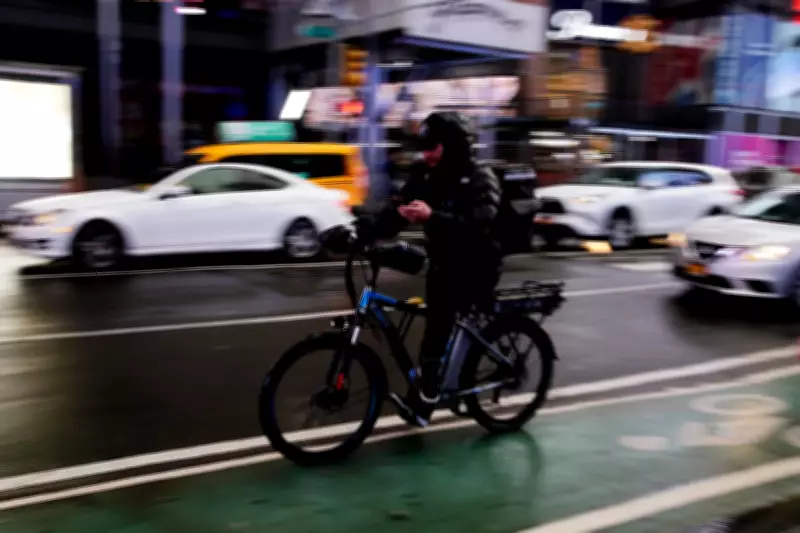
E-Bike Safety Crisis Intensifies as Cities Search for Solutions
The alarming rise in e-bike-related injuries and fatalities across the United States has sparked urgent debates among policymakers, healthcare professionals, and safety advocates. In New York City alone, 17 people lost their lives in e-bike crashes in 2024, highlighting a growing public health concern. This trend mirrors a national surge, with e-bike injuries skyrocketing from 1,600 in 2018 to 23,000 in 2022, according to a report in the medical journal Jama Surgery.
Infrastructure vs. Regulation: A Clash of Approaches
Roadway safety experts are divided on the best strategies to prevent accidents. Some, like Alexa Sledge of Transportation Alternatives, argue that improving infrastructure is key. "When we think about e-bike crashes and deaths, the vast majority involve cars and trucks killing people on e-bikes," Sledge emphasized. Her organization advocates for expanded protected bike lanes and safer street designs to separate different modes of transport.
However, others point to reckless riding as a major factor. Roberta Simon, an attorney, suffered a traumatic brain injury after being struck by a teen on an e-bike in Central Park in August 2024. "I can't stress enough how lucky I am," she said, noting it took six months to recover. Such incidents have fueled calls for stricter regulations.
Legislative Responses and Advocacy Efforts
In response, the NYC E-Vehicle Safety Alliance is pushing for Priscilla's Law, named after a preschool educator killed by an electric Citi Bike in 2023. This legislation would require e-bike registration and license plates, enabling enforcement of speed limits through traffic cameras. "Police can't chase down bikes," said Janet Schroeder, co-founder of the alliance, "but with plates, e-bikers breaking laws would be caught by cameras, just like cars."
Opponents, including Transportation Alternatives, warn that registration could lead to bureaucratic hurdles and unequal enforcement, particularly targeting undocumented immigrants who often work in food delivery. Ligia Guallpa of Los Deliveristas Unidos supports speed limits but fears over-policing. "Rather than deploying more cops, we should encourage manufacturers to limit speeds," she argued.
National and Local Impacts
The crisis extends beyond New York. In Tampa Bay, Florida, at least 28 e-bike fatalities occurred over five years, prompting emergency medicine shifts. California towns near San Diego declared states of emergency after fatal crashes. Nationally, e-bike sales exploded from 50,000 in 2018 to 527,000 in 2022, with the market projected to exceed $6.2 billion by 2031.
Healthcare systems are feeling the strain. Dr. Ashley Pfaff, a trauma surgeon at Bellevue Hospital in New York, sees e-vehicle injuries daily. A study found that 7% of trauma visits at Bellevue from 2018 to 2023 were due to micromobility injuries, with nearly 69% requiring hospitalization.
Policy Shifts and Future Directions
New York City Mayor Zohran Mamdani has revoked a previous policy of criminal summonses for e-bikers, opting for tickets instead. His administration focuses on adapting street designs and holding delivery companies accountable for unsafe practices. "We're addressing the root cause: companies encouraging fast deliveries without regard for safety," a transportation department spokesperson stated.
As cities grapple with this complex issue, the debate continues between regulatory measures and infrastructure improvements. With e-bike usage on the rise, finding effective solutions remains critical to protecting public safety on urban streets.



