
Thames Water Executives Face Intense Scrutiny Over Dividend Payments
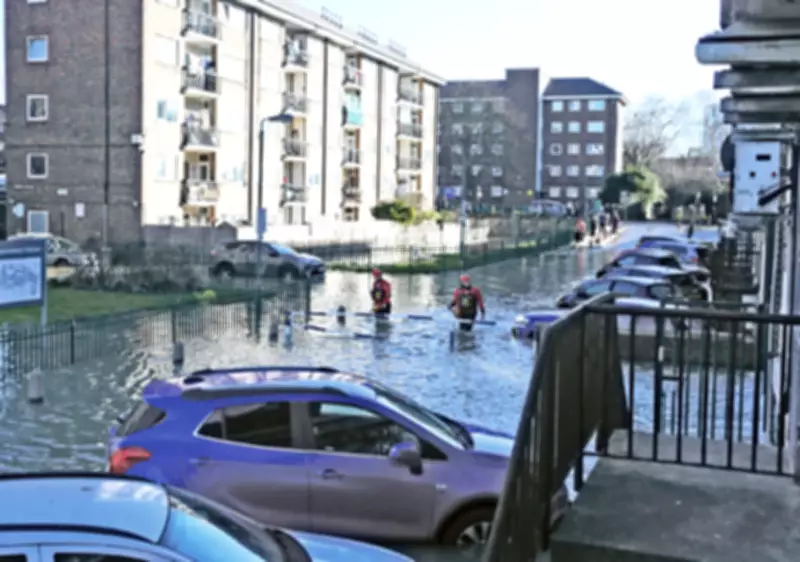
Thames Water bosses endured a rigorous interrogation at the Town Hall on Monday regarding the profit-driven company's efforts to prevent flooding incidents across London. The timing proved particularly ironic when, less than twenty-four hours later, a catastrophic mains burst transformed Caledonian Road in neighboring Islington into a waterlogged disaster zone.
Dividend Payments Under Fire During Council Meeting
The scenes along Caledonian Road bore a striking resemblance to previous flooding disasters in Kentish Town last year and South Hampstead three Christmases ago. During the council committee meeting, representatives faced pointed questions about why customer bills continue to rise while substantial dividends have been distributed to shareholders instead of being reinvested into aging infrastructure.
Councillors on the cross-party culture and environment committee initially heard claims that no dividends had been paid for seven years. However, committee chair Awale Olad promptly presented contradictory figures from regulator OFWAT, revealing multi-million pound sums had been extracted from the company even during the COVID-19 pandemic period.
Labour councillor Rishi Madlani expressed widespread frustration, stating: "It really, really irks me. My water bill has doubled from £20 to £40 monthly – that's typical for most residents. We're all suffering higher bills when your shareholders received substantial dividends, extracting money instead of making crucial investments. How should we possibly trust you? Why should we be paying for extraction to previous shareholders? There is a fundamental trust breakdown."
Major Flooding Incident Follows Council Grilling
James Abbott, Thames Water's local engagement chief, attempted to deflect responsibility by noting: "We don't even have shareholders currently because the company's value is so low. Our creditors are negotiating with the government about recapitalizing – we can't be held accountable for previous owners' actions."
This defense proved insufficient when Councillor Olad read OFWAT statistics showing Thames Water has distributed approximately £7.2 billion in dividends since water privatization began in 1989. The clear implication was that these funds could have substantially upgraded London's deteriorating water infrastructure.
South Hampstead ward councillor Izzy Lenga raised additional concerns, noting that the pipe which burst in Kentish Town last October hadn't even appeared on the company's list of potential network weak spots. "If this is happening with mains that aren't on the radar, that's extremely concerning," she emphasized. Lenga further expressed frustration that Camden continues to be classified as a low-risk area despite mounting evidence to the contrary, potentially affecting critical funding decisions.
Emergency Response and Business Impact
The flooding images weren't confined to Camden. On Tuesday afternoon, London Fire Brigade crews deployed inflatable boats at the southern end of Caledonian Road near King's Cross, rescuing fifty people and three dogs from the rising waters after a thirty-six-inch main ruptured.
Businesses along the busy thoroughfare began assessing damage costs immediately, with more than 150 properties still without power the following Wednesday. Thames Water issued apologies for the disruption while maintaining that teams remained on-site with loss adjusters available to affected parties.
Infrastructure Replacement and Weather Challenges
The night before the flooding, Kevin Brown, Thames Water's head of asset planning, informed the council committee that fifty-nine percent of Camden's mains had been replaced since 2000. This statistic prompted further questions about why incident frequency appears to be increasing rather than decreasing.
Brown acknowledged changing weather patterns, explaining: "We're experiencing drier and wetter conditions that create ground movement, leading to leaks and bursts. This doesn't specifically explain 'why Camden?' – similar incidents are occurring across multiple locations."
He added: "We remain committed to addressing bursts and leakage. As we replace more mains – which we are actively doing – we expect numbers to decrease, though current levels remain concerningly high."
Abbott emphasized the company's financial commitment, noting a multi-billion-pound budget allocated specifically for leakage management. "We segment our network by age, condition, and soil characteristics – London clay aggressively affects metal pipes. This modeling guides our investment decisions, and we learn from every burst incident," he concluded.



