
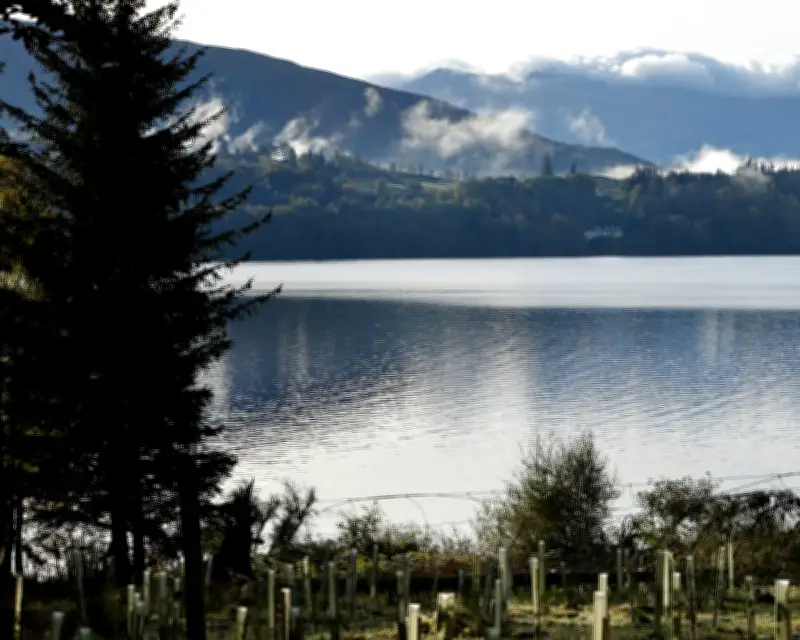
Ofgem has provisionally approved three pumped storage hydroelectric power station projects in northern Scotland, marking the first major hydropower developments in Great Britain in over 40 years. The projects are part of a list of 16 long-duration electricity storage schemes designed to reduce the country's reliance on energy imports and bolster renewable energy integration.
Three Scottish projects lead the way
The Loch Kemp project, developed by Statera Energy, will draw water from Loch Ness. SSE’s Coire Glas project plans to use water from Loch Lochy between Fort William and Inverness. Gilkes Energy’s Earba project will utilise Loch Leamhain and Loch Earba to create the UK’s largest pumped storage hydro facility. All three are expected to be operational by the early 2030s, becoming the first pumped hydro plants since Dinorwig in north Wales, which began operations in 1984.
How pumped storage works
Pumped storage hydropower is one of the oldest forms of energy storage, used in Britain for almost 150 years. When electricity is abundant, water is pumped from a lower reservoir to an elevated dam. During peak demand, the water is released to flow over turbines, generating electricity. Dinorwig, known as “electric mountain,” can power the equivalent of nearly 2 million households in seconds.
Government and regulator support
Energy minister Michael Shanks said: “Forty years after the country’s last pumped storage facility, this government is getting Britain building again. The lesson from the conflict in Iran is clear: Britain cannot afford to remain at the mercy of volatile fossil fuel markets and leave families exposed to the next price shock.”
Akshay Kaul, director general for infrastructure at Ofgem, added: “It’s fantastic to see such a wide range of technologies coming forward. This takes us a step closer towards the long-duration energy storage we need in a clean power system to maintain secure supply during periods of cold, hot, still or cloudy weather when solar or wind power output may be low.”
Diverse storage technologies
The 16 provisionally approved projects include not only pumped hydro but also lithium-ion batteries, compressed air energy storage, and flow batteries. TeesCAES plans a compressed air energy storage scheme in Tees, using surplus electricity to compress air to about 70 bar pressure, then releasing it to spin turbines. Invinity Energy Systems will deploy a vanadium redox flow battery, which uses liquid electrolytes to store and release electricity.
Balancing renewable energy
The projects, located across England, Scotland, and Wales, aim to balance electricity supply and demand, which fluctuates due to the unpredictability of wind and solar power. By providing storage for eight hours or more, they help ensure secure supply during adverse weather conditions.



