Pakistan's Grassroots Solar Revolution
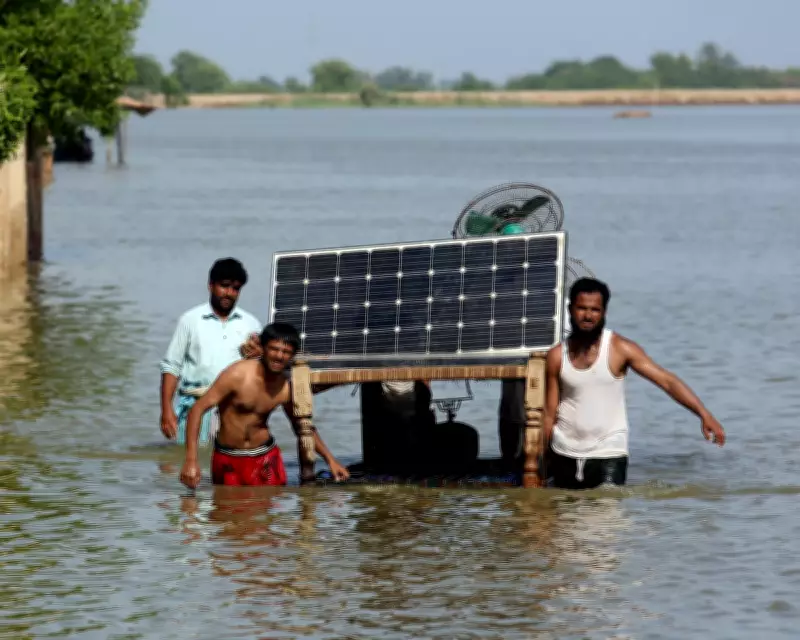
In September 2022, men in Jaffarabad, Pakistan, salvaged belongings including a solar panel from their flooded home. This image symbolizes a broader national shift. Following Russia's full-scale invasion of Ukraine in 2022, liquefied natural gas (LNG) prices soared to record highs, triggering widespread power cuts across Pakistan. An intense heatwave and gas shortages exacerbated the crisis, leaving millions without reliable electricity.
The Rise of Rooftop Solar
Citizens soon discovered a viable alternative. Plummeting costs for solar panels, combined with generous government incentives for feeding excess power back to the grid, made rooftop solar an increasingly attractive investment. "People who could afford it realized that a one-time investment in rooftop solar was much cheaper and more cost-effective in the long run than paying high bills for an unreliable grid," explained Nabiya Imran, an associate at the Pakistani thinktank Renewables First.
This realization sparked a stunning surge in solar deployment. Aerial photographs of Lahore vividly illustrate the scale of this bottom-up, people-led energy transformation. Nationwide data reveals the share of electricity generated by solar jumped fivefold between December 2021 and December 2025. Renewables First estimates solar contributed approximately one-fifth of the country's grid-supplied electricity by 2024.
Insulation from Global Disruption
As conflict in Iran chokes off the vital Strait of Hormuz oil and gas trade route, energy analysts highlight Pakistan's solar expansion as a critical buffer. "The expansion of distributed solar has provided a cushioning effect against impacts which could have been much worse," said Imran. This booming solar generation has significantly reduced daytime demand for gas-fired electricity. Prior to the Iran conflict, Pakistan was already diverting cargoes from a long-term Qatar supply agreement due to falling gas demand.
Analysis shows Pakistan's solar surge helped avoid roughly $12 billion in oil and gas imports by February 2026. "Distributed solar has been a blessing for Pakistan, preventing immediate supply crunches," stated Haneea Isaad, an energy finance specialist at the Institute for Energy Economics and Financial Analysis (IEEFA). "Pakistan serves as a great case study for how renewables can hedge against fossil fuel dependence."
Persistent Economic Vulnerabilities
Despite this progress, Pakistan remains highly vulnerable. Over 90% of its LNG and oil imports transit the Strait of Hormuz. In 2024 alone, the nation spent more than 10% of its GDP on fossil fuel imports. Soaring oil prices have increased pump prices by about 20%, crippling the transport sector and fueling inflation. LNG market disruptions have also impacted the fertilizer industry.
In response, the government recently mandated school closures and remote work for half of public sector employees to curb fuel consumption. Power Minister Awais Leghari acknowledged the "people-led solar revolution" alongside investments in nuclear, hydropower, and domestic coal have reduced vulnerability. However, he warned a prolonged crisis could still cause summer shortages when air conditioning demand peaks.
The Path Forward for Energy Security
Experts advocate for doubling down on the energy transition. "If anything, the crisis will probably motivate more people to adopt rooftop solar and battery storage," Imran noted. "For Pakistan, the shift to renewables is no longer just about climate—it's a matter of energy security." Key steps include rolling out electric vehicles, modernizing the grid, and deploying batteries to store excess solar power for evening use.
The regional context underscores the urgency. The Middle East conflict has exposed Asia to higher prices and shortages, with 80% of Hormuz-transited oil destined for the continent. Countries like Bangladesh, Myanmar, and the Philippines have implemented fuel rationing. In India, fears of cooking gas shortages are affecting food services.
A Broader Asian Imperative
Ramnath Iyer, Asia sustainable finance lead at IEEFA, argued many problems "could have been avoided if Asian countries had switched faster to renewables." Instead, the region bet heavily on LNG infrastructure, with India, Bangladesh, and Pakistan planning or building $107 billion in terminals and pipelines.
Yet, solar energy with storage is now economically competitive with gas in most Asian markets. "Asian economies have every incentive to accelerate the move towards renewables. It's a win-win for availability and cost," Iyer emphasized. Examples abound: Vietnam's solar expansion may cut fossil import costs, while Thailand's solar and battery targets could save $1.8 billion by 2037. In the Philippines, where pump prices rose 40%, solar-plus-storage offers relief for areas reliant on expensive diesel power.
Dinita Setyawati, a senior analyst at Ember, concluded Asian nations are at "a really important juncture." "Renewables, grids, and storage could be the holy trinity solutions for the region's energy dilemma." Pakistan's experience demonstrates the tangible security and economic benefits of a people-powered energy transition.