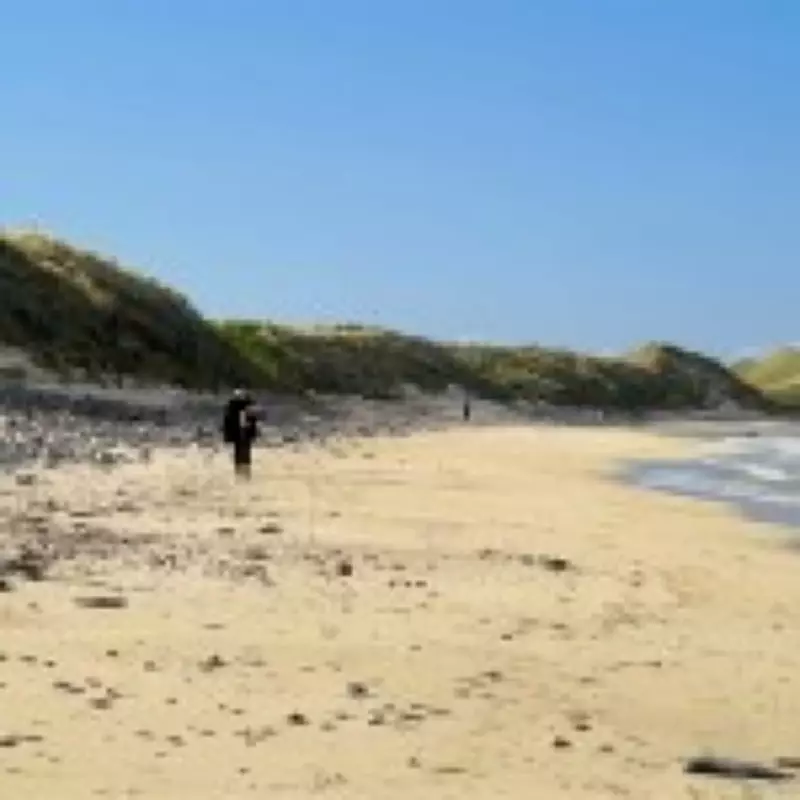
Millions of swarming black flies have descended on the north of Scotland in a vast mating frenzy, just weeks after the same area was hit by an invasion of heather beetles. Huge seething masses of insects were found washed up along the shoreline at Reiss beach, in Caithness, over the weekend, with millions more still alive and swarming inland.
The invasion appears to involve two species – fever flies (Dilophus febrilis) and the larger St Mark’s flies (Bibio marci), easily recognised by their long dangling legs. Experts say the extraordinary numbers are linked to a seasonal mass emergence during the insects’ mating cycle.
Local weather pundit Keith Banks suggests that a perfect storm of climate anomalies has driven the surge. The meteorological winter of 2025/26 in Wick was 0.93C higher than the long-term average, creating a mild and moist environment that favoured the survival of larvae. ‘Those anomalies during the winter months, coupled with the fact the first two months of spring 2026 have been significantly milder than average, will have created optimal conditions for breeding,’ Mr Banks said. He added that a wet April followed by strong May sunshine encouraged pupae to reach maturation more quickly than usual. ‘It is reasonable to suggest that the protracted, and generally mild and moist conditions we’ve experienced in Caithness during much of last winter, and during this spring, have provided the ideal conditions for the emergence of large numbers of many insects.’

David Glass, secretary of the Caithness Biodiversity Group, noted that while numbers are high, they haven’t yet reached the ‘biblical’ levels seen during a similar event in 2019. ‘They sometimes appear in large swarms – known as synchronous emergence, which is not unusual,’ Mr Glass said. ‘Also known as St Mark’s fly, appearing around St Mark’s Day (April 25), but as usual, our calendar up here is later.’
While some mixed the swarms up with the invasion of heather beetles that recently plagued the county, others correctly identified the bibionid flies. The flies, often dubbed ‘love bugs’ because they mate on the wing or wherever they land, have been a significant nuisance for locals. Ann Pemberton reported ‘loads near the Wick harbour,’ while Sheona Cormack found her garden in the town swamped. Sightings were reported from Thurso beach by Siobhan Lowe to Murkle beach, with one anonymous resident describing them as ‘not nice beasties’.
Many people found their weekend chores ruined. Sabrina Taylor, Noreen Mackenzie, and Sj Paterson all complained that their washing on the line was completely covered in the shiny black insects. Andrew Carter highlighted a specific problem for motorists: ‘Anyone with a white car will find that their paintwork is proving particularly attractive. It’s a difficult job washing the bodywork when they’re constantly landing on it to copulate.’ Meanwhile, Sarah Garden jokingly said: ‘Are these the second horseflies of the apocalypse?’
Despite the ‘plague’ status given by frustrated homeowners, the invasion is an ecological boon, says Mr Banks. The ‘cornucopia of protein’ provided by the swarm is essential for passerine songbirds currently feeding hungry broods. Chaffinches, goldfinches, starlings, and song thrushes, alongside swallows and house martins, are expected to benefit from the wealth of insects. This ‘glut’ of food is particularly vital following years where dry springs led to declines in insect life and bird numbers.
This is not the first time Caithness has been blanketed by bibionids. In May 2019, fever flies caused similar havoc, plastering windscreens and garage doors across the county. Going back further to May 30, 2001, the Caithness Courier reported a ‘black oil slick’ off the east coast that was 100 yards long; it turned out to be trillions of flies washed out to sea. For those struggling to clear the ‘love bugs’ from their property, local resident Anne Campbell offers a practical solution: ‘Get a spray bottle with a mix of water, vinegar and washing detergent. Spray all over the windows… they literally drop like flies.’