
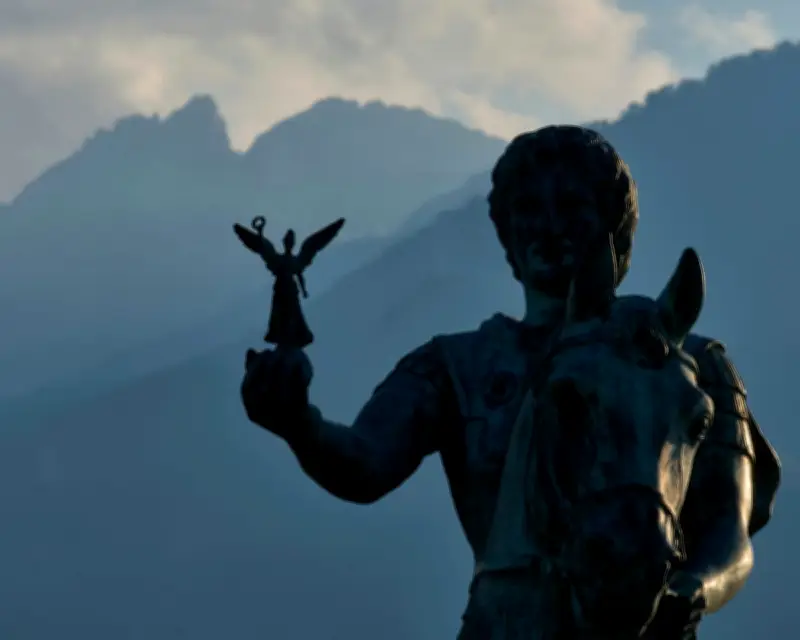
After a 12-year campaign, Mount Olympus, the legendary abode of the ancient Greek gods, has been added to the Unesco World Heritage list. The decision was announced at a Unesco committee meeting in Busan, South Korea, on Sunday, sparking joy in Greece. The mountain, rising 2,918 meters from near sea level, was recognized as a mixed site for its cultural and natural significance.
Greece Celebrates Unesco Designation
Mount Olympus, immortalized as the seat of Zeus and the 12 Olympian deities, had been on Unesco's tentative list since 2014. The designation also includes the D-day landing beaches in Normandy, France, and the ancient Japanese capitals of Asuka and Fujiwara. South Sudan's Boma-Badingilo landscape, hosting one of the world's largest land mammal migrations, earned its first Unesco listing.
Georgios Koumoutsakos, head of Greece's Unesco delegation in Busan, hailed the decision. "It reaffirms our unwavering commitment to safeguarding Mount Olympus for the benefit of present and future generations," he said. "As Greek mythology wisely reminds us, it is always best to remain on good terms with the gods."
Environmental and Preservation Commitments
Evangelos Geroliolios, mayor of the region, stated before the announcement that the site's induction would place greater responsibility on protecting the local environment, especially its extraordinary biodiversity. Inscribed monuments gain legal protection under an international treaty overseen by Unesco, which also provides advice and financial support.
D-Day Beaches Join World Heritage List
France's bid for the D-day beaches, including Omaha, Utah, Sword, Gold, and Juno, as well as Pointe du Hoc, succeeded after years of effort. The beaches witnessed the largest amphibious operation in history on June 6, 1944, when over 150,000 Allied troops landed, with 4,000 soldiers dying. The operation was decisive in liberating Europe from Nazi occupation.
Ahlem Gharbi, France's permanent delegate to Unesco, said the designation carries particular weight amid international tensions. Hervé Morin, president of the Normandy region, said inclusion represents "immense recognition" for the soldiers who sacrificed to defeat Nazism. "This decision places a responsibility upon us. It compels us to preserve this site, to protect it, to cherish it even more, and to promote its value," he added.
Preservation Challenges and Controversies
The International Council on Monuments and Sites had warned of threats to the Normandy sites from tourism, climate change, rising sea levels, and nearby windfarm development, calling for stronger monitoring. The coastline retains extensive remnants of the landings, including German bunkers, gun positions, sunken vessels, and Allied installations.
Unesco stated that the beaches form an "exceptional cultural landscape shaped both by the events of 1944 and by their enduring remembrance." Both Mount Olympus and the D-day beaches have seen record tourist numbers in recent years.
Unesco's inclusion of conflict-associated sites has sparked debate over whether "sites of memory" fit its mission to foster equality and peace. In 2023, three sites used by Cambodia's Khmer Rouge regime for torture and execution were inscribed.
Greek Relief After Unanimous Support
Greek officials expressed relief as the nomination won unanimous support, despite earlier fears of delays. Unesco's draft agenda had suggested the Mount Olympus file might be referred back for further details, but the decision was ultimately swift and positive.



