London's Litter Fines: A £500 Shock for a Cigarette Butt Sparks Outcry
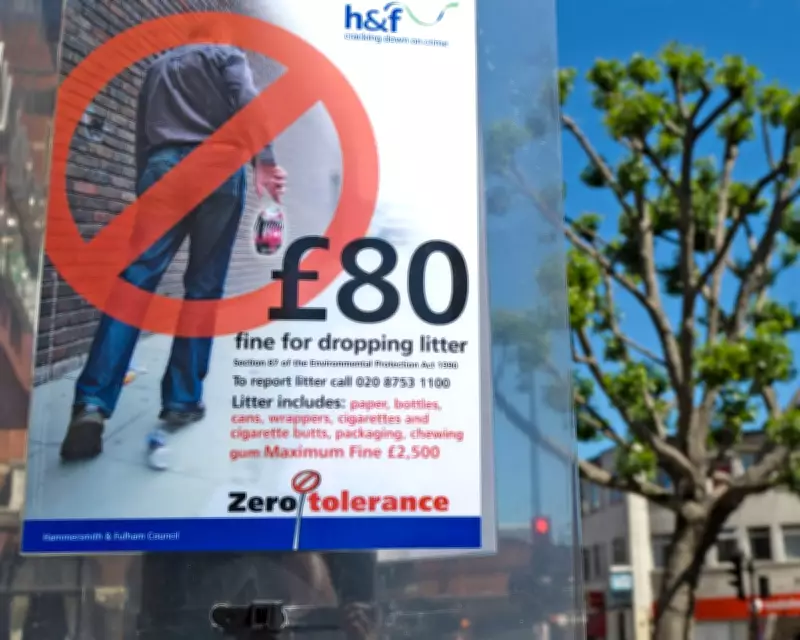
In London, a stark poster warns of an £80 fine for littering, with penalties potentially soaring to a maximum of £2,500. This warning has become a harsh reality for one resident, whose son faced a £500 fixed-penalty notice after dropping a cigarette butt in Southwark. According to the account, enforcement officers physically stopped him from picking it up and issued the fine promptly, under pressure to provide ID or face police involvement.
Disproportionate Penalties and Borough Disparities
The £500 fine stands out as excessive, especially when compared to typical penalties for more dangerous offences like speeding. Investigations reveal dramatic variations in litter fines across London boroughs. For instance, Barnet charges £100 for the same infraction, while just yards away in Enfield, on Cockfosters Road, the fine jumps to £500—a 400% increase. This inconsistency highlights a system that many argue is neither proportional nor fair, undermining public trust in local enforcement.
Government Guidance and Enforcement Gaps
While littering remains a national scourge and environmental hazard, recent government guidance to councils, now legally binding, emphasizes education and behavior change. It mandates that enforcement should be transparent, accountable, proportionate, and consistent. However, the £500 penalty for a minor first offence appears disproportionate, and the lack of uniformity across London breeds confusion and inequity.

Moreover, councils are required to publish their enforcement policies for public accountability. Yet, it has been discovered that only one London borough seemingly complies with this rule. Adding to concerns, many councils outsource enforcement to private companies, such as APCOA in Southwark—a firm familiar to drivers for parking fines. These contractors wield significant powers, issuing face-to-face penalties with a 50% reduction for prompt payment, which can pressure individuals into paying without recourse to challenge.
Responses from Authorities
When questioned, the Department for Environment, Food and Rural Affairs defended its stance, stating, "Litter louts must be stopped from spoiling our streets, which is why we have given local authorities clear guidance and powers to take action." It added that enforcement should be proportionate to target worst offenders. Southwark Council asserted that its contractor acted properly, citing resident concerns and adherence to national and local guidance. APCOA confirmed it followed standard procedures and does not retain proceeds from fines.
Challenges and Consumer Rights
Fixed-penalty notices can be challenged through the council, but failing that, court remains the only option, with risks of escalating costs. This system places a heavy burden on individuals, raising questions about fairness and transparency in consumer rights. As debates continue, the call for more consistent and reasonable enforcement grows louder, urging councils to align with government aims of education over excessive punishment.