
Historic Flooding Devastates Hawaii with Red Volcanic Mud and Billions in Damage
The worst flooding to strike Hawaii in two decades has unleashed catastrophic destruction across the islands, sweeping homes from their foundations, floating cars out of driveways, and coating interiors with thick, reddish volcanic mud. Authorities report hundreds of homes damaged, along with schools and a hospital, as residents face a grueling cleanup with losses expected to surpass $1 billion.
Residents Trapped and Communities Submerged
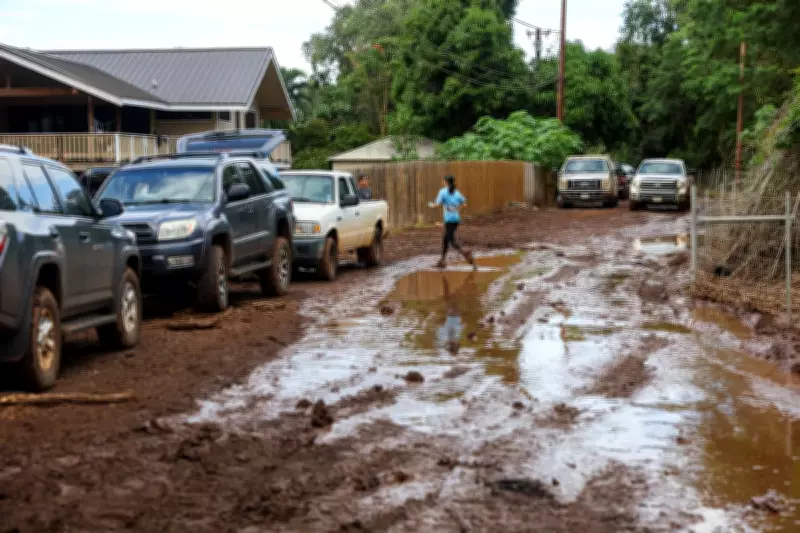
On Oahu's North Shore, the Otake Camp community in Waialua was devastated by flooding that left a young girl jumping over thick mud and water. Residents like Michael McEwan and his wife Heather Nakahara returned to their Waialua home to find kitchen counters covered in red silt, furniture piled in hallways, and mysterious tables lodged in their backyard.
The couple endured a harrowing eight-hour ordeal trapped in a bedroom closet with their two terriers and three parrots as rushing water surrounded their home. At daybreak on Friday, McEwan flagged down firefighters who tied a rope to a tree to guide them through narrow channels of flowing water to safety.
"It's full of iron, so it stains everything brownish-yellow," McEwan said of the volcanic mud that has permeated their home, likely leaving permanent reminders of the flooding.
Agricultural Damage and Economic Impact
Farms across Hawaii have reported staggering losses exceeding $9.4 million, according to surveys conducted by Agriculture Stewardship Hawaii and the Hawaii Farm Bureau. Oahu farmers alone sustained more than $2.7 million in crop damage, with few having federal crop insurance or any insurance coverage at all.
Hawaii Governor Josh Green declared this the state's most serious flooding event since 2004, when Manoa floods inundated homes and a University of Hawaii library. The governor warned that storm costs could top $1 billion, with state leaders seeking federal assistance for recovery efforts.
Weather Patterns and Climate Connections
Officials attribute the devastation to extreme rainfall volumes in short timeframes. Parts of Oahu received 8 to 12 inches (20 to 30cm) of rain, with Kaala, the island's highest peak, recording nearly 16 inches (40cm) late last week on top of 26.6 inches between March 10 and 16.
The deluges resulted from winter storm systems known as "Kona lows," featuring southerly or south-westerly winds that bring moisture-laden air. Experts note that the intensity and frequency of heavy rains in Hawaii have increased amid human-caused global warming, contributing to these extreme weather events.
Recovery Efforts and Community Support
As new downpours triggered fresh flooding on Oahu's south side Monday, North Shore residents began the intensive process of clearing thick mud layers from homes and streets. The National Weather Service reported showers and thunderstorms were expected to wane, but the Big Island remained under a flash flood watch.
Governor Green recommended donations to the Hawaii Community Foundation's Stronger Hawaii Fund, while the non-profit Hawaiian Council launched the Kako'o Oahu initiative to provide housing and other assistance to affected households.
From Glenn Duquez cleaning his mud-caked kitchen in Haleiwa to Philip Holman flushing mud from his truck's engine bay after complete submersion, residents across Hawaii now face the monumental task of rebuilding their lives and communities after nature's devastating onslaught.



