
Farmers Panic Over Fertilizer Shortages as Iran War Disrupts Global Supply Chains
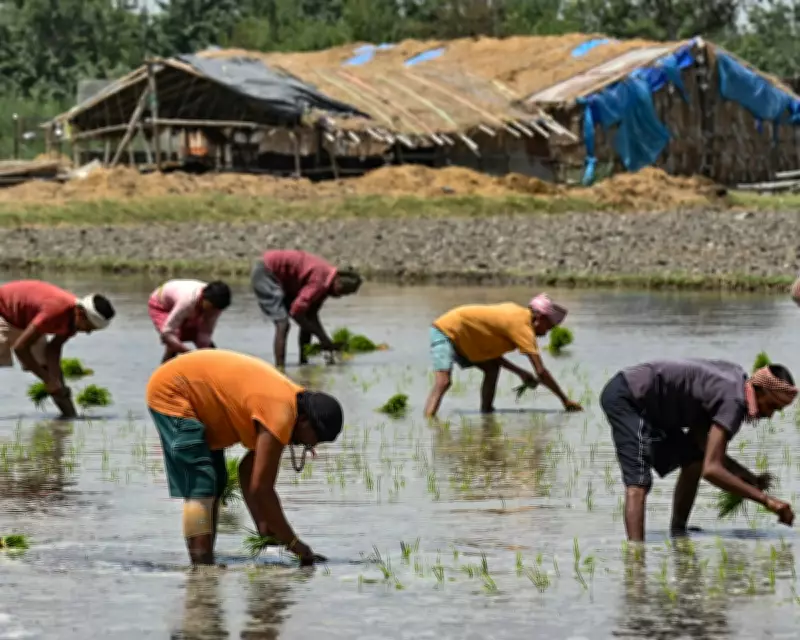
Gurvinder Singh, a 52-year-old farmer in Punjab, India's breadbasket region, never imagined a conflict in Iran would threaten his livelihood. Yet as he surveys his fields where he alternates between wheat and rice crops, anxiety grips him. "We are already struggling with profits," Singh said. "If we don't get fertilizers, there will be less yield. That will affect my entire family and the entire region."
Global Shipping Blockade Creates Agricultural Crisis
Iran's blockade of the Strait of Hormuz, implemented in retaliation for US and Israeli strikes over a month ago, has created a global supply chain crisis extending far beyond oil markets. While initial concerns focused on energy supplies, agricultural experts now warn of devastating consequences for global food security, particularly in South Asia.
The World Food Programme estimates that an additional 45 million people could face acute food insecurity if the conflict continues through June. This alarming projection stems from the critical role Gulf states play in fertilizer and natural gas exports, both essential components of modern agriculture.
India's Fertilizer Dependency Creates Vulnerability
India, the world's second-largest fertilizer consumer after China, uses more than 60 million tonnes annually. Most imports, including both finished products and raw materials, traditionally come from Gulf countries via the now-blockaded Strait of Hormuz. This dependency creates particular vulnerability as the kharif season approaches, when farmers typically begin procuring fertilizers for rice and cotton crops planted in June and July.
Devinder Sharma, an agricultural economist, explained the precarious situation: "Indian agriculture remains heavily dependent on chemical fertilizers. Any disruption quickly creates anxiety among farmers." Early signals already indicate tightening supplies and rising costs being passed directly to agricultural producers.
Urea Shortages Threaten Rice Production
Farmers express particular concern about urea, the nitrogen-based fertilizer central to Indian farming with annual consumption of 35-40 million tonnes. While much urea production occurs domestically, it relies heavily on imported natural gas already in tight supply. Gas supplies to fertilizer factories have reportedly been cut by 30%, creating production bottlenecks even before distribution challenges.
Prakash Limbuyya Swami, a fertilizer retailer in Karnataka with 35 years of experience, described unprecedented conditions: "I have not seen such panic. Farmers are stocking up in advance despite the narrow window before planting season."
Government Assurances Fail to Calm Farmer Fears
Despite official statements about adequate buffer stocks and diversified sourcing, anxiety persists throughout India's agricultural communities. Aparna S Sharma, a senior official in the department of fertilizers, insisted: "Currently, we have higher stocks compared to last year, indicating a healthy supply position."
Yet Tejveer Singh, a farmer from Ambala in Punjab, reported widespread hoarding: "Because of the panic, farmers around me have started hoarding fertilizers, despite their limited shelf life. Any shortage will affect our productivity. Farmers are already under stress due to rising costs."
Sri Lanka Faces Even Greater Vulnerability
The situation proves particularly haunting in Sri Lanka, where farmers remember the devastating 2019 economic crisis that left the country unable to import fertilizers. A UN report highlights Sri Lanka as one of the most vulnerable nations after Sudan if Gulf conflict continues disrupting fertilizer supplies.
P Amila, a farmer from Monaragala district, has decided against sowing next season's rice crop due to fears of escalating debt from fertilizer price increases. "This is the most volatile situation I have faced in 30 years of farming," he said. "I worry, what will people do when they don't have rice to buy?"
National Security Implications Emerge
Anuradha Tennakoon, chairman of the National Agrarian Unity in Sri Lanka, warned that the fertilizer crisis potentially exceeds the fuel crisis in severity. "The government and officials keep saying there is enough fertilizers. That is a big lie," Tennakoon stated. "If this yala season is affected, there is a serious food security issue. The disruption of food security poses a threat to national security."
In Polonnaruwa, farmer Ranjit Hulugalle reported fertilizer stocks already running low with prices nearly doubled. He described the situation as a "minefield" for both farmers and consumers, predicting: "We, as farmers, are going to face a massive crisis in a month. Then the country is going to face a food crisis."
Broader Agricultural Impacts Beyond Fertilizer
The crisis extends beyond fertilizer shortages alone. Farmers' ability to water, harvest, process, store, and transport crops faces additional threats from oil and diesel shortages and surging electricity prices. India's substantial investment in fertilizer subsidies—more than 1.8 trillion rupees ($22 billion) in 2023-24—underscores both the sector's importance and its sensitivity to global price shocks.
As procurement for the critical kharif season approaches, with its typical production of about 100 million tonnes of rice, the window for resolution narrows. Farmers like Gurvinder Singh continue their anxious vigil, praying for conflict resolution: "We are praying this war stops because it will not spare us either." The fate of millions facing potential food insecurity hangs in the balance as geopolitical conflicts create agricultural crises thousands of miles from the front lines.



