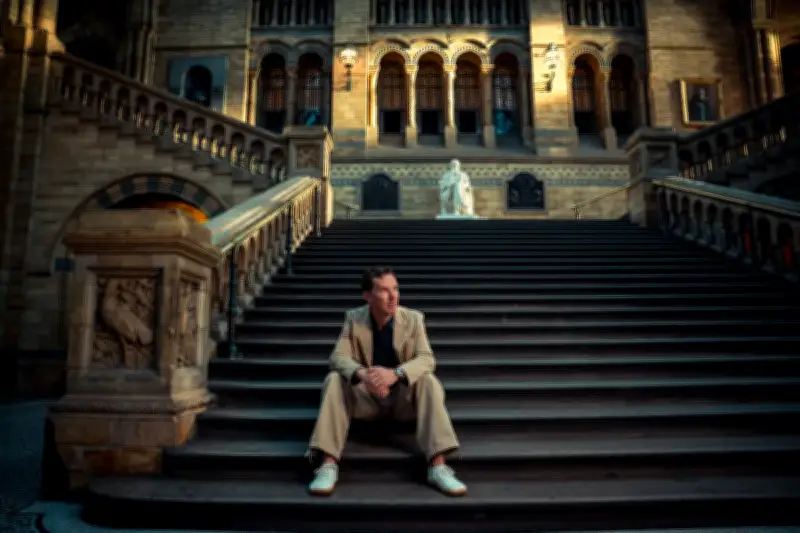
Benedict Cumberbatch's new documentary, 'How to Live on Earth', argues that living nature holds greater financial value than extracted resources, proposing a model where people can invest as shareholders in nature to fund its protection. The film, launching on YouTube this month, features experts from Alaska, the Amazon, and beyond, and aims to serve as a blueprint for humanity's future interaction with the planet.
A blueprint for healing the planet
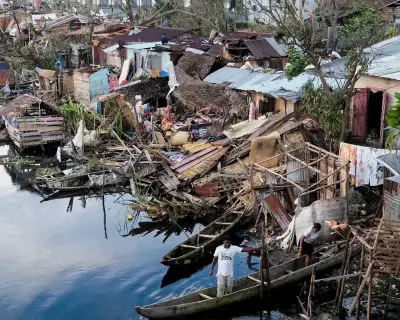
The documentary, directed by Jonnie Hughes, combines Cumberbatch's monologues from the Natural History Museum in London with short films showcasing activists, scientists, and chefs who are learning a 'new way to live on Earth'. Among the featured individuals are Indigenous activists protecting salmon from dams and Barack Obama's former White House chef experimenting with alternative proteins.
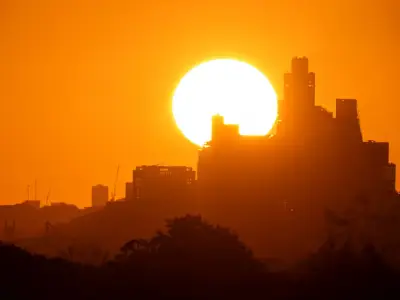
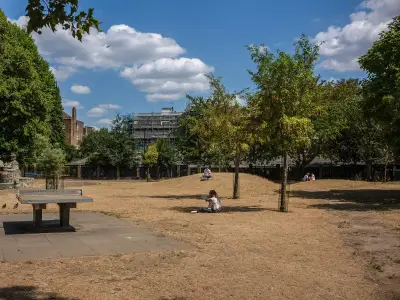
Cumberbatch, speaking from an air-conditioned hotel room in Soho during peak summer heat, acknowledged the irony of promoting an environmental film amid record-breaking temperatures. According to a report co-authored by the Met Office, there were 2,700 excess deaths in England and Wales due to the searing heat by midsummer. 'The irony is not lost on anyone,' he said. 'We're living in the results of climate breakdown so stepping outside is – literally – a call to action.'

Personal eco-journey and film industry challenges
The actor, who became vegan two decades ago, faced challenges during the filming of 'The Courier', where he played captured British spy Greville Wynne. The production required him to eat lean meat and avoid fibre for two weeks, causing his blood sugar to plummet and making him unwell. 'People were saying, 'You should think about eating a little bit of meat now, because your body doesn't really work under these conditions – you've lost so much weight,'' he recalled.
Now, Cumberbatch sources meat ethically, opting for venison due to the UK's deer overpopulation. He also works with the Green Rider movement, which pushes for contractual commitments to reduce pollution and emissions during film productions. 'We're working with Disney at the moment – their Avengers project in the UK. So yeah, it's scaling up – and everyone I speak to about it in my community is on board,' he said.
Monetising nature and challenging naysayers
Cumberbatch dismissed accusations of hypocrisy regarding personal environmental choices, noting that the fashion industry pollutes more than aviation, and the food industry even more. 'We just waste our energy if we're naysaying and calling people hypocrites,' he said.
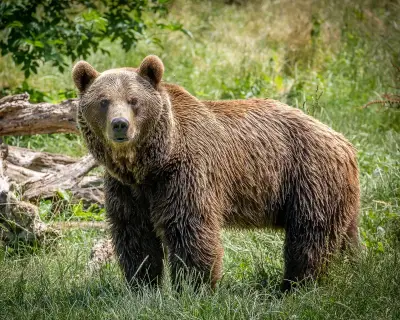
On the documentary's central thesis, he stated: 'Nature that's alive is actually far more valuable to us than dead nature. So an elephant's tusk is not worth as much as the elephant alive, in terms of what it brings to the savannah, to make the savannah work as an ecosystem. It's how you create a new financial model whereby people can invest as shareholders in nature and that nature – which has done all this work for us for free – can actually be monetised to be protected, actually get paid.'
The film also highlights the work of Dan O'Neill, a biologist studying big cats in rainforests. O'Neill noted that the YouTube release 'democratises our message for the entire world. Indigenous communities will see themselves represented.' He also reflected on the paradox of phone connectivity, saying, 'The ability to communicate with my family even from remote parts of the world is powerful. But the second you get your phone, you realise you don't want it.'
Local nature and peaceful protest
Cumberbatch, who lives in Hampstead, London, stays connected to nature through swimming in the heath ponds, walking his dog, cycling, and using public transport. O'Neill, based in Walthamstow, frequents the Walthamstow wetlands, which he described as 'one of the most important in Europe'.

The actor also expressed dismay at recent government crackdowns on climate protests, stating, 'We should have the right in a democracy to peaceful action, even if it is direct action.' He remains optimistic about humanity's ability to save the planet, saying, 'Hopefully, what we're seeing now in this last grab for the extractive industries is that we actually don't want to foster that, nor all the other nasty things of populism and nationalism.' The documentary, 'How to Live on Earth', streams on YouTube from 20 September.