
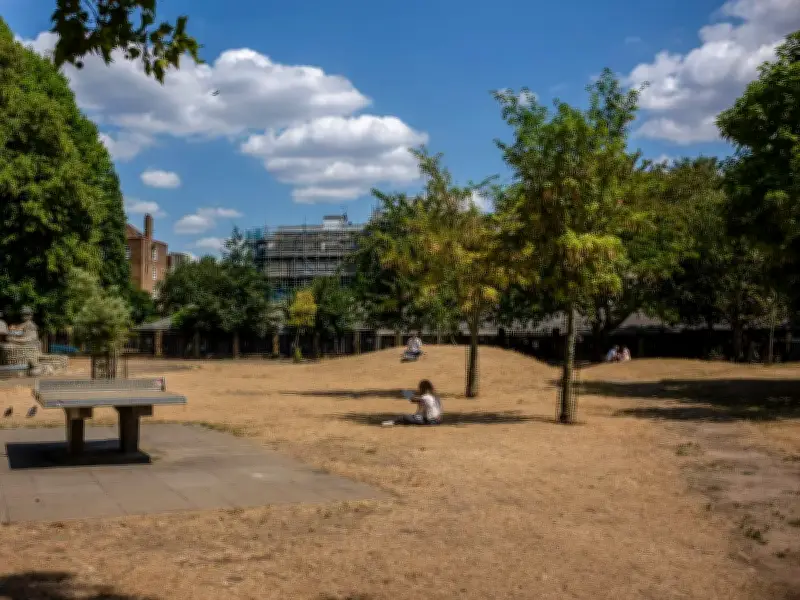
London and much of the UK remain in a state of drought despite the end of heatwaves and the return of rain clouds. Recent downpours have drenched the capital, but water shortages persist, and Thames Water’s hosepipe ban remains in force.
The drought continues because of the exceptionally hot and dry summer, which saw six heatwaves and record-breaking temperatures. The Environment Agency has said the country will remain in drought until there is ‘sustained rainfall’ nationwide.
Why recent rain has not ended the drought
Public water supply depends on rainfall, and London receives less rain than Sydney and Barcelona. Consistent rainfall is essential to maintain water levels, and winter rain refills the natural underground aquifers that feed the rivers. Summer rain is largely taken up by plants and lost through evaporation, leaving very little to recharge groundwater sources.
Thames Water told MyLondon there isn’t a set reservoir storage percentage at which a drought is declared. Reservoir storage is just one of the factors the Environment Agency considers when deciding whether to declare a drought in a given area.
September drought status across England
Ten areas of England were in drought status at the start of September: East Anglia; Hertfordshire and North London; Thames; Devon, Cornwall and Isles of Scilly; West Midlands; Wessex; Kent and South London; Solent and South Downs; East Midlands; Lincolnshire and Northamptonshire. The remaining areas were in “prolonged dry weather status”, according to the Environment Agency.
Rainfall across August reached 78 per cent of the long-term average nationally, although south-east England received only 54 per cent. The Met Office said autumn had marked a “significant change of weather type from summer, which was dominated by dry conditions”. It added that the first week of autumn had seen 18mm of rain fall across the UK, with more heavy rain forecast this week, especially in western areas.
Where London’s water is held
Around 80 per cent of London’s water comes from the River Thames and the River Lee, which is stored in reservoirs in south-west London and the Lee Valley. The rest comes from groundwater, and Thames Water also has a desalination plant in London, in case of drought.
A Thames Water spokesperson said: “The recent rain has been welcome but has had only a limited impact following many months of exceptionally hot and dry weather across our region. Although we want to lift the hosepipe ban as soon as we can, a few showers will not be enough.
“We need sustained, significant rainfall over months to help rivers recover and groundwater levels recharge before reservoir levels can fully recover. We continue to monitor conditions closely and are grateful to customers for continuing to use water wisely. Their support remains essential as we manage water resources following what the Met Office has declared to be the warmest summer on record.”



