
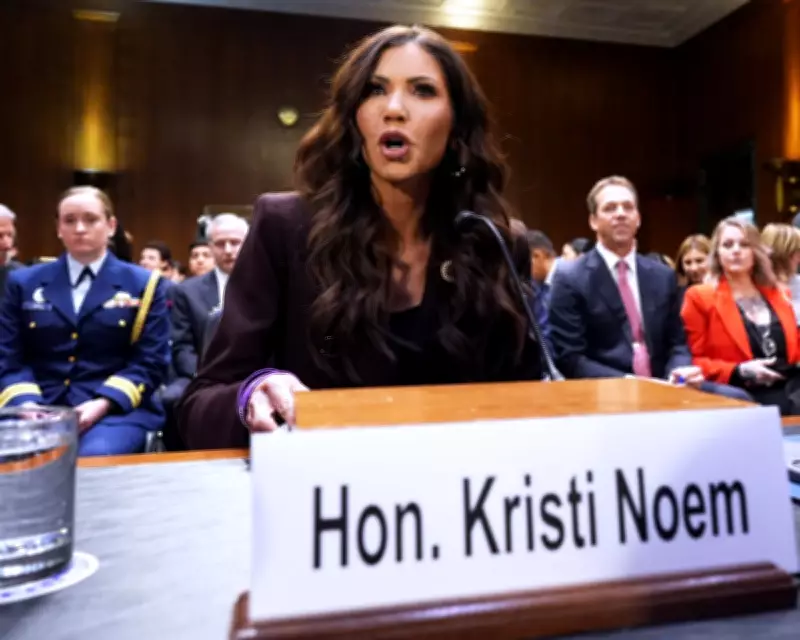
US Disaster Response Workers Decry Kristi Noem's Legacy as Destructive Force
In a stark assessment, disaster response workers across the United States have characterized the legacy of former South Dakota Governor Kristi Noem as a singularly destructive force, pointing to profound and lasting impacts on environmental and social systems. These frontline responders, who have dealt with the aftermath of natural and man-made crises, argue that Noem's policies during her tenure have exacerbated vulnerabilities and hindered recovery efforts, leaving communities more exposed to future disasters.
Long-Term Environmental and Social Fallout
According to interviews and reports from workers in the field, Noem's approach to governance prioritized short-term economic gains over sustainable practices, leading to significant environmental degradation. They cite examples such as relaxed regulations on industrial pollution, reduced funding for conservation projects, and a dismissal of climate science, which they claim have increased the frequency and severity of disasters like floods, wildfires, and storms. Socially, her policies are blamed for widening inequalities, as marginalized groups often bear the brunt of these environmental challenges without adequate support systems.
Impact on Disaster Preparedness and Response
The workers emphasize that Noem's legacy has directly compromised disaster preparedness and response capabilities. They note that budget cuts to emergency services, a lack of investment in resilient infrastructure, and a politicized stance on federal aid have slowed recovery times and increased costs. For instance, during major flooding events in the Midwest, responders faced shortages of equipment and personnel, attributing this to Noem's austerity measures. This has not only endangered lives but also strained the morale and effectiveness of response teams, who feel undervalued and overburdened.
Broader Political and Policy Implications
Beyond immediate disaster scenarios, the criticism extends to Noem's broader political influence, which workers say has set a dangerous precedent for other states. Her emphasis on deregulation and skepticism toward environmental protections has inspired similar policies elsewhere, potentially amplifying national risks. The workers call for a reevaluation of such approaches, advocating for policies that integrate scientific evidence, community input, and long-term planning to build more resilient societies.
Moving Forward: Lessons and Recommendations
In light of these concerns, disaster response workers propose several measures to mitigate the damage and prevent future crises. These include:
- Reinstating and strengthening environmental regulations to reduce pollution and protect natural resources.
- Increasing funding for emergency services and infrastructure to enhance preparedness and response efficiency.
- Promoting climate adaptation strategies that address rising threats from extreme weather events.
- Fostering greater collaboration between federal, state, and local agencies to ensure coordinated disaster management.
They stress that learning from Noem's legacy is crucial to avoid repeating mistakes and to safeguard communities against an increasingly volatile environment.



