The Environmental Cost of Toronto's Snow Mountains
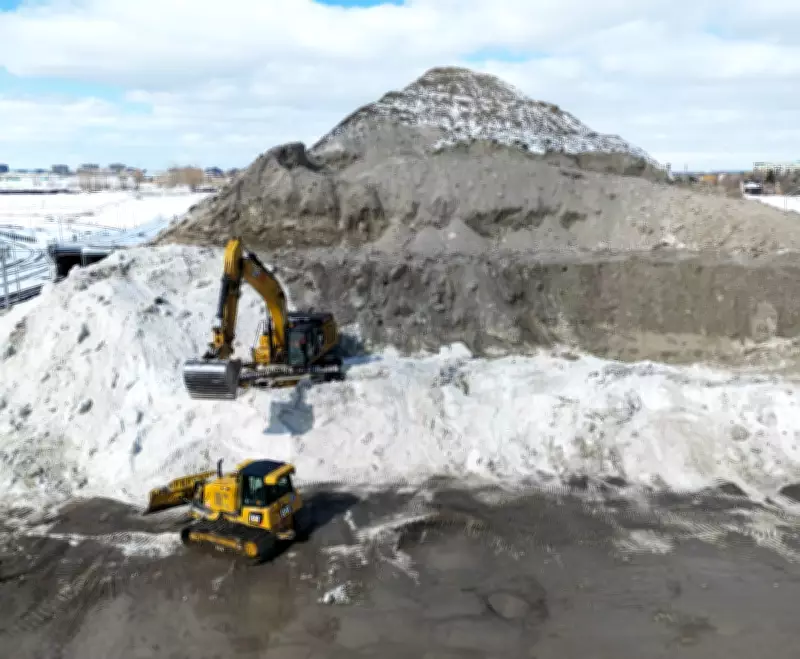
While natural mountains form over millions of years, Toronto's newest mountainous formations have emerged in mere days. These towering structures, reaching heights of up to 100 feet—equivalent to a ten-story building—are not composed of limestone or granite but rather represent massive accumulations of snow mixed with a hazardous blend of road salt, antifreeze, oil, discarded coffee cups, and lost keys. These artificial peaks serve as the final repository for the winter storms that have recently battered the city, yet they present a formidable environmental threat that cities must urgently address.
Unprecedented Winter Storms and Snow Removal Efforts
In late January, Toronto experienced what many meteorologists described as the heaviest single-day snowfall in the city's recorded history. Certain areas received nearly 23 inches of snow, driven by a convergence of powerful weather systems. By mid-February, municipal crews had already cleared an astonishing 264,000 tonnes of snow from 1,100 kilometers of roads, sidewalks, and bicycle lanes. Similarly, New York City faced a comparable storm at February's end, with some regions accumulating over 25 inches of snow during a two-day event accompanied by hurricane-force winds.
Major urban centers that endure harsh winters have long confronted the practical necessity of removing snow from streets and pedestrian pathways. The standard solution involves transporting snow—sometimes continuously for weeks—to designated storage facilities located on the urban periphery. Toronto currently maintains six such snow mountains strategically dispersed throughout the city. Most locations remain undisclosed to prevent illegal dumping, but one particularly visible site occupies two acres in the northwestern outskirts, visible to highway travelers, with a capacity to hold 144,000 cubic meters of snow.
The Operations Behind Snow Management
The snow storage facility resembles an Italian marble quarry, where yellow excavators work in synchronized patterns against the ashen snow. Plumes of steam rise from industrial melters—devices roughly the size and shape of shipping containers—that gradually reduce the mountain's volume over time. During severe weather events, site operators work extended shifts, with machinery operating continuously around the clock to manage the accumulating snow.
"There's an undeniable need to remove snow to minimize risks on roads and sidewalks, particularly from a public safety standpoint," explained Donald Jackson, a professor of ecology at the University of Toronto. "However, the challenge lies in balancing this necessity against the ultimate environmental impact on aquatic ecosystems."
The Pervasive Threat of Road Salt Contamination
Toronto has invested over one billion Canadian dollars during the past decade to successfully renaturalize the mouth of the Don River, restoring its natural flood mitigation capabilities and reviving a riparian ecosystem once considered beyond recovery. The city employs various methods to prevent contaminants like automotive oil from entering water systems, but road salt remains a persistent adversary that bypasses most stormwater treatment processes.
This winter season alone, Toronto has utilized more than 130,000 tonnes of salt, with local governments confronting shortages despite the world's largest salt mine located less than 150 miles west of the city. "We recognize that municipalities are attempting to reduce their dependence on salt, but it remains effective," Jackson noted. "While we have approximate data on municipal usage, we lack information about quantities applied to private driveways and commercial parking lots."
The rock salt used on roadways—sodium chloride—shares chemical composition with table salt but presents distinct environmental and health risks. Elevated chloride concentrations prove toxic to freshwater fish populations. Recent research conducted by Jackson and doctoral researcher Lauren Lawson revealed chloride levels sufficiently high to be lethal to most aquatic species at 30 percent of tested sites, with virtually all locations exceeding federal environmental guidelines.
Broader Environmental and Health Implications
In regions where residents rely on wells for drinking water, sodium levels gradually increase as salt permeates groundwater systems. The environmental writer John McPhee once observed that mountains' composition differs from what created them, and what created them differs from what will ultimately destroy them. This principle finds disturbing manifestation in Toronto's snow mountains, where recent thaws have eroded substantial portions, discharging vast quantities of salt into nearby waterways.
"We've documented locations where salt concentrations reach ten to one hundred times background levels," Jackson reported. "In some instances, water salinity exceeds even seawater concentrations."
Climate Change and Future Challenges
Environmental experts warn that while climate change will generally elevate temperatures, it will also generate increasingly severe winter storms similar to those that recently paralyzed infrastructure in Toronto and New York. These intensified weather events will necessitate greater salt application, creating persistent environmental contamination that may endure for generations.
"Current trends indicate a troubling trajectory," Jackson concluded. "We're observing rising salt concentrations in rivers and lakes with no indication this pattern will cease. Even if we halted all salt application immediately, it would require years to decades for these compounds to fully dissipate from soils and groundwater systems."
The snow mountains of Toronto stand as both engineering marvels and environmental warnings, embodying the complex trade-offs urban centers face between public safety and ecological preservation in an era of changing climate patterns.