
Sydney Summers Lengthen Dramatically: Climate Study Reveals 15-Day Increase Per Decade
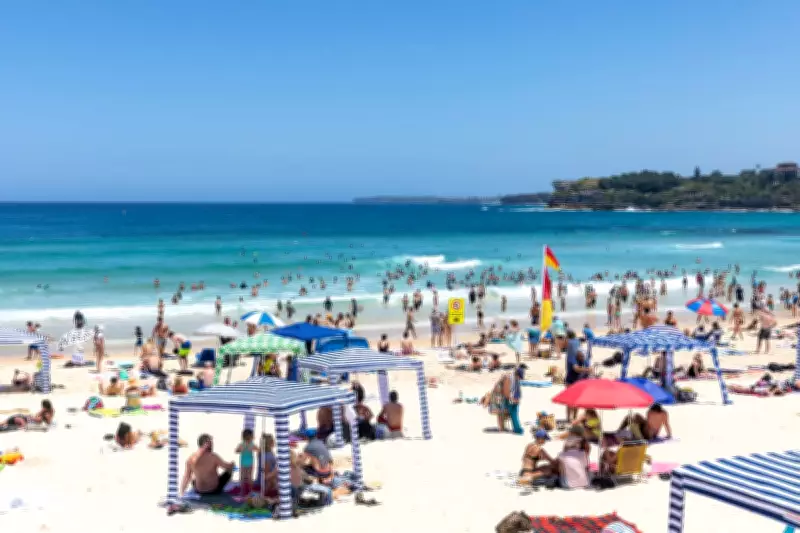
New scientific research has confirmed what many Sydney residents have long suspected: summers in Australia's largest city are becoming significantly longer and more intense. A comprehensive study published in the journal Environmental Research Letters reveals that summer conditions in Sydney are expanding at an alarming rate of approximately 15 days per decade, representing two-and-a-half times the global average increase.
Global Analysis of Seasonal Shifts
The research team, led by PhD candidate Ted Scott from the University of British Columbia, analyzed temperature trends across ten major global cities to understand how climate change is altering seasonal patterns. Their methodology examined the stretch of days each year when temperatures exceeded historically typical thresholds for each location during the warmest months, using 1961-1990 as the baseline period.
The findings paint a concerning picture of accelerating seasonal disruption worldwide. On average, summer conditions across the studied cities are arriving earlier and persisting longer by approximately six days per decade. However, Sydney's rate of change stands out dramatically from this global pattern.
Sydney's Accelerating Summer Expansion
For Sydney, where researchers defined summer conditions as temperatures above 21°C, the data reveals a startling transformation. During the 1961-1970 period, Sydney's summer typically spanned from January 6th to March 9th—approximately 65 days. By the most recent analyzed decade (2014-2023), this summer period had expanded dramatically to run from November 27th to March 28th, lasting 125 to 130 days.
"Recent summers in Sydney are much closer to 125 to 130 days long whereas that time in the '60s was half as long," explained Scott. "The transitions between seasons are becoming much more abrupt. It feels like we had spring weather and then suddenly, boom, it's completely warm."
Comparative Global Patterns
The study placed Sydney's dramatic changes in global context. Minneapolis, Minnesota showed a nine-day per decade increase in summer length, while Toronto added just over eight days per decade. European capitals Paris and Reykjavik both demonstrated increases of approximately 7.2 days per decade.
"People's perceptions of what was happening to the seasons match what the data is telling us," Scott noted, emphasizing that these changes have profound implications for numerous aspects of society including school calendars, agricultural planning, and sporting seasons.
Scientific Validation and Concerns
Dr. Andrew Watkins, an adjunct professor at Monash University's School of Earth, Atmosphere and Environment and a councillor with Australia's Climate Council, cautioned that the research relied on globally aggregated datasets rather than locally developed meteorological data. However, he affirmed that the overall conclusions align with scientific consensus.
"It doesn't change the story, which is absolutely right and is what we all, as scientists, have seen: summers are getting longer, winters are getting shorter," Watkins stated. He emphasized that the Sydney results likely represent the broader metropolitan region, including western Sydney areas known for increasingly extreme temperatures.
Professor Sarah Perkins-Kirkpatrick of the Australian National University noted that "the uptick in Sydney summers is not surprising" given observed climate changes in recent decades, while suggesting that verification with local observation products would strengthen the specific findings.
Broader Climate Implications
The researchers and independent experts agree that these seasonal shifts represent clear manifestations of human-induced climate change. "This is exactly what we expect with climate change," Watkins emphasized. "We need to adapt for what's coming and mitigate and reduce fossil fuel usage."
The lengthening summer periods carry significant consequences beyond mere temperature changes. Extended warm seasons contribute to longer fire danger periods, increased frequency and intensity of heatwaves, greater strain on energy systems, and heightened public health risks—particularly for vulnerable populations.
The study underscores the urgent need for both adaptation strategies to cope with changing seasonal patterns and accelerated mitigation efforts to address the root causes of climate change. As global temperatures continue to rise, the research suggests that cities worldwide will need to prepare for increasingly disrupted seasonal cycles with far-reaching impacts on ecosystems, economies, and daily life.



