
Lebanon Condemns Israel Over Alleged Cancer-Linked Herbicide Spraying
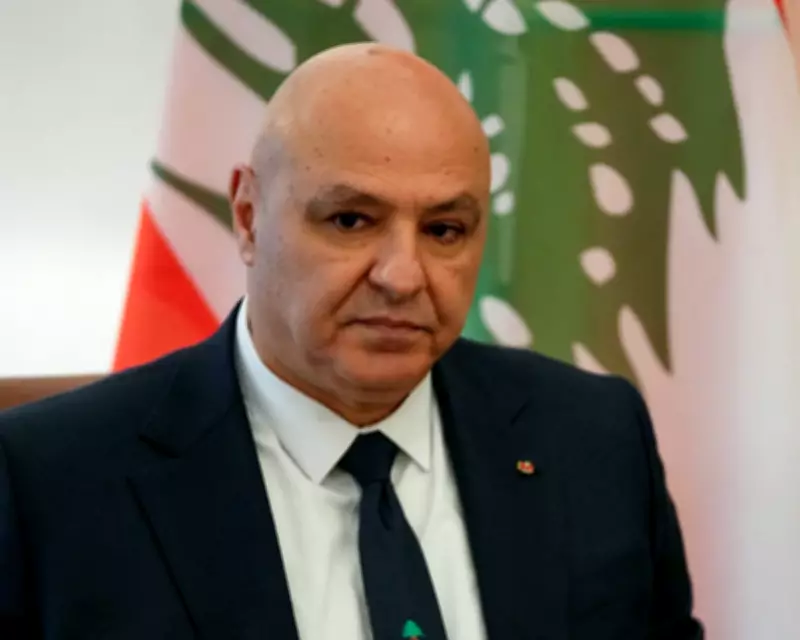
Lebanon has formally accused Israel of conducting an aerial spraying operation that released a herbicide linked to cancer over agricultural land in the country's southern regions. President Joseph Aoun has condemned the action as "an environmental and health crime" and a clear violation of Lebanese sovereignty, vowing to pursue "all necessary legal and diplomatic measures to confront this aggression."
Details of the Alleged Chemical Attack
The incident is reported to have occurred on Sunday morning, with UN peacekeepers stating they received warnings from the Israeli military to remain under cover during what was described as an aerial operation to disperse a "non-toxic chemical substance." However, video evidence captured light aircraft extensively spraying agricultural areas, and subsequent laboratory analysis by Lebanese authorities identified the substance as glyphosate.
Glyphosate is one of the world's most widely used herbicides, but in 2015, the World Health Organization classified it as "probably carcinogenic to humans." While commonly applied to crops before harvest for drying purposes, studies indicate that glyphosate-based herbicides can disrupt various organs and biochemical pathways in mammals.
Severe Environmental and Agricultural Impact
In a joint statement, Lebanon's ministries of agriculture and environment revealed that samples from the affected areas showed glyphosate concentrations 20 to 30 times higher than normal application levels. They warned that this would:
- Cause significant damage to vegetation in targeted zones
- Directly impact agricultural production and soil fertility
- Disrupt the ecological balance
- Threaten food security and farmers' livelihoods
- Pose potential health and environmental risks to water, soil, and the food chain
The ministries emphasised that "the spraying of chemicals from military aircraft over Lebanese territory constitutes a serious act of aggression" with far-reaching consequences.
Pattern of Environmental Warfare Allegations
This latest accusation comes as southern Lebanon continues to recover from ecological damage sustained during intense military campaigns. Previous conflicts have left the region scarred by:
- The use of white phosphorus and incendiary bombs that burned farmland, olive groves, and forests
- Soil contamination with heavy metals
- Landscape littering with unexploded cluster munitions
Hisham Younes, founder and president of the Lebanese environmental group Green Southerners, explained that this new spraying occurs "over land and vegetation already severely stressed and degraded" by previous bombardments. He described the cumulative impact as having "complex and deep" consequences for the ecosystem.
Broader Regional Context and Colonial Parallels
Younes further suggested that Israel has deliberately targeted agricultural infrastructure, including beekeeping operations, and that the glyphosate use adds another layer of pressure on insect communities and pollinators. He connected these tactics to a "legacy of colonial practices" in warfare, noting that "the very concept of 'scorched' or 'dead' land is rooted in a colonial tradition."
The environmental activist argued that Israel has long relied on approaches characterised by long-term destructive effects on landscapes, natural systems, and livelihoods. "Within this continuum, the recent chemical spraying cannot be seen as an isolated incident," Younes stated. "It forms part of an evolving pattern in which environmental harm is cumulative and increasingly difficult to reverse."
This incident follows similar reports of Israeli planes spraying agricultural areas inside Syria on three occasions within a single week prior to the Lebanon operation. Israel's government has not responded to requests for comment on these allegations, which critics say bolster accusations that its military is conducting a campaign of ecocide aimed at making southern Lebanon uninhabitable, mirroring tactics allegedly used in Palestinian territories.



