
The Global Electric Vehicle Revolution Enters High Gear
The automotive world is undergoing a profound transformation as electric vehicles transition from niche products to mainstream transportation. This seismic shift is being propelled by a wave of affordable, Chinese-made EVs that are accelerating the move away from petrol-powered cars across both wealthy and developing nations.
Developed Nations Lead the Charge
In prosperous European countries, electric car adoption has reached remarkable levels that would have seemed improbable just five years ago. Norway, despite its oil wealth, saw almost every new car sold last year being fully electric. Denmark witnessed battery electric vehicle sales surge to 68% of the market share, while California achieved a 20% zero-emissions vehicle penetration. The Netherlands, Finland, Belgium and Sweden now see at least one in three new cars being electric.
These figures demonstrate how wealthy nations are spearheading the transition away from vehicles that emit toxic gases and planet-heating pollutants. However, the most striking development is occurring beyond these traditional EV strongholds.
Emerging Markets Embrace Electric Mobility
A more startling trend is the rapid acceleration of electric car sales in developing countries. While China's domestic EV market is well-documented, demand has soared across emerging economies from South America to Southeast Asia. Recent data reveals that Turkey's BEV sales have caught up with the European Union's market share, signalling a truly global transformation.
According to a comprehensive report published last month by climate thinktank Ember, which analysed BEV and plug-in hybrid sales for the first ten months of last year, 39 countries worldwide now have electric sales shares above 10%. This represents a dramatic increase from just four European countries in 2019. Singapore, Thailand and Vietnam have surpassed the EU in EV uptake, while India, Mexico and Brazil have overtaken Japan.
The Chinese Manufacturing Advantage
Robbie Andrew, a scientist tracking electric vehicle sales at Cicero research centre in Oslo, notes that "in developing countries, this is largely about the recent arrival of much cheaper models from China. The Chinese companies have innovated extraordinarily quickly."
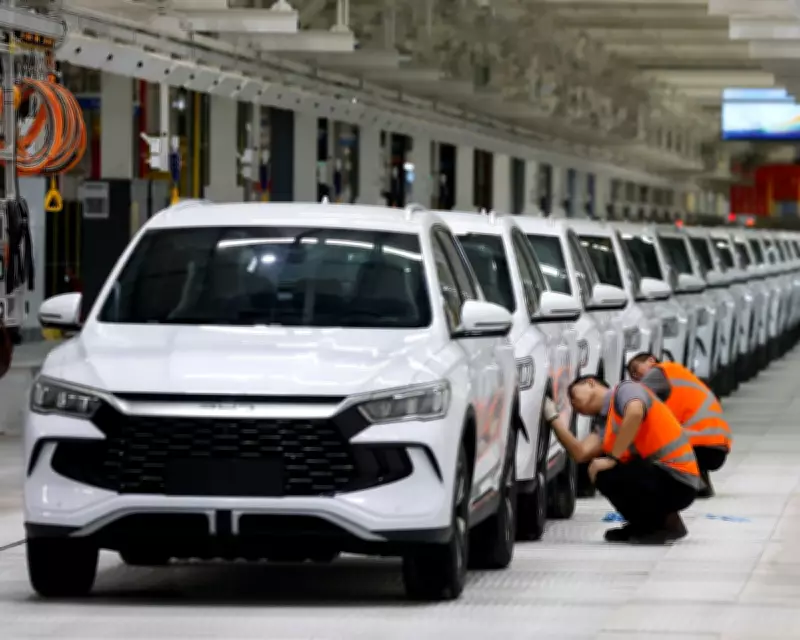
Half of all cars registered in China last year were electric, with manufacturers like BYD driving the boom across the global south. The Ember report identified that three of the ten largest-value markets for Chinese EV exports are outside the OECD – Brazil, the United Arab Emirates and Indonesia – while export values to non-OECD countries and Mexico have tripled over the past two years.
Diverse Global Adoption Patterns
The countries benefiting from this electric revolution range from Ethiopia, which in 2024 became the first nation to ban imports of combustion engine cars, to Nepal, a polluted country still recovering from severe petrol shortages following a blockade eleven years ago. However, Chinese manufacturers aren't the only drivers of progress.
Turkey achieved a 17% BEV sales share last year – matching the European Union's figure – through a transition led by domestic carmaker Togg. The company has overtaken Tesla as the country's leading supplier, with BYD occupying third place. This demonstrates how local manufacturers can successfully compete in the evolving EV landscape.
Infrastructure and Affordability Challenges
A significant challenge for developing countries seeking to sustain the EV boom involves building charging infrastructure rapidly enough to avoid customer frustration. According to the International Energy Agency, approximately two-thirds of public charger growth since 2020 has occurred in China, which now possesses about 65% of the global charging stock. Many other markets are struggling to keep infrastructure development pace with EV adoption rates.
There are also concerns that the EV surge may taper as wealthier customer bases in lower- and middle-income countries become saturated. New cars are typically purchased by more affluent residents, while others buy second-hand vehicles. However, in markets like Turkey and Thailand, where falling prices and rising subsidies are bringing EV costs in line with petrol cars, affordability barriers are diminishing.
As Robbie Andrew observes, "With price parity, people buy the cars because they're simply better and cost less to run." This fundamental economic advantage could prove decisive in the global transition to electric transportation.
Cultural and Political Dimensions
The question of whether to purchase an electric vehicle has become complicated by cultural and political factors surrounding some manufacturers. Tesla has experienced plummeting sales across Europe and the United States following Elon Musk's support for far-right parties and promotion of racist conspiracy theories. However, in Turkey, the brand maintains a more favourable perception.
Berke Astarcioğlu, an engineer from Istanbul and early EV adopter, explains the nuanced cultural perceptions: "If you have a Togg in Turkey, some people think you are a government-lover and a political Islamist. But if you have a Tesla, you are seen as secular, educated and open-minded."
These cultural dimensions add complexity to what might otherwise appear as a straightforward technological and economic transition.
The Road Ahead for Electric Transportation
For decades, climate progress primarily stemmed from cleaning up the power sector through transitions from coal to gas or renewable energy sources. Now, early indicators suggest transportation may be on the verge of delivering similar environmental victories. Electric vehicles are rapidly gaining ground in markets outside Europe and North America, potentially enabling developing nations to 'leapfrog' the fossil fuel-dependent development path taken by wealthier countries.
William Lamb, a scientist at the Potsdam Institute for Climate Impact Research, reflects on this transformation: "Five years ago you might have thought transportation is really going to be a bottleneck for climate progress. But now with the widescale adoption of EVs, it's looking a little bit easier."
If current trends continue spreading worldwide, electric vehicles may soon leave their fume-belching counterparts in the dust, fundamentally reshaping global transportation systems and accelerating progress toward decarbonisation goals.



