
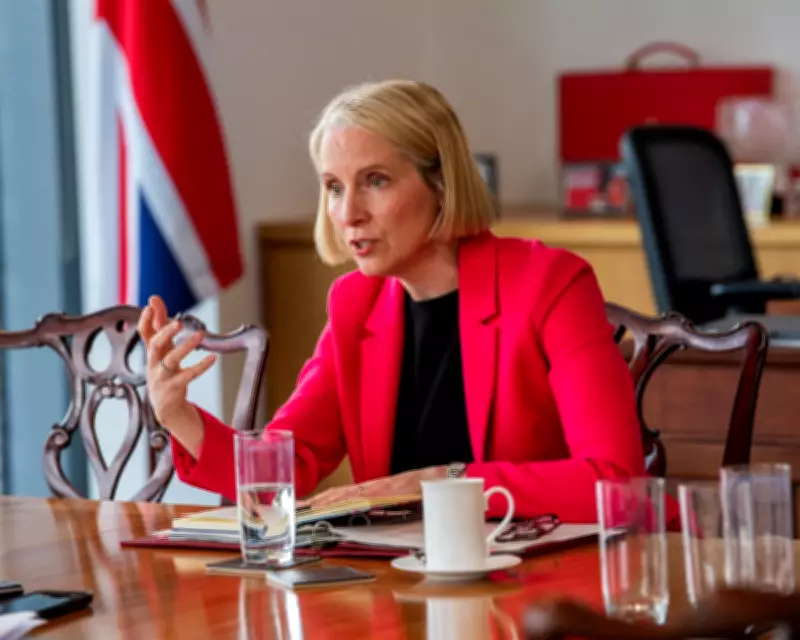
The Environment Secretary, Emma Reynolds, has unveiled ambitious plans to transform government-owned land into more nature-friendly spaces, including establishing tree nurseries in prisons and restoring peat bogs on military ranges. Speaking ahead of local elections where Labour faces pressure from the Green Party, Reynolds emphasized the government's commitment to restoring natural habitats.
Key Projects in the Plan
Under the scheme, expected to be confirmed in the coming weeks, land owned by the Department for Transport near roads and railways will feature more 'green bridges' to facilitate safe wildlife movement. Additionally, solar panels will be installed on government buildings to enhance sustainability.
Tree Nurseries in Prisons
Tree nurseries on Ministry of Justice land will not only support reforestation but also improve prisoner welfare. This initiative aims to provide vocational training and mental health benefits for inmates.
Peatland Restoration on Military Ranges
Peatland restoration, including the construction of stone dams, will restore natural habitats and reduce flooding, ensuring more consistent training conditions for the military. This dual-purpose approach highlights the government's strategy to integrate environmental benefits with other public services.
Government's Environmental Commitment
Reynolds stated that the plan demonstrates 'how the government is delivering better outcomes for nature and the environment for future generations.' She rejected criticism that Labour prioritizes economic growth over the environment, citing policies like species reintroduction (beavers, golden eagles) and these land-use changes as evidence of a strong commitment to nature restoration.
'These are decisions that we are making, that I am making now, that will have an impact for generations and generations to come. So that’s really important,' Reynolds said.
Criticism of Green Party and Reform UK
Reynolds criticized the Green Party for what she called a diminished focus on environmental issues under leader Zack Polanski, pointing to local Green Party objections to solar farms and pylons for offshore wind energy. 'They are not prepared to take any of the sometimes difficult decisions that we need to take as a country to put in place green infrastructure,' she said. 'I will not take lessons from a Green party that rarely talks about nature; that, frankly, is a party of protest.'
She was even more scathing about Reform UK's environmental plans, expressing worry about the potential impact of a Nigel Farage-led government. She cited Reform's proposals for onshore fracking as deeply unpopular, noting that her predecessor, Steve Baker, lost his seat after advocating for fracking in Wycombe.
Compromises on EU Trade and Foie Gras
The government is likely to drop plans to ban imports of foie gras and furs, a pre-election promise. Reynolds defended such compromises, highlighting the significant benefits of a revamped EU deal to reduce red tape on agriculture and food. 'The prize is big,' she said. 'We can talk about the detail, but the overall prize here is to bring down the barriers at the border, and the friction and the cost and the administrative burden that the previous Tory government’s botched Brexit deal has left us with.'
She noted that many small businesses gave up exporting to the EU entirely, while larger firms faced delays and uncertainty. The government aims to ease these burdens through improved trade relations.



