
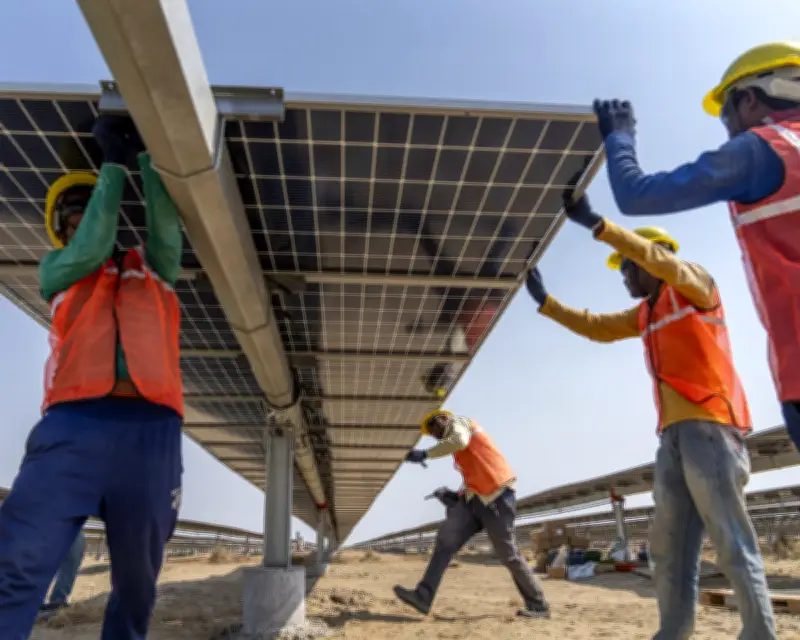
India's ambitious plan to expand its economy nearly eightfold within a generation while simultaneously transitioning to net zero by 2070 is unprecedented, according to Niti Aayog, the government's policy thinktank. The claim, made in a detailed report earlier this year, asserts that no major economy has attempted such a dual transformation, marking a significant departure from historical industrialisation patterns.
Historical Context and Unique Challenges
Unlike China, which industrialised at scale without a net-zero pathway, and unlike Korea, Japan, and Europe, which became wealthy before decarbonising, India faces the dual challenge of building infrastructure and raising living standards while cutting emissions. Rich nations have already satisfied basic needs and created high per-capita energy use, but India still needs to construct that foundation while addressing climate change.
The climate emergency is starkly visible: in April, all of the planet's top 50 hottest cities were in India on a single day. This drives a dangerous feedback loop where heat increases cooling demand, which relies on coal, which in turn raises temperatures. Non-fossil fuel sources now account for more than half of installed electricity capacity, but coal remains critical during peak demand.
The Role of State-Made Demand
The thinktank's report assumes India reaches $30tn GDP by 2047, with rising urbanisation, industrialisation, and living standards. It reasons that growth will spur energy and infrastructure demand, creating a virtuous cycle. However, it fails to explain the initial source of demand that sustains this process.
Political economist Mathias Larsen, in a 2025 paper, argues that India's solar success stems from the state creating a market, using public sector financial firepower, and protecting domestic producers. This contradicts the notion that private finance spontaneously allocates capital; instead, it is state-made demand driving progress.
Beyond Solar: Whole-Economy Transition
But solar is just one sector. A whole-economy transition may not follow the same pattern. When domestic demand cannot absorb state-created capacity, what happens? China answered through exports, but only because of a historically exceptional arrangement: Washington opened its market to China on favourable terms in 1979, allowing heavy state intervention within the US-led trading system.
India faces a more hostile environment, with fragile supply chains, climate trade barriers, and Chinese export overcapacity. This makes domestic demand even more critical. The mainstream view assumes private investors will allocate capital efficiently once cash is mobilised, but it fails to explain why firms would invest at the necessary scale without the state spending first, guaranteeing markets, and coordinating sectors.
The Guardian editorial argues that India's green growth gamble requires state-generated demand to industrialise and decarbonise, avoiding the overcapacity trap that China faced. The political economy of investment must address who spends first, how demand is guaranteed, and how private profitability is maintained when consumption's share of national income falls.



