
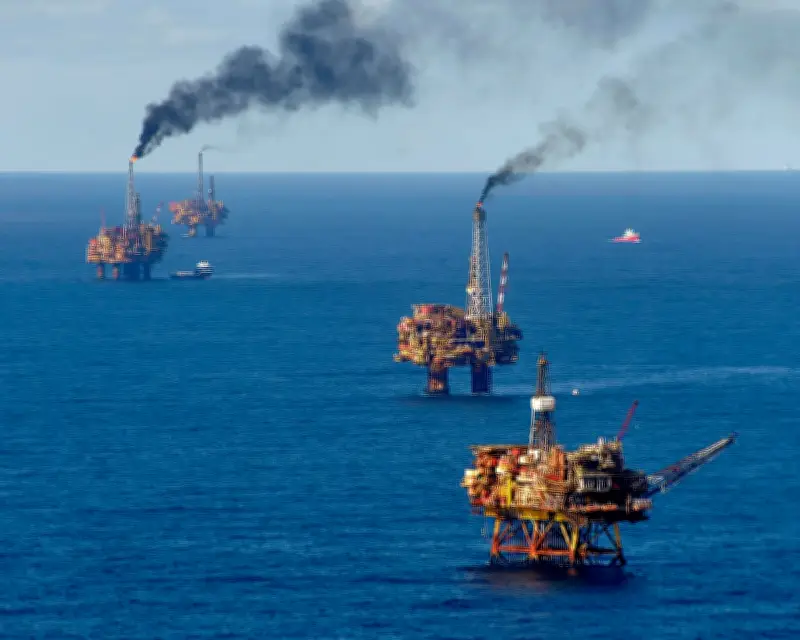
The debate over North Sea oil expansion has become a defining test for Prime Minister Andy Burnham, with environmentalists sharply divided on the issue. While some argue that oil is a necessary component of green technology supply chains, others contend that new drilling would be a significant setback for climate action. The controversy highlights the tension between economic development and environmental protection in the UK's energy policy.
Oil as a Feedstock: An Environmentalist's Perspective
John Barstow from Fittleworth, West Sussex, writes to express support for North Sea oil expansion, framing it as a necessity for environmental reasons. He argues that oil is not merely fuel but a critical feedstock for maintaining wind turbines, nuclear plants, and rail infrastructure. "Oil is necessary for the day-to-day maintenance of wind turbines, nuclear plants and rail. Hence oil is part and parcel of supply chains for green tech," Barstow states.
Barstow further emphasizes that a domestic oil base would bring supply chains closer, reducing reliance on foreign sources. He also draws a parallel with coking coal extraction in Cumbria, asserting that green tech requires high-grade steel, which in turn requires coking coal. "Green tech needs high-grade steel and high-grade steel needs coking coal," he explains.
Instead of focusing solely on reducing oil and gas use, Barstow suggests more effective environmental measures, such as increasing tree planting and preventing plastic waste from entering the oceans. These actions, he argues, would bolster carbon sinks and offer tangible benefits. He also highlights the potential economic advantages of expanding the North Sea oil sector, including job creation in Scotland and northern England, particularly in supply manufacturing chains.
Burnham's Credibility at Stake
Barstow concludes that full approval of North Sea oil expansion is an "absolute litmus test" of Andy Burnham's credibility, given his previous commitments to reindustrialization. He implies that failing to support the expansion would undermine Burnham's stance on economic growth and industrial policy.
However, not all environmentalists share this view. David Parker from Holmfirth, West Yorkshire, criticizes Burnham's apparent pragmatism as deficient regarding North Sea oil. Parker argues that new drilling would yield insignificant gains while causing considerable damage to the renewed optimism and support Burnham has generated. "His pragmatic antennae should be telling him that new drilling will bring insignificant gain in exchange for a considerable dent in the renewed optimism and the support which he has so far generated," Parker writes.
Public Perception and the Oil and Gas Lobby
Parker warns that Burnham may be perceived as bowing to the oil and gas lobby, which he describes as "intent on burning the planet." He takes issue with Burnham's reported statement: "The question isn’t whether Britain will still be using oil and gas, the question is where does it come from." Parker counters, "Wrong. The question is which side is our prime minister on and seen to be on: the planet’s or that of the fossil fuel industry?"
This exchange underscores the deep divisions within the environmental movement regarding the role of fossil fuels in the transition to a greener economy. It also highlights the political challenges facing leaders like Burnham as they navigate competing demands for economic development and climate action.
Impact on UK Energy Policy
The outcome of this debate could have significant implications for UK energy policy. If Burnham approves further North Sea drilling, it may signal a pragmatic approach that prioritizes energy security and economic benefits. Conversely, rejecting expansion could strengthen his environmental credentials but might face opposition from industry and workers in oil-dependent regions.
According to industry data, the North Sea oil and gas sector supports around 270,000 jobs across the UK, contributing billions to the economy. Any policy shift could have ripple effects on employment and investment. The decision also comes at a time when the UK aims to achieve net-zero carbon emissions by 2050, raising questions about the long-term viability of fossil fuel projects.
As the debate continues, Burnham's decision on North Sea oil will be closely watched as a barometer of his commitment to both environmental sustainability and economic growth. The letters from Barstow and Parker reflect the broader national conversation about how to balance these priorities in the face of climate change.



