
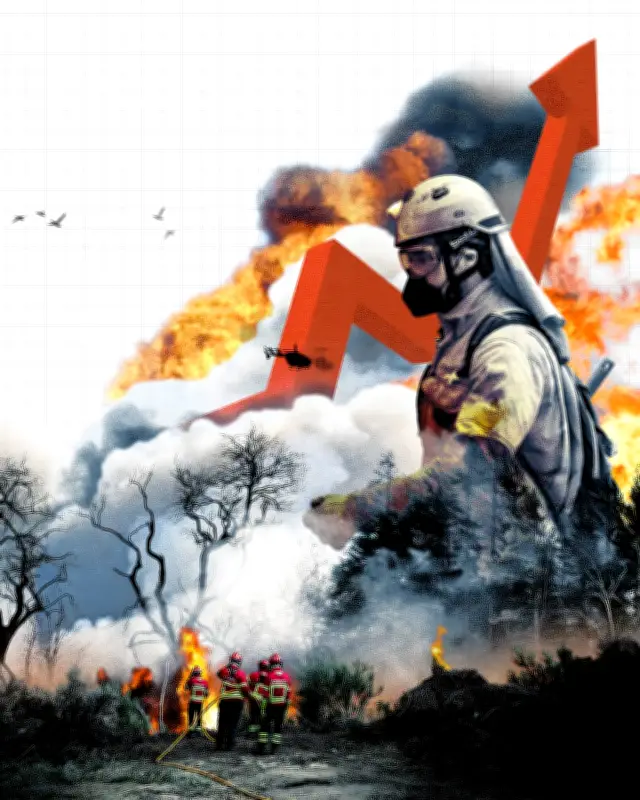
Eight of the world's largest oil companies amassed combined profits of nearly $93bn (£69bn) in just three months, as the Iran conflict sent energy prices soaring and the climate crisis fueled deadly heatwaves. The windfall has intensified calls for these corporations to pay for environmental damage and accelerate the shift to renewable energy.
Record Profits Amid Global Turmoil
According to a Guardian analysis, the eight listed oil producers—Saudi Aramco, BP, Shell, Equinor, TotalEnergies, Eni, Chevron, and ExxonMobil—earned almost $93bn in the three months to the end of June. This period marked the first full financial quarter after the US-Israeli war on Iran triggered a surge in oil prices above $126 a barrel, the biggest disruption of fossil fuel supplies in market history.
The companies nearly doubled their combined profits from just under $50bn in the same period last year, translating to more than $700,000 of profit every minute throughout the spring quarter. Their market valuations swelled by about $600bn, exceeding $3tn, even as temperatures built towards a series of deadly heatwaves made more severe by fossil fuel burning.
Heatwaves and Human Cost
The summer's impacts include Europe's worst-ever heatwave, categorized by scientists as “impossible” without human-caused global heating. An estimated 20,000 people died due to the extreme temperatures, including nearly 3,000 in the UK in May and June alone. South Korea and Japan experienced record-breaking heat up to 42.5°C, while Africa saw elevated temperatures in July.
Scientific analysis published last September directly linked carbon emissions from the world's biggest fossil fuel firms to fatal heat spells for the first time. It found that emissions from any one of the 14 largest companies were enough to cause more than 50 heatwaves that would otherwise have been virtually impossible.
Corporate Windfalls and Criticism
Saudi Aramco reported a 34% increase in quarterly net income to over $33bn, despite infrastructure damage from drone and missile strikes. Its production has made it responsible for more carbon emissions than any company in history, according to the Carbon Majors database, followed by Chevron and ExxonMobil.
BP's quarterly profits reached $5.73bn, the highest since the first year of Russia's full-scale war on Ukraine and more than double the previous quarter. Patrick Galey, lead on fossil fuels at Global Witness, said: “BP's sky-high profits are a scandalous reminder of who's been cashing in on human misery this year. While wildfires threaten communities across the world, drought bites and energy costs spiral, ordinary families are paying the price for big oil's prioritisation of shareholder wealth over a livable planet.”
Rosie Downes, head of campaigns at Friends of the Earth, added: “While BP banks another round of enormous profits, millions of households are paying the price through sky-high energy bills and a climate crisis accelerating rapidly out of control.”
BP's Strategic Shift and Asset Sales
BP's new chief executive, Meg O'Neill, defended the profits, saying the company was “focused on the things we can do to try to help address the situation” such as reliably producing more oil products in short supply. However, BP has cut its green energy spending since dropping environmental ambitions in a “fundamental reset” last year, reducing its annual energy transition budget from $5bn to $1.5bn-$2bn.
The company has spun off its UK offshore windfarms, sold its US onshore wind business, and announced the sale of its $4bn US biogas business. It is also in advanced talks to sell its solar power business, Lightsource, to a consortium backed by Kuwait's sovereign wealth fund, according to the Financial Times. On Friday, BP put its North Sea oil and gas business up for sale after 60 years, reigniting calls for the UK government to rule out two controversial North Sea fields.
US Profits and Political Backlash
Shell reported its second-highest quarterly profits ever at $9.84bn, while Equinor's profits climbed to $3.2bn. In the US, Chevron's net income of $12.2bn marked a fivefold increase, and ExxonMobil reported a profit of $14.5bn, its highest since Russia's 2022 invasion of Ukraine.
These profits provoked criticism from US President Donald Trump, who accused the companies of “making too much money” from his war on Iran and warned they would be made to return profits to the public. Galey noted: “You know big oil is taking us for a ride when one of their biggest allies, Donald Trump, is telling them to rein their profiteering in.”
Climate Disasters and Urgent Action
The UN climate chief, Simon Stiell, said: “Around the world, climate-driven disasters are reaching nightmare proportions. What needs to be done is clear: leave coal, oil and gas behind faster, scale up renewables, and protect people where the impacts are already hitting hardest.”
Europe's heatwaves have caused extreme drought, damaging food supplies, with at least 9 million tonnes of grain expected to be lost. The UK faces its worst harvest on record. Wildfires in France, Spain, Portugal, and Greece have caused billions of euros in damage, with smoke causing an estimated 4,000 deaths in the US and Canada within a week of exposure in July. In south Asia, extreme rainfall has led to flash flooding, with over 40cm of rain falling in 24 hours in Chattogram, Bangladesh. Floods and landslides have killed dozens in Pakistan, India, and north-west China.
The eight oil companies were contacted for comment.



