
Global Energy Crisis Intensifies as Iran War Highlights Fossil Fuel Dependence
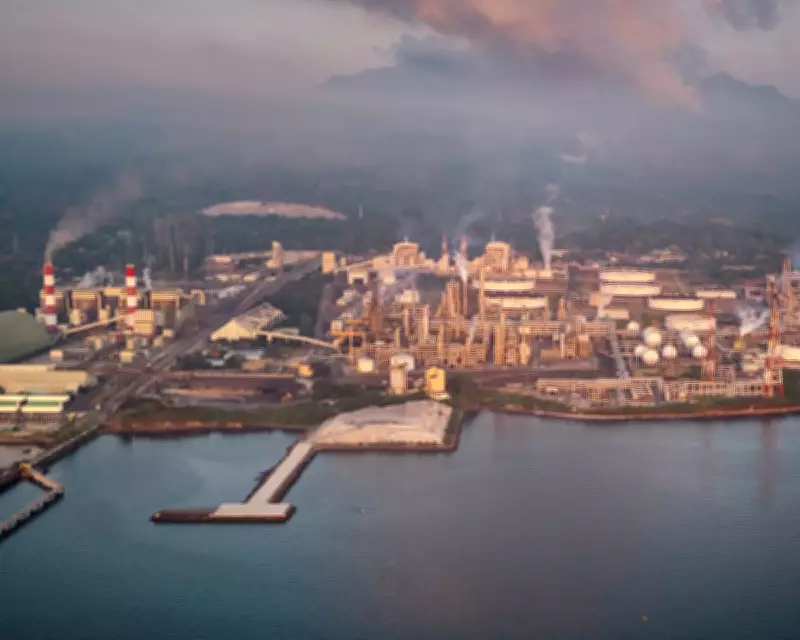
The Petron oil refinery in the Philippines has recently imported crude oil from Russia, reflecting a broader scramble by nations to secure alternatives as Middle Eastern supplies face disruptions due to the ongoing US-Israel war on Iran. This conflict, the third major global shock in six years following Russia's invasion of Ukraine and the Covid-19 pandemic, has starkly revealed the world's continued reliance on fossil fuels, with oil prices hovering around $110 per barrel and predictions of potential spikes to $150.
Economic and Social Impacts of the Energy Shock
The ripple effects are profound: food prices are escalating due to fertiliser shortages, threatening to push 45 million more people into acute hunger, according to the World Food Programme USA. Industries from steel to chemicals are grappling with soaring costs, while households worldwide are advised to reduce energy use by lowering thermostats, using public transport, and cutting driving speeds. Simon Stiell, the UN climate chief, warned in March that fossil fuel dependency is undermining national security and inflating expenses, a sentiment echoed as the Guardian's analysis of the top 10 greenhouse gas emitters divides them into two camps—petrostates clinging to hydrocarbons and electrostates pursuing low-carbon futures.
The Rise of Electrostates Versus Petrostates
John Kerry, former US secretary of state, describes this era as the dawn of electrostates versus petrostates, where electricity becomes the holy grail for energy security. The Iran war has accentuated this divergence, showing which major emitters might emerge stronger. Globally, trends already favor renewables; last year, low-carbon electricity generation surpassed coal for the first time, with clean energy investments doubling those in fossil fuels. Notably, coal use declined in China and India, marking a shift since the 1970s.
Beneficiaries and Challenges Among Top Emitters
However, the conflict has also exposed a sobering reality: many leading emitters profit from high fossil fuel prices. The US oil and gas sector anticipates a $60 billion windfall, while Russia, despite economic strains from the Ukraine war, gains an extra $150 million daily from oil sales as some sanctions ease. Saudi Arabia, despite attacks on its infrastructure, sees surging share prices for Aramco, and Iran's oil revenues have increased despite infrastructure damage. These petrostates are reinvesting profits into expanding hydrocarbon extraction, complicating climate efforts.
China and India: Leading the Charge for Renewables
China, the world's largest emitter, is at the forefront of the electrified future, with emissions flat or falling for nearly two years. Analysts attribute this to structural changes, as renewables grow rapidly—China added 360GW of solar and wind capacity in 2024 and 430GW in 2025, driving a third of its GDP growth. Investments in clean energy topped $1 trillion, dwarfing fossil fuel spending. Li Shuo of the Asia Society Policy Institute notes that batteries may increasingly replace coal, signaling a sustained shift.
India, the fourth-largest economy, has made strides with a new national plan targeting 60% low-carbon electricity by 2035 and a 47% reduction in emissions per GDP unit. While its renewable sector added a record 45GW last year, coal remains crucial for energy security, reflecting a hybrid approach rather than a complete leapfrog to clean energy.
Blurred Boundaries and Global Struggles
The divide between electrostates and petrostates is often blurry. Germany, despite early renewable adoption, clings to gas and scales back low-carbon reforms, while Japan's climate commitments are deemed inadequate. Indonesia's ambitious just transition plan, aimed at shifting from coal with $20 billion in support, has faltered due to vested interests and bureaucratic hurdles, though efforts may resume.
Iran's war-torn economy could pivot toward fossil fuels for reconstruction, but there's potential for rebuilding infrastructure to reduce methane leaks, a potent greenhouse gas. Meanwhile, the US under Trump presents a paradox: despite falling emissions and green growth under Biden, Trump's policies threaten to reverse progress, with actions like paying $1 billion to halt offshore wind projects in favor of oil and gas.
The Path Forward: Methane Reduction and Government Intervention
As time runs out to convert petrostates, experts like Durwood Zaelke advocate for methane cuts to slow near-term warming, suggesting satellite monitoring to tackle leaks. Jayati Ghosh emphasizes that government intervention is essential for any green transition, citing China's example and the need for subsidies and infrastructure. The war's aftermath will heavily influence whether the world embraces a low-carbon path or retreats into oil dependency, with the top 10 emitters—responsible for two-thirds of global carbon output—holding the future in their hands.
Ultimately, if climate breakdown reaches 2°C above pre-industrial levels, the economic impact could mirror an annual oil war, underscoring the urgency of decisive action in the post-conflict era.



