The word "unprecedented" is losing its power as extreme weather events become more frequent, according to science writer Helen Pilcher. In a new opinion piece, she argues that the overuse of the term in climate reporting is causing the public to accept extraordinary deterioration as normal.
Pilcher draws a parallel to the linguistic phenomenon of "semantic bleaching," where words like "awesome" and "fantastic" lose their original, awe-inspiring meanings through casual overuse. She suggests that "unprecedented" is undergoing a similar transformation, becoming a mere synonym for "really extreme" rather than a marker of historically significant events.
Record-breaking heat and shifting baselines
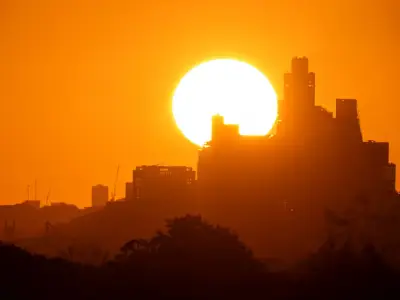
Britain has just experienced its hottest summer on record, beating the previous record set only last year. According to Pilcher, this rapid succession of record-breaking events raises a critical question: what do we actually find remarkable?

A study analyzing more than 2 billion weather-related social-media posts, led by Frances Moore from the University of California, Davis, found that remarkability changes with repeated exposure. Unprecedented temperatures feel less remarkable when similar ones have occurred in the previous few years. Moore's research indicates that people don't base judgments on historical precedents or childhood memories, but on recent lived experience. This means something can be historically unprecedented yet psychologically precedented.
The danger of a shifting baseline
Ecologists call this phenomenon "shifting baseline syndrome," a term originally coined by fisheries scientist Daniel Pauly. He observed that successive generations of fisheries scientists accepted increasingly depleted fish populations as their baseline. Pilcher notes that this syndrome now applies broadly to biodiversity loss, pollution, environmental degradation, and the climate crisis.
However, Moore's study contained a crucial twist: although extreme temperatures became less remarkable with repeated exposure, the negative feelings they provoked did not fade. Pilcher emphasizes that people may stop finding unprecedented temperatures remarkable, but that doesn't mean they find them tolerable. The public can still recognize that something is unpleasant without realizing how unusual it is.
Lessons from the boiling frog parable
Pilcher references the parable of the boiling frog, where a frog placed in slowly warming water fails to notice the gradual temperature rise. She warns that if extreme temperatures become familiar, people may be less likely to recognize how extraordinary they are. What once seemed remarkable becomes just another hot summer, another flooded street, another crop failure.
But she points out that the parable is scientifically inaccurate. Healthy frogs feel heat and respond to it, hopping out when temperatures cross a threshold. The real question, she argues, is what it will take for humans to respond similarly to the heat.
Pilcher suggests that one place to start is with the words used to describe climate events. "Unprecedented" should retain its historical meaning, signaling that humanity has crossed into territory never experienced before. The most unsettling aspect of a heating world, she concludes, is not that unprecedented weather keeps happening, but that the word is beginning to sound like a perfectly normal thing to say.