
In a significant development for global climate efforts, new analysis reveals that China's carbon dioxide emissions have remained flat or shown a decline over the past 18 months. This trend suggests the world's largest polluter may be on course to hit its peak emissions target substantially ahead of its 2030 schedule.
Renewable Energy Surge Drives Emissions Trend
The analysis, conducted by the Centre for Research on Energy and Clean Air (Crea) for Carbon Brief, found that China's CO2 emissions were unchanged from a year earlier in the third quarter of 2025. This stability occurred despite increasing electricity demand, largely thanks to rapid deployment of renewable energy infrastructure.
Solar power generation grew by an impressive 46% in the third quarter of this year, while wind power increased by 11%. The scale of China's renewable expansion is staggering: the country added 240GW of solar capacity in just the first nine months of this year, alongside 61GW of wind capacity.
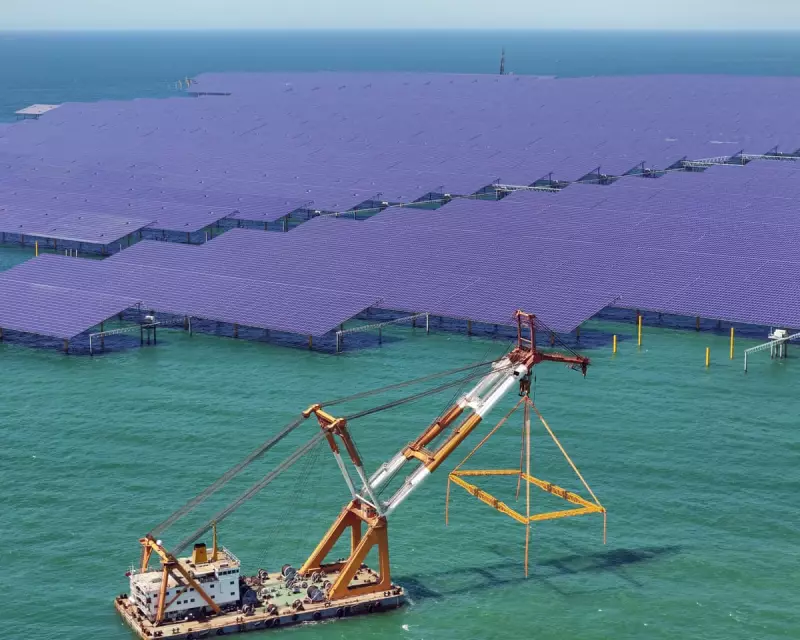
This follows an extraordinary 2024, when China installed 333GW of solar power – more than the rest of the world combined. The momentum continues with notable projects such as an offshore solar farm constructed off Shandong province in April, positioning China for another renewable record in 2025.
Mixed Progress Amid Global Climate Talks
The findings emerge as global leaders gather in Brazil for the COP30 climate conference, where the urgency of addressing the climate crisis dominates discussions. While Chinese President Xi Jinping did not attend the leaders summit, the Chinese delegation is participating in talks.
Lauri Myllyvirta, lead analyst at Crea, noted that China's overall emissions trend for 2025 could still record a small increase depending on fourth-quarter performance. However, if the country follows previous years' patterns where electricity demand and associated emissions grow fastest in summer months, CO2 emissions could record a fall for the full year.
Brazilian diplomat André Corrêa do Lago, president of COP30, praised China's progress on green technologies, stating: "China is coming up with solutions that are for everyone, not just China." He highlighted how solar panels have become so competitive with fossil fuels that they're appearing everywhere.
Challenges Remain in Climate Targets
Despite the promising emissions trend, China faces challenges in meeting all its climate objectives. The country is on track to miss its target for cutting carbon intensity – the CO2 emissions per unit of gross domestic product – between 2020 and 2025.
This means steeper reductions will be necessary if China is to hit its 2030 goal of reducing carbon intensity by 65% compared with 2005 levels.
China's dual carbon goals aim for peak emissions by 2030 and net neutrality by 2060. In September, the country released its latest climate targets, pledging to cut overall greenhouse gas emissions by between 7% and 10% of their peak by 2035. Experts consider these targets relatively modest compared to the 30% cut they deem both feasible and necessary to prevent global catastrophe.
However, China has a history of underpromising and overdelivering on climate targets. Li Shuo, director of the China Climate Hub at the Asia Society Policy Institute, suggested that the latest targets should be viewed as a baseline rather than a ceiling.
All eyes are now on China's 15th five-year plan, which will outline government priorities and policies for the 2026-2030 period. While the full text won't be published until next year, Chinese officials have indicated that low-carbon energy systems will be a key focus of the plan.
The analysis also revealed varying performance across different sectors. While oil demand and emissions in the transport sector fell by 5% in the third quarter, emissions grew by 10% elsewhere due to surging production of plastics and other chemicals, highlighting the uneven nature of the decarbonisation effort.



