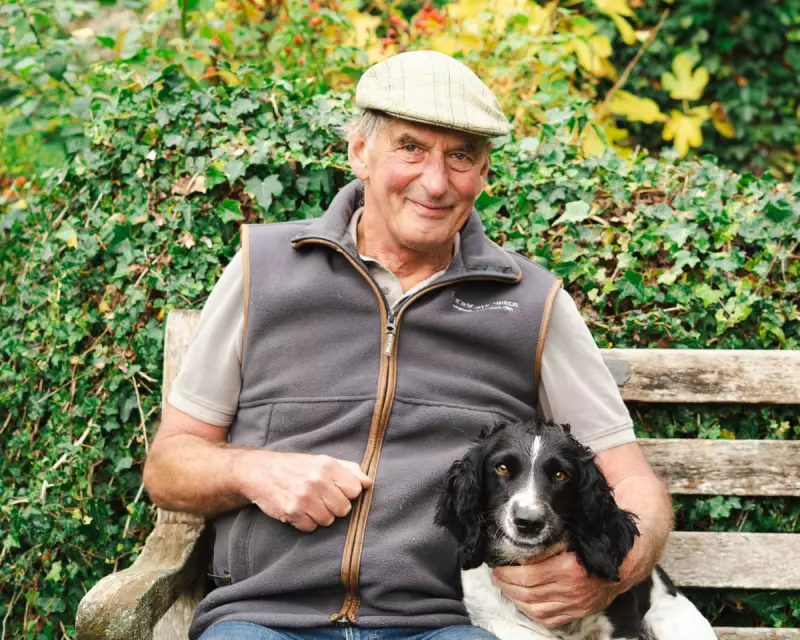
The British landscape has lost one of its most influential conservation champions with the passing of Donald MacIntyre at 76. The pioneering botanist and farmer dedicated his life to restoring native wildflowers across the nation, leaving an enduring legacy that has transformed meadows, farmland, parks and roadside verges.
The Genesis of a Conservation Vision
Born in Salisbury, Donald MacIntyre was the son of an aircraft engineer and test pilot who worked for the Ministry of Defence, and Mary Turner, who shared her passion for wildflowers with her children. His early life involved frequent moves due to his father's work, attending various schools including Beaumont in St Albans and Bath technical school.
After earning a BA in botany and plant genetics from Royal Holloway, University of London in 1970, followed by a master's at Glasgow University, Donald gained practical experience in plant breeding at the Scottish Horticultural Research Institute and Floranova Ltd in Norfolk.

In 1980, armed with seeds collected from wasteland and a loan from his father, Donald leased farmland in Norfolk to cultivate wildflower and grass seeds. This venture coincided with groundbreaking research by the Nature Conservancy Council at Monks Wood Experimental Station near Huntingdon, where researcher Terry Wells provided Donald with a crucial box of stock seeds that would become the foundation of Emorsgate Seeds.
Revolutionising Seed Harvesting Methods
The year 1984 marked a significant turning point when the NCC offered Donald access to North Meadow national nature reserve in Wiltshire for seed harvesting. Faced with the challenge that no established method existed for harvesting meadow seeds at the time, Donald began developing prototype harvesters.
His innovation culminated in 1986 with the creation of the first successful meadow brush harvester, which was immediately put to use at North Meadow. This revolutionary technology, which involves towing equipment across sites to brush seeds into a hopper, was rapidly adopted by county wildlife trusts and remains fundamental to ecological restoration projects today.
Expanding the Native Seed Movement
Donald's vision extended beyond his own business. In 1998, he co-founded Flora Locale, an organisation dedicated to promoting the use of native seeds in wildflower mixes. His influence reached European levels when he became a founding member of the European Native Seed Producers Association in 2018.
Emorsgate Seeds, under Donald's leadership, grew to become a leading supplier of native wildflower and grass seeds, earning a royal warrant in 2014 in recognition of its exceptional quality and service.
Beyond his commercial success, Donald was fundamentally a farmer who cherished working the land throughout the year. He continuously developed machinery and methods to enhance seed sowing, harvesting and storage processes. His generosity with knowledge made him a valued mentor to ecologists and land managers across the country.
In 2024, his expertise was preserved for future generations with the publication of his comprehensive guide, Restoring the Wild: A Guide to the Restoration, Creation and Management of Meadow and Other Wild Vegetation.
Donald MacIntyre is survived by his wife Jane Lipington, a horticulturist who worked alongside him at Emorsgate, his four daughters from his second marriage - Mischa, Marsha, Martha and Myrica - seven grandchildren, and his sister Anne. His first two marriages, to Annette Pinner and Adrienne Hill, ended in divorce.
The landscape of Britain today bears the unmistakable imprint of Donald's vision - a living testament to one man's determination to bring native wildflowers back into our countryside on a national scale.