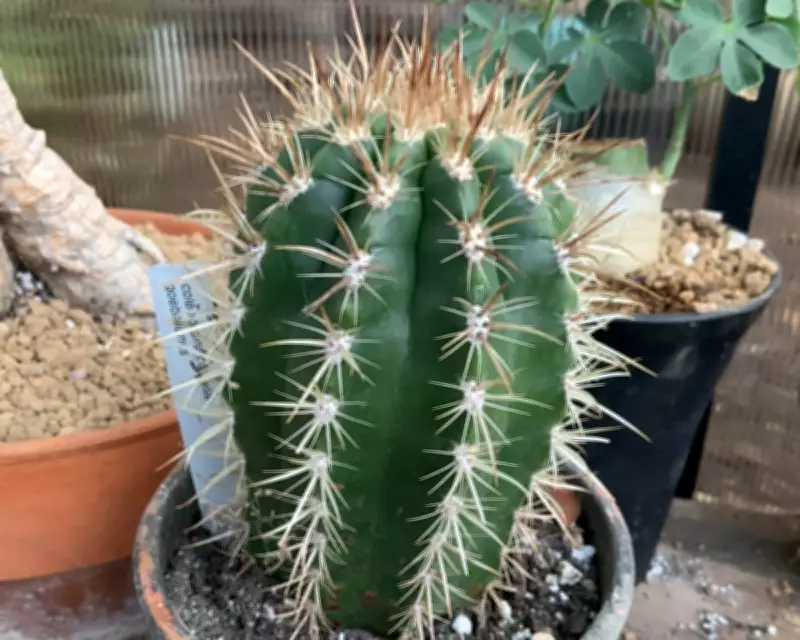
In the diverse ecosystems of eastern Brazil, a remarkable cactus species has developed an ingenious acoustic strategy to ensure its survival through bat pollination. The Coleocephalocereus goebelianus, a towering plant that rises above its neighbors, employs a specialized fuzzy structure near its flowers to attract bats, bypassing the need for scent-based lures common in other night-blooming flora.
The Acoustic Beacon of the Cactus World
While many plants rely on olfactory cues to draw pollinators, this cactus has evolved a cephalium—a dense, fuzzy growth resembling a hat—that serves as an acoustic reflector. Bats, which navigate and locate objects using high-frequency echolocation calls, find their ultrasound focused directly toward the cactus flowers by this structure. The cephalium's dense composition not only directs sound but also minimizes background noise, creating a clearer echolocation signal for the bats.
Beyond Scent: A Towering Advantage
Unlike other cacti in the region that may emit odors mimicking fermenting fruit or urine to attract bats, Coleocephalocereus goebelianus stands out by forgoing scent entirely. Its tall, columnar growth habit allows it to tower over surrounding vegetation, further enhancing the acoustic clarity of its signals. This vertical prominence ensures that bats can easily detect and approach the flowers, facilitating efficient pollination in the dark of night.

Echolocation in the Plant Kingdom
This cactus is not alone in leveraging bat echolocation for mutual benefit. Some carnivorous pitcher plants, for instance, feature curved, dish-like openings around their traps that reflect bat calls, helping the mammals locate safe roosting spots. In return, bats provide fertilization through their dung, creating a symbiotic relationship. The Coleocephalocereus goebelianus exemplifies how plants can adapt to specific pollinators through innovative physical adaptations, showcasing the intricate interplay between flora and fauna in tropical ecosystems.
The discovery of this acoustic adaptation highlights the ongoing evolution of plant-pollinator interactions, where sensory cues beyond sight and smell play a critical role. As researchers continue to explore such phenomena, the Coleocephalocereus goebelianus serves as a testament to nature's creativity in ensuring reproductive success through specialized mechanisms.