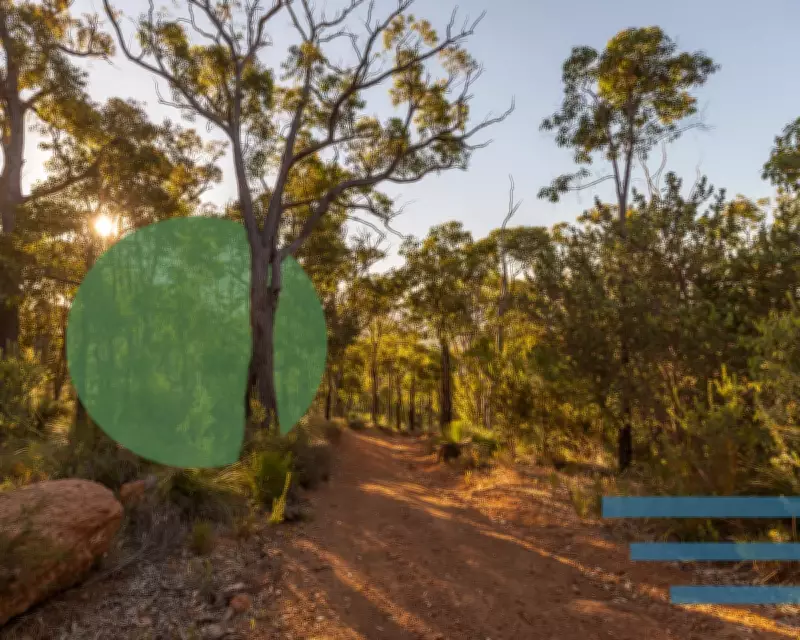
Private Conservation Revolution Sweeps Across Australia
Australia is witnessing a quiet but powerful revolution in environmental protection, with individuals and private organizations taking the lead in safeguarding the nation's biodiversity. Powered by personal donations and bequests, the country has established one of the world's most extensive networks of privately protected and managed land, now covering more than 10 million hectares across the continent.
From Humble Beginnings to National Impact
The movement traces its origins to 1990 when former Tasmanian Greens MP Bob Brown made a bold decision that would change Australia's conservation landscape. Discovering that two bush blocks adjacent to his property in Liffey were up for auction, Brown sent a bidder despite lacking personal funds and successfully purchased the land for $250,000, outbidding Northern Woodchipping company that intended to log the area.
This initial act of environmental defiance sparked the creation of Australian Bush Heritage, co-founded by Brown and his former schoolmate Judy Henderson. What began as a grassroots initiative has grown into one of Australia's most successful conservation organizations, now protecting 45 bush reserves spanning over 1.4 million hectares and providing habitat for more than 9,000 native species.

Rising Tide of Personal Commitment
Between 2019 and 2024, leading Australian environmental charities experienced a remarkable 150% increase in bequest revenue, according to data from the 2025 Benchmarking Project report. This surge reflects a growing personal desire among Australians to address the worsening climate and biodiversity crisis through meaningful individual action.
Rachel Lowry, Chief Executive Officer of Bush Heritage Australia, explains the critical need for private conservation efforts: "Some of Australia's most threatened and fragile ecosystems and wildlife sit outside of the national reserve system. They're found on private land or pastoral country, and they may have deep cultural and ecological values, but they're not protected from threats such as land clearing, mining or invasive species."
The organization has seen personal bequests nearly double from 2,500 in 2022 to more than 4,600 last year, demonstrating increasing public commitment to environmental legacy.
Grassroots Conservation Models Multiply
Bush Heritage's success has inspired numerous smaller organizations across Australia to adopt similar conservation models. The North East Tasmania Land Trust (NETLT), described by secretary Dr. Christine Hosking as "a microcosm of Bush Heritage," manages donated land through weed control and native environment regeneration.
Currently protecting 10 acres of endangered eucalyptus forest in Binalong Bay and coastal habitat for the endangered swift parrot, NETLT represents the vital role of community-led conservation. Hosking notes: "With a paucity of government support, philanthropy has become an invaluable enabler for people dedicated to working for the environment."
Personal Legacies Creating Lasting Impact
Individual bequests are translating into tangible conservation outcomes across Australia. In December 2024, former Adelaide taxi driver Bob Croser bequeathed $1.1 million to Adelaide University, establishing the Bob Croser Woodland Recovery Project. This initiative identifies optimal locations and planting designs to support bird populations in the Mount Lofty Ranges, home to 76 threatened bird species including the southern emu-wren, hooded robin, and Bassian thrush.
Professor Andrew Lowe of the university's Environment Institute explains the project's significance: "By working on research with partners we can answer questions like what type of vegetation we should put back, where it should go, is it going to be good food or shelter for birds, will it help support endangered species?"
Lowe emphasizes the growing importance of private contributions: "The role of private landholders, charities and philanthropy is increasing in the land conservation sector because governments don't have the money, capacity or expertise. Projects like these often involve a broad range of government, community and industry partners to maximise our leverage but also uptake and translation of research into solid conservation outcomes."

How Australians Can Contribute
For those interested in contributing to this growing movement, numerous organizations facilitate land donations and bequests:
- Bush Heritage Australia
- Foundation for National Parks & Wildlife
- North East Tasmania Land Trust (NETLT)
- Trust for Nature in Victoria
Prospective donors should verify that chosen organizations have accredited Deductible Gift Recipient status, which allows for tax deductions from donations.
Lowry summarizes the collaborative nature of modern conservation: "The environmental movement needs many hands. Governments to set ambition, communities to demand action, traditional custodians to lead with knowledge and generations of experience sustainably managing Country, and not-for-profits like Bush Heritage to act with speed, trust and long-term purpose. Our purpose is simple: we are here to protect the most vulnerable and important ecosystems, for ever."
As Australia's private conservation network continues to expand beyond 10 million hectares, this grassroots movement demonstrates how individual commitment can collectively create substantial environmental protection where government resources fall short, offering a model for biodiversity preservation that other nations might emulate.