South Korea's Solar Surge: A Renewable Revolution Fueled by Global Crisis
In the wake of the escalating crisis in the Middle East, South Korea is dramatically ramping up its investment in solar power, viewing energy independence as a critical national priority. The country, which imports over 90% of its primary energy, including about 70% of crude oil through the Strait of Hormuz, is channeling political urgency and substantial funds into transforming its renewable energy landscape. This push aims to mitigate vulnerabilities tied to fossil fuel dependency, with President Lee Jae Myung emphasizing that the "nation's fate" hinges on a swift energy transition.
Solar Villages: A Model for Community Transformation
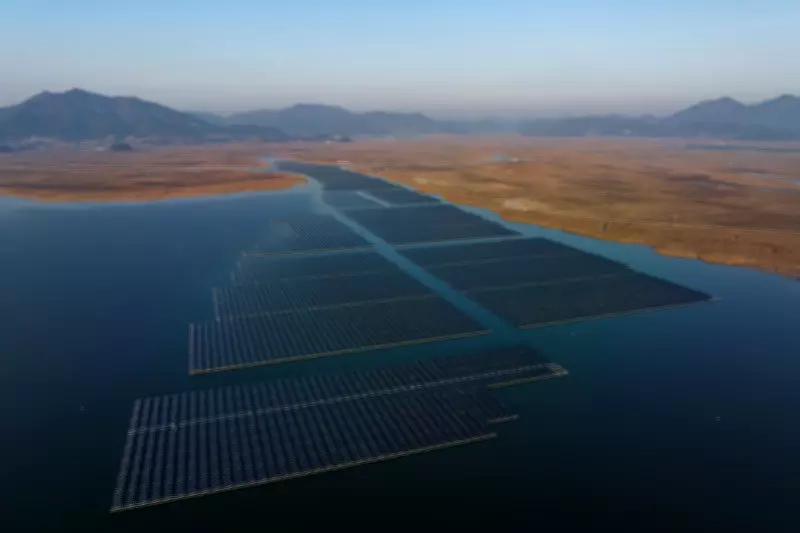
At the heart of this initiative is the "solar income village" program, exemplified by Guyang-ri, a farming village southeast of Seoul. Here, a one-megawatt solar installation generates approximately 10 million won ($6,800) in net profit monthly, funding communal benefits such as free lunches six days a week, a "happiness bus" for elderly residents, and cultural activities. Village chief Jeon Joo-young notes that this approach has strengthened community bonds, with residents choosing welfare over individual dividends to foster solidarity. The program, which launched in 2022, serves as a national prototype, with the government targeting 2,500 villages by 2030 and aiming to establish 700 this year alone, a sharp increase from around 150 previously.
Funding and Political Momentum
To accelerate this transition, South Korea has allocated about 500 billion won to energy transition in a supplementary budget, boosting overall annual support for renewable projects to a record 1.1 trillion won ($670 million). Additionally, 400 billion won in low-interest loans will be provided to the solar villages program. Kim Sung-whan, the Minister of Climate, Energy and Environment, stated that the Middle East conflict is driving a global acceleration in renewable energy adoption, compelling Korea to hasten its efforts. While pre-existing goals include generating 20% of electricity from renewables by 2030 and phasing out coal by 2040, officials confirm that the pace and urgency have intensified significantly.

Grid Challenges and Supply Chain Dependencies
However, the rapid expansion of renewable energy is encountering obstacles, particularly grid capacity limitations in southern and southwestern regions where solar development is concentrated. Gigawatts of projects await connection, with some renewable capacity going unused. Energy economist Hong Jong Ho from Seoul National University points to deeper issues, such as artificially low electricity prices set by the state utility Kepco, which discourage investment in renewable infrastructure and erode public acceptance of transition costs. Furthermore, South Korea's reliance on Chinese supply chains for solar panels highlights vulnerabilities, prompting government measures like domestic module requirements and carbon footprint certifications for imports.
Contradictions and Future Outlook
Environmental groups, while acknowledging President Lee's political intent, express concerns about implementation. Gahee Han from Solutions for Our Climate notes that while 500 billion won was allocated for energy transition, about 5 trillion won was simultaneously directed toward fossil fuel subsidies, creating a contradiction in policy. The government has also delayed some coal plant closures and accelerated nuclear reactor restarts as temporary measures, with capacity payments continuing to flow to coal plants beyond 2040. Han emphasizes that the window for transformative change is open, but whether the government can demonstrate institutional courage will define Korea's energy future. As South Korea navigates these complexities, its solar revolution stands as a test case for balancing crisis-driven urgency with sustainable, long-term energy strategies.