Six US States Declare Blizzard Emergency as Bomb Cyclone Threatens Northeast
A severe winter storm has escalated into a full-blown crisis across the northeastern United States, with six states officially declaring a state of emergency. New York, New Jersey, Massachusetts, Connecticut, Delaware, and Rhode Island have all taken this critical step in response to what forecasters are warning could develop into a dangerous bomb cyclone.
Widespread Disruption and Dangerous Conditions
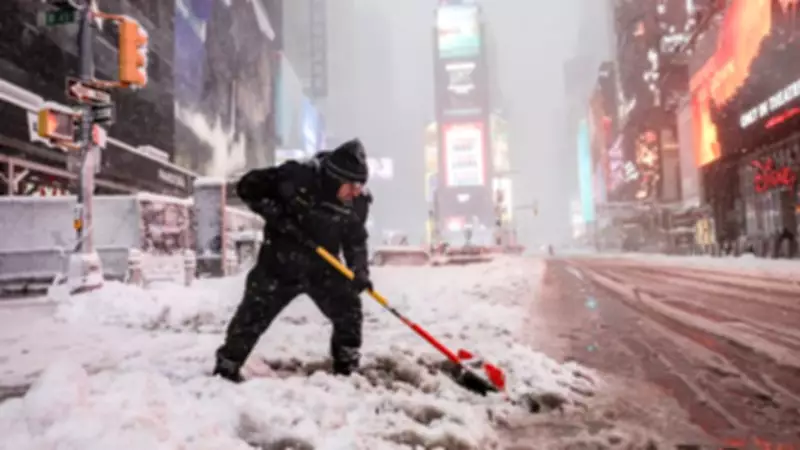
Millions of residents across the region have been forced to remain indoors as blizzard conditions intensify. In New York City alone, non-emergency road travel has been completely banned due to what authorities describe as "dangerous blizzard conditions." The iconic streets of Manhattan, including Times Square and 42nd Street, have been transformed into winter landscapes under a thick blanket of snow.
Forecasters have reported snowfall totals reaching more than two feet in some areas, with Central Park among the hardest hit locations. The storm has brought not only heavy snow but also powerful winds, with gusts recorded up to 60 miles per hour. Wind chills have plummeted to a bone-chilling -15°C (5°F) in New York City, creating life-threatening conditions for anyone caught outside.

The Bomb Cyclone Threat
Meteorologists are particularly concerned about the storm's potential to develop into what's known as a bomb cyclone. Frank Pereira, a weather service meteorologist, explained that this occurs when a storm's pressure drops at least 24 millibars within 24 hours. "We're expecting conditions to rapidly deteriorate," Pereira warned on Sunday, adding that "when all is said and done, it will meet the definition of a bomb cyclone."
This rapid intensification has already caused significant damage across the region. According to the PowerOutage website, approximately 650,000 homes have lost electricity as the storm intensified across multiple states. Massachusetts has been particularly hard hit, with roughly 255,000 homes experiencing power outages.
Transportation Chaos and School Closures
The storm has created massive disruptions to transportation systems throughout the Northeast. Air travel has been severely impacted, with nearly 90% of flights cancelled at New York's John F. Kennedy International Airport. The situation is even worse at LaGuardia Airport and Boston's airports, where cancellation rates are even higher. In total, more than 5,300 flights have been cancelled nationwide, with an additional 700 flights experiencing delays.
Educational institutions have also been forced to adapt to the extreme conditions. School classes have been cancelled or moved to online platforms in major cities including New York City, Boston, and Philadelphia. New York City Mayor Zohran Mamdani declared it the "first old-school snow day since 2019," telling children across the city to "stay cosy" and safe indoors.
Emergency Response Efforts
Emergency services and support workers have been mobilized across the affected states. In New York City, teams have been working tirelessly to bring homeless individuals off the streets and into shelters and warming centers. Even food delivery services like DoorDash have been suspended as conditions became too dangerous for delivery personnel.
The storm's impact extends beyond the six states that have declared emergencies. Weather warnings have also been issued in Pennsylvania, Maine, and New Hampshire, with blizzard warnings covering an area affecting nearly 70 million people. Residents have been advised to avoid all unnecessary travel and to prepare for potentially extended power outages and difficult conditions.
As the storm continues to batter the Northeast, authorities are urging residents to heed all warnings and stay informed about rapidly changing conditions. The combination of heavy snowfall, powerful winds, and extreme cold has created what officials describe as one of the most dangerous winter weather events in recent years.