The Photograph That Redefined War Imagery
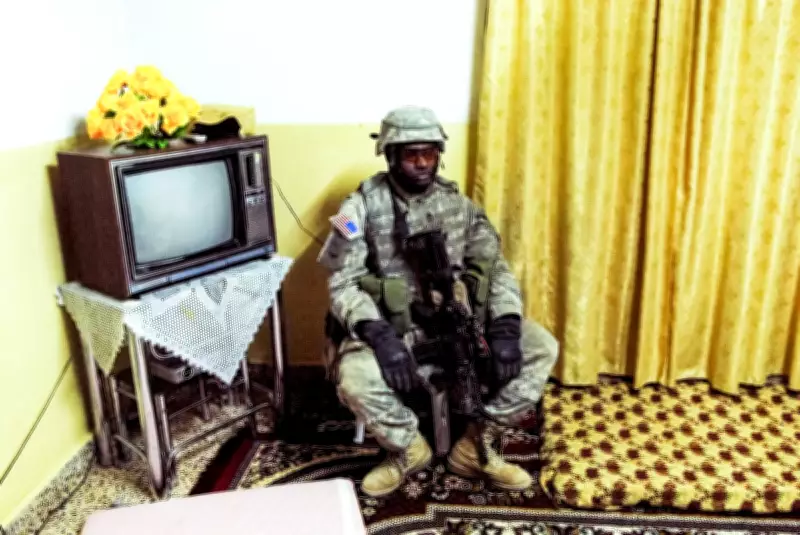
Twenty years ago, a young American photographer captured an image in Iraq that would become a defining moment in contemporary war documentation. Peter van Agtmael's "Night Raid, Rawa, Iraq, 2006" presents a US soldier sitting dejectedly in what appears to be an ordinary Iraqi living room during a military operation. The photograph, now featured in Magnum's 27th Square Print Sale, continues to resonate as a powerful commentary on the nature of modern conflict.
A Formative Journey Into War
Van Agtmael had just turned 25 when he embarked on his first trip to Iraq, embedded with US military forces for approximately six weeks. This experience marked the beginning of what would become a two-decade exploration of America's post-9/11 engagements both domestically and internationally. "It was a formative journey on a personal level," the photographer reflects. "My understanding of my country and its relationship to the world developed in the crucible of this extremely violent situation."
While he had taken several compelling photographs during his embedment, this particular image stood apart. Unlike traditional war photography that often focuses explicitly on violence, horror, and victims, van Agtmael sought to capture something more nuanced about the Iraq conflict. "I wanted to understand this particular conflict, and how my position as an American of the same generation as those fighting could help me interpret it for the public," he explains.

The Surreal Domesticity of Conflict
The photograph crystallizes what van Agtmael witnessed repeatedly during his time in Iraq: US soldiers conducting raids on homes of "suspected terrorists," often finding nothing incriminating. "This could be my grandma's living room," he observes, highlighting the jarring contrast between military operations and ordinary domestic spaces.
"With all this money, weaponry and rhetoric, an anonymous living room like this one showed the reality of what I saw on the ground," van Agtmael states. The image captures what he describes as "the incongruity of the soldier in the domestic surroundings," revealing "how absurd, and how close to us, war is."
War as Part of Human Nature
Beyond documenting a specific moment in the Iraq War, van Agtmael believes the photograph speaks to enduring truths about human conflict. "Insane violence continues amid absolutely normal life," he notes. "I think it expresses that war is part of the human soul – in civilised society we tend to forget that."
This perspective has been shaped by van Agtmael's extensive experience covering conflicts. "Soldiers on the whole are decent people capable of extreme violence," he observes. "We all fancy ourselves as peace-loving, but you twist the right knobs and you're a killer."
Reflections on a Changing Career
Now a father, van Agtmael has stepped back from frontline war photography. "The next question is how to find a new purpose, when what I previously found purpose in is no longer an option," he acknowledges, while adding that "being with my daughter is way more fun."
His career highlights include being accepted into the prestigious Magnum Photos collective, which he describes as "the most powerfully validating moment of my professional life." For aspiring photographers, he offers this advice: "Be honest and unsentimental with yourself, while maintaining confidence. There are lots of talented people out there, but the ones who survive in the industry are usually those who want it the most."
A Lasting Legacy
Van Agtmael's photograph continues to challenge conventional narratives about war and its representation. As part of Magnum's Odyssey print sale in partnership with London's Photographers' Gallery, the image remains accessible to new audiences who can contemplate its complex message about the proximity of violence to everyday life.
The photographer's work demonstrates that thoughtful documentation of human conflict carries moral weight, even if the subject matter is neither pure nor beautiful. "Being against war is like being against clouds," van Agtmael concludes. "It's so much part of human existence, and it always will be until it destroys the last of us."