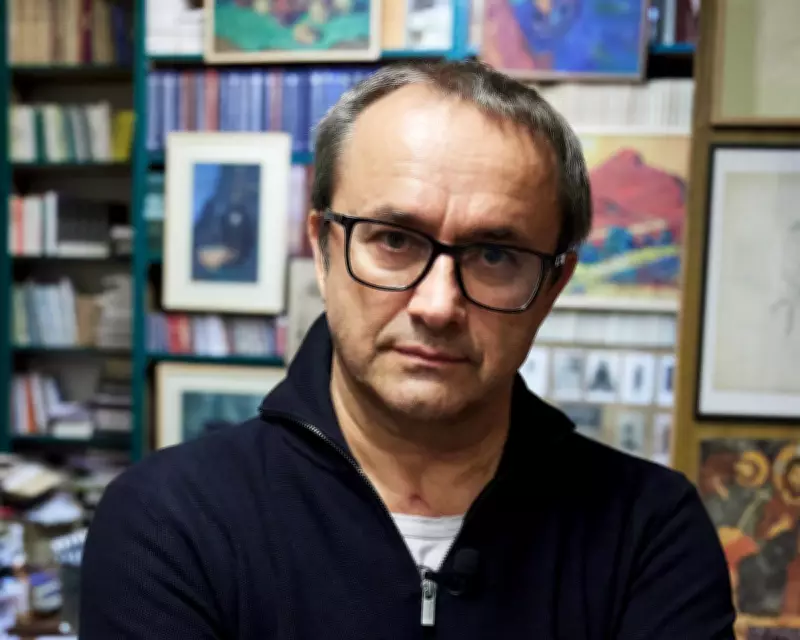
A Remarkable Comeback
Russian director Andrey Zvyagintsev, renowned for his damning allegories of state oppression, has made a stunning return to cinema after a nine-year hiatus. His new film, Minotaur, premieres at the Cannes Film Festival, marking his first feature since 2017's Loveless.
Zvyagintsev's journey back to the screen was fraught with extraordinary obstacles. In February 2022, while recovering from a severe Covid-19 infection in a German hospital, he learned of Russia's invasion of Ukraine. The illness had left him with 90% lung damage and paralyzed limbs for months. 'It was a shock; I felt immense pain and deep despair,' he said. He spent 11 months in hospitals, relearning to walk and hold a spoon before channeling his anguish into filmmaking.
From Siberia to the Red Carpet
Born in Novosibirsk, Zvyagintsev spent decades as an actor before finding his calling in directing. His debut feature, The Return (2003), won the Golden Lion at Venice and established his signature style: tense, parabolic narratives with unpredictable male authority figures. Subsequent films like The Banishment (2007) and Elena (2011) explored themes of cruelty and injustice.

With 2014's Leviathan, his critique became overtly political, targeting corrupt officials and the church. The film won the Best Screenplay award at Cannes and cemented his reputation as Russia's most important contemporary director. Loveless (2017) continued this trend, examining societal apathy under oppressive systems.
A New Chapter
Minotaur, an adaptation of Claude Chabrol's 1969 erotic thriller The Unfaithful Wife, is set in a fictional Russian town in 2022. It follows a business executive who discovers his wife's affair. The film was developed without Russian state support, and Zvyagintsev has chosen exile in France, stating, 'I don't want to be associated with what my country has done.'
His return to Cannes is a major event, competing for the Palme d'Or alongside auteurs like Pedro Almodóvar. Julian Graffy, a professor at University College London, noted, 'Many artistic careers have been broken by Russia's political turn, but Zvyagintsev's voice has been most keenly missed.'
Despite cutting ties with Russia, Zvyagintsev's moral focus remains fixed. His films continue to explore the futility of resistance under authoritarian rule, a theme that resonates deeply in today's geopolitical climate.