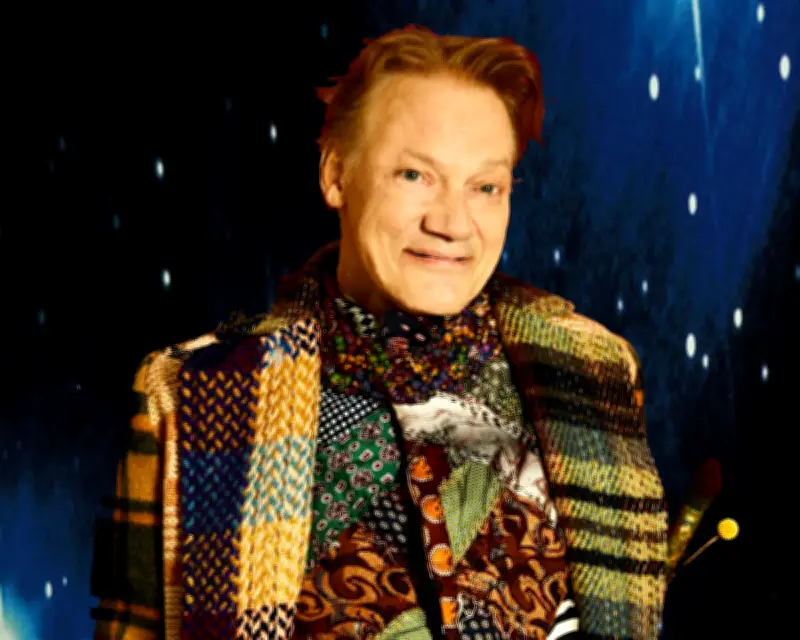
William Orbit, the visionary British music producer known for his work with Madonna, Blur, All Saints, and U2, has died at the age of 69. A statement posted on his social media, attributed to his family and friends, confirmed that he passed away at his home on 23 July. The statement read: “He will be greatly missed by us and by so many whose lives he touched through his music, friendship and kindness.” No cause of death was provided.
A Legacy Defined by Innovation
Orbit’s most celebrated collaboration was with Madonna on her 1998 album Ray of Light. His unique production style, blending trip-hop, jungle, and techno, marked a pivotal shift in Madonna’s career, yielding hits like “Frozen,” “The Power of Goodbye,” and the euphoric title track. The album achieved multi-platinum status worldwide, earned Madonna three Grammy Awards in 1999, and is widely regarded as her finest studio work.
Beyond Madonna, Orbit’s influence extended to Blur’s experimental album 13, All Saints’ UK No. 1 singles “Pure Shores” and “Black Coffee,” and Pink’s “Feel Good Time,” which reached No. 3 in the UK. He also released numerous solo projects, including a Top 5 hit with his electronic interpretation of Samuel Barber’s “Adagio for Strings” in 1999.

Early Life and Musical Beginnings
Born William Wainwright in 1956 in north London, Orbit grew up in a family of teachers he described as “decidedly working class and poor.” He left school at 16, embracing a “post-hippie” lifestyle in a squat. In 1980, he co-founded the electronic trio Torch Song with Laurie Mayer and Grant Gilbert, releasing three albums between 1984 and 1987. His growing expertise in electronic production led to soundtrack work, including for the film Youngblood, and remixes for artists like Madonna, notably her early 90s singles “Justify My Love” and “Erotica.”
Breakthrough with Madonna
Orbit’s big break came when Madonna, struggling to redefine her sound, enlisted his help. He submitted tracks and was hired. Madonna later praised him, saying: “William is a complete madman genius. I’d come to him with an idea of where I wanted to go musically, hum melodies or read lyrics, and then leave him alone in the laboratory.” The result was Ray of Light, an album that reestablished Madonna as a pop innovator and won her the first non-video Grammys of her career.
Orbit also produced two standalone Madonna singles: “Beautiful Stranger” (1999) and her cover of “American Pie” (2000). He returned for her 2012 album MDNA, co-producing six tracks. Reflecting on their relationship earlier this year, Orbit said: “I will always love that woman. For real. She made my career.”
A Prolific Late 1990s
In 1999, Orbit released Pieces in a Modern Style, an album of classical reworkings, and produced Blur’s 13, an emotionally raw album that explored frontman Damon Albarn’s breakup. Albarn described Orbit’s role as “a psychiatrist.” The album, featuring hits like “Tender” and “Coffee and TV,” is considered one of Blur’s most distinctive works.
Orbit’s success attracted a wide range of artists, including Britney Spears, Melanie C, Robbie Williams, and No Doubt. His work with All Saints on “Pure Shores” and “Black Coffee” became iconic, though he admitted in 2021 that he initially thought “Pure Shores” was “pure shite” due to the lengthy production process.
Later Career and Personal Struggles
Orbit produced two new songs for U2’s compilation The Best of 1990-2000, including “Electrical Storm” and “The Hands That Built America,” the latter featured in Martin Scorsese’s Gangs of New York. His only other full album project was Katie Melua’s The House (2010). He also brought to life a long-lost duet between Freddie Mercury and Michael Jackson, “There Must Be More to Life Than This,” released in 2014.
Orbit continued releasing solo albums, with his most recent being The Painter (2022). In March 2024, he dismissed rumors of a Ray of Light sequel with Madonna, stating: “Let’s put this Madonna ROL 2.0 thing to rest here and now folks. Can get exhausting. Is not going to happen.”

In a 2021 Guardian interview, Orbit revealed he had struggled with substance abuse, including heavy marijuana use and other drugs, leading to a psychotic episode and hospitalization. He said: “Fortunately, once the drugs were out of my system, I finally got back to being normal.”
Tributes and Influence
Tributes poured in from across the music industry. Melanie C wrote: “Such an honour to have worked with this great man.” Music mogul Merck Mercuriadis called him “a genius … arguably the most important producer of the 90s and noughties and his influence will forever be felt.”