What Makes Good 'Game Feel'? These Three Titles Have Pinned It Down Perfectly
Game feel is one of the most elusive concepts in interactive entertainment, at once perfectly clear and difficult to define. It refers to what a game feels like to play, but where does that feeling come from? How does it manifest? Consider it from a different angle. When chef Samin Nosrat started her career at Chez Panisse, she understood that diners responded to four key factors in food: salt, fat, acid, and heat. This idea formed the basis of her bestselling cookbook and inspired a video game audio director to compare game feel to eating a potato chip: the salt and fat are part of it, but so are the crunch and the sensation of the chip dissolving in your mouth. Game feel is a combination of elements—responsiveness of controls, intuitiveness of action, aesthetics of the world, and creative opportunities—all coming together in the right quantities.
Three games released recently illustrate good game feel beautifully. The first is Pragmata, Capcom's sci-fi action adventure where you explore an abandoned colony base with a child-like android. You hack robotic enemies by lowering their defenses before blasting them. The hacking mini-game takes place on a grid with nodes that power up your hack attack. As you progress, you add new nodes and weapons, creating complex, multifaceted, and fun interplay. This linear world hides areas, making exploration guided but discovery possible. Running, jumping, and gliding feel seamless, and it is joyous simply to be there.
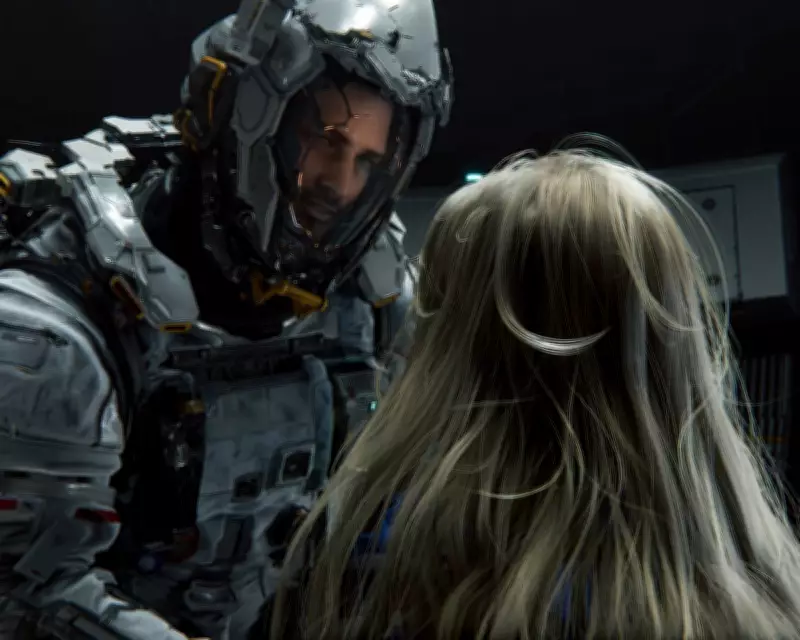
Saros, from Finnish studio Housemarque, shares similarities. It involves human astronauts trying to contact a lost colony on a hostile planet. Here, you use a shield to absorb enemy fire, powering up your special weapon to unleash deadly bursts. This simple system creates lovely interplay between attack and defense: you observe, track, and dart into enemy fire while managing shields and firing your weapon with analogue triggers for various shooting styles. It feels like playing a classic 2D shooter such as R-Type, but in three dimensions while doing several other things. Movement is luscious, guns give great feedback, and the world is gorgeous. It reminds me of Dark Souls games—hard but fair, because you always know why you lost. The game gives you everything you need and want; the potato chip is crunchy yet dissolves as expected.

The final game is Vampire Crawlers, a deck-building roguelike where you explore pixellated dungeons, collect treasure, and defeat monsters with differently powered cards. This oversubscribed genre remains maddeningly compelling. It has nostalgic visual appeal of Commodore 64 or Amiga games and lovely sound effects, from crunchy skeleton bones to vibrating treasure chests. Combat and card play are fluid and devoid of unnecessary friction, dragging you into a flow state so deep it takes hours to emerge.
These games affront what we're supposed to want: online multiplayer blasters with superficial rewards like costumes and skins. There are no other players here; your only company is mechanical. Pragmata, Saros, and Vampire Crawlers are great old-fashioned meals—succulent, tasty, and moreish, served on simple white plates. They are nostalgic for challenging single-player action games that differentiate through clever systems and responsive controls. If you want to understand game feel, don't Google it or use ChatGPT—load one of these games and tuck in. You'll know it when you taste it.

What to Play
Mix Up Fairy Tales is a collaborative story-generating card game by Warcradle Studios, produced with the British Library's Fairy Tales exhibition. Each card contains a portion of a classic tale like Goldilocks, Hansel and Gretel, or Cinderella, with beautiful illustrations from the library's collection. The aim is to mix up plot points to meet challenge card requirements. You might craft a story featuring a witch or cat to beat a challenge, or ensure your story lacks a house or monster. The story continually changes, creating emergent narrative experiences that reflect the oral history of the genre. Fairytales have heavily influenced video games—rescuing damsels, battling supernatural foes, saving kingdoms—since Donkey Kong. This game reconnects with those formative tales playfully. Available from the British Library store; estimated playtime 15 minutes per session.
What to Read
Creative Assembly has announced an Alien Isolation sequel. The teaser trailer shows darkness and beeping noises, then doors opening to a wind-ravaged environment. Is it Earth? LV-426? A new colony? We'll have to wait. Rob Fahey on GamesIndustry.Biz argues that Call of Duty was never right for Xbox Game Pass; forthcoming instalments won't be on the subscription service from day one, which Fahey says is best for fans and non-fans. Ars Technica has a long read on Peter Molyneux's failed Legacy game, which attracted millions in cryptocurrency investments before collapsing. The piece paints an unflattering picture of Molyneux and publisher Gala, serving as a cautionary tale from the NFT boom era.
Question Block
Carrie asks: "Considering rising RAM prices, is it possible to buy a new gaming PC for less than £500?" Kind of, but you'll make sacrifices. Building it yourself offers better deals. Look for CPU and motherboard bundles: an AMD Ryzen 5 or 7 (G-series or 9000 series) or Intel Core Ultra 5 CPU with a decent motherboard costs about £250–350. Integrated graphics suffice for older or less demanding games. For memory, get 16GB of DDR4 instead of 8GB of DDR5 (check compatibility), costing about £150. An M.2 SSD at 500GB or 1TB is around £75. A mouse and keyboard bundle with a cheap case costs £75 or more. That totals £550 for all-new parts running undemanding games at lower settings. Lower costs by buying used parts on eBay or CeX, but get a warranty and check compatibility with PCPartPicker. YouTube videos and the Build a PC subreddit are helpful. Good luck!