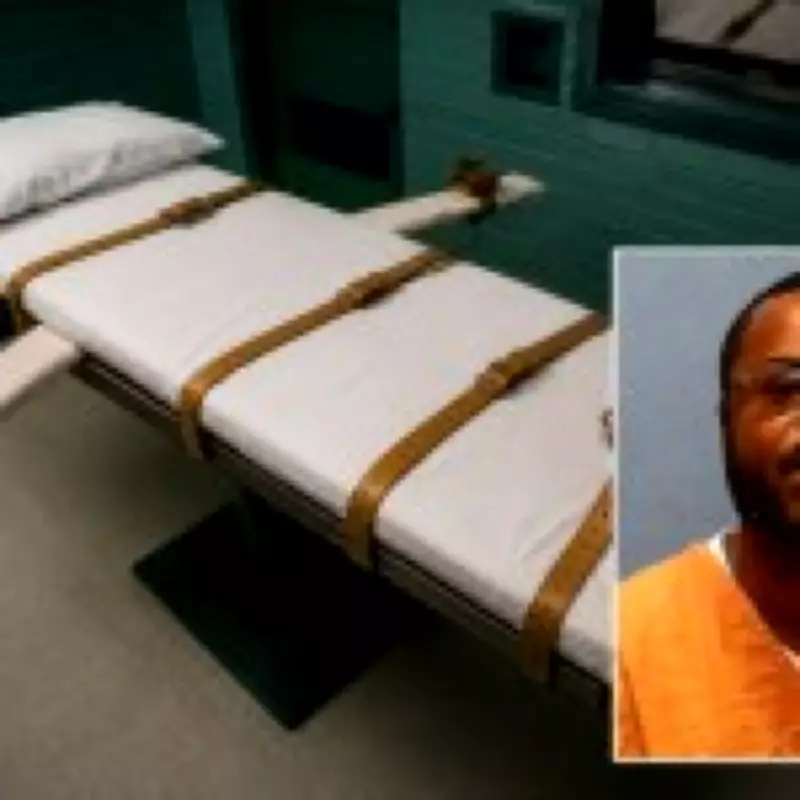
The state of Florida has carried out its seventh execution of the year after a man convicted of murdering a pregnant woman and her young daughter in 2000 was put to death by lethal injection. Richard Knight, 47, was pronounced dead at 6:13 p.m. local time on Thursday at Florida State Prison. He had been sentenced to death for the killings of Odessia Stephens and four-year-old Hanessia Mullings at a home in Coral Springs more than two decades ago.
Details of the Crime
The case dates back to June 27, 2000, when Stephens reportedly tried to force Knight out of the property where he had been staying. Court records indicated that she was dating Knight’s cousin at the time, though he was not home during the attack. Investigators said Knight armed himself with kitchen knives before attacking both victims inside the house. Stephens was repeatedly stabbed, while Hanessia was strangled and stabbed. Autopsy findings revealed the devastating extent of the injuries: Stephens suffered 21 stab wounds, including 14 to the neck, while Hanessia sustained four stab wounds to her neck and chest. Additionally, Stephens was six weeks pregnant at the time of her murder. She had extensive defensive wounds, suggesting she fought back during the attack.
Evidence and Conviction
Police recovered blood matching Stephens’ on Knight’s shirt and found bloody clothing hidden beneath a sink inside the home, indicating an attempt to cover up the crime. Knight’s DNA was found underneath Stephens’ fingernails, which prosecutors used as key evidence during the trial that led to his conviction and death sentence. Hanessia’s father, Hans Mullings, said after the sentencing that Knight “deserves to die for what he’s done” and expressed a wish for a more painful death, noting that the victims suffered greatly.

Legal Challenges Before Execution
In the days leading up to the execution, attempts were made to stop the lethal injection. One argument centered on a fingerprint found on one of the knife blades; Knight’s lawyers requested further testing, but courts rejected that request. Another challenge focused on Florida’s lethal injection procedures, with attorneys arguing that “unqualified” execution team members performed vein access without local anesthetic. This issue gained attention after a dramatic incident in Tennessee, where officials halted the execution of inmate Tony Carruthers due to difficulties establishing an intravenous line. An ACLU attorney questioned the qualifications of medical personnel involved, and Tennessee Governor Bill Lee granted a one-year reprieve. Knight’s lawyers filed an emergency motion with the Florida Supreme Court, citing the Tennessee incident and claiming Carruthers “was in agony and bleeding.” However, the Florida Supreme Court denied the request just hours before the scheduled execution.
Final Moments
Knight declined a final meal and kept his final statement short and religious, saying, “I want to give thanks to Yahweh, who is the most high,” shortly before the lethal injection process began. He became the 14th person executed in the United States this year, with more than half of those executions in Florida. The state has sharply increased executions since Governor Ron DeSantis began signing death warrants at a faster pace, aiming to provide closure to victims’ families after years of appeals. Florida executed 19 inmates last year, surpassing its previous record of eight in a single year set in 1984 and matched in 2014. No other state approached that total; Alabama, Texas, and South Carolina each carried out five executions. Florida’s next scheduled execution is for Andrew Richard Lukehart, convicted of killing five-month-old Gabrielle Hanshaw in 1996.