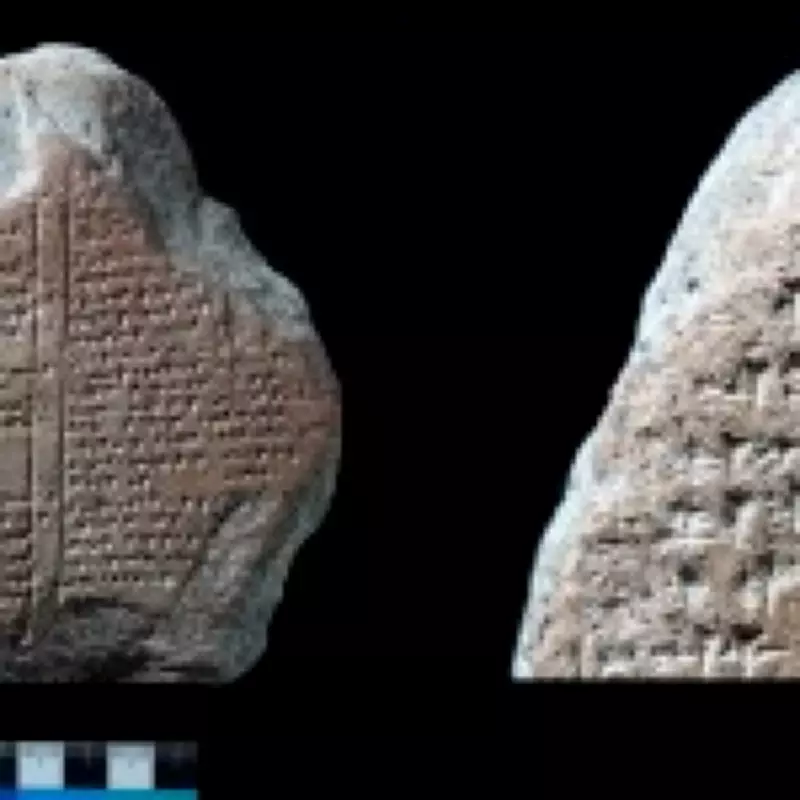
Scientists have unlocked a 3,500-year-old ancient code that could rewrite human history. Artificial intelligence is being used to translate ancient clay cuneiform tablets, offering new insights into the origins of human civilization. The tech tools can decipher and reconstruct fragments of Hittite texts in a fraction of the time it has taken humans to read and translate them.
Background on Cuneiform Tablets
In the three millennia before the Common Era, advanced civilizations in the Near East recorded information on clay tablets using cuneiform, a writing system in which wedge-shaped symbols were pressed into wet clay with a stylus before being dried. The project, developed by researchers at the University of Würzburg and the Academy of Sciences and Literature Mainz, focuses on cuneiform tablets produced around 3,500 years ago in what is now Anatolia, Turkey. Many of those tablets have since broken apart, with fragments dispersed across museums worldwide. Scholars in Ancient Near Eastern Studies have long faced the challenge of reassembling the pieces to recover complete texts and gain insights into life in the ancient world.
The Würzburg-Mainz Research Team
The research team has spent years developing digital tools to support this work, particularly in the study of the Hittites. Their cuneiform system was highly complex, containing 375 signs representing both syllables and entire words. The group had already created the Hethitologie-Portal Mainz, an online catalogue containing all 30,000 known Hittite clay tablet fragments, alongside research materials and texts. A decade ago, the team also introduced a digital system capable of capturing the unique three-dimensional characteristics of cuneiform signs, helping researchers reconstruct tablets with computer assistance. In 2023, another tool, TLHdig, enabled searches in cuneiform script and transliteration.

Latest Development: Palaeographicum
The latest development, known as 'Palaeographicum', analyses digitized images from the Hethitologie-Portal and searches the collection for similarly written signs. It can isolate individual characters and organize them into image tables for comparison. Researchers currently have access to 70,000 photographs documenting more than five million cuneiform characters. They say that the precise form of each sign is crucial because it reveals the distinctive handwriting styles of individual scribes. Although cuneiform was impressed into clay rather than written with ink, personal styles are still visible. Some scribes drew the stylus away sharply, leaving flourishes, while others spaced their signs in recognizable ways.
Expert Insights
'With the naked eye, we can usually only do this slowly and with difficulty,' said Professor Gerfrid Müller, an expert in Ancient Near Eastern Studies, adding that the three-dimensional nature of cuneiform often makes signs difficult to read in photographs. 'The Palaeographicum is radically changing our work; it allows us to save thousands of hours,' said Professor Daniel Schwemer, head of the Department of Ancient Near Eastern Studies at the University of Würzburg. He revealed that a comparison of handwriting across five clay tablet fragments, which once took three days, could now be completed in five minutes.
Further Applications and Refinements
Researchers also believe the tool could help date fragments more accurately. Since Hittite tablets rarely include dates, scholars rely on changes in handwriting styles over time – a field known as palaeography – to estimate when texts were produced. However, the AI system is still being refined. 'We are continuously retraining the AI,' said Professor Müller, adding that user feedback would shape future updates where technically feasible. According to the team, the international Hittitology community has already responded enthusiastically to the tool. 'All researchers in Hittitology open the portal first thing in the morning; they simply can't do without it,' said Professor Schwemer.

Long-Term Ambitions
The researchers' longer-term ambition is to train the AI to identify the handwriting of individual scribes automatically. They say the task is challenging because scribes adapted their handwriting to different circumstances, producing more careful script in calm conditions and faster, less formal writing when drafting reports in the field. 'If we achieve this goal, we could gain a better picture of what individual scribes produced over the course of their professional careers,' Professor Schwemer said. 'And we could compile a social history of Hittite writing culture.' The foundations for the project were laid between 2018 and 2023 through the DFG-funded CuKa project, which developed the AI model underpinning Palaeographicum.