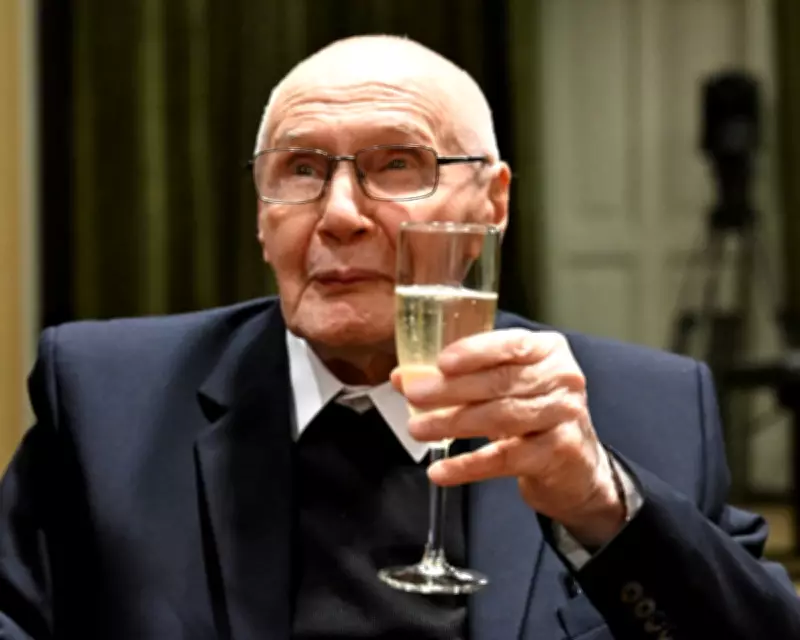
György Kurtág Honored with Doctorate as He Turns 100
Earlier this month, the legendary Hungarian composer György Kurtág was awarded the diploma of Doctor Honoris Causa from the Liszt Ferenc Academy of Music in Budapest. This prestigious honor recognizes his lifetime of contributions to the world of classical music, coinciding with his centenary celebrations. The ceremony underscored Kurtág's enduring influence and the deep respect he commands within the musical community.
A Four-Decade Friendship and Musical Partnership
Cellist Steven Isserlis has shared a profound friendship and musical collaboration with György Kurtág spanning over forty years. Isserlis vividly recalls their first encounter at the International Musicians Seminar in Prussia Cove, Cornwall, where he was immediately struck by Kurtág's magnetic intensity and fierce passion for music. Accompanied by his wife Márta, a gifted pianist, Kurtág approached Isserlis with a unique, stuttering English style that has since become a hallmark of his expressive communication.
From that initial meeting, Isserlis was drawn into Kurtág's world, where every note held immense significance. Kurtág and Márta embodied music in its purest form, reminding Isserlis of a friend's description of Beethoven: "He didn't know the meaning of the words 'it doesn't matter.'" This philosophy has guided their partnership, with Isserlis often performing Kurtág's compositions under his meticulous guidance.
Transformative Lessons and Vivid Imagery
Playing for György Kurtág is described by Isserlis as a transformative experience that reshapes one's understanding of music. Kurtág's teaching methods are characterized by boundless imagination and vivid, often unexpected imagery. For instance, in coaching Isserlis on the solo cello piece Schatten (Shadows), Kurtág evoked the opening scene of Shakespeare's Hamlet, comparing the music to the ghost of Hamlet's father flitting across castle battlements—an analogy that helped capture the piece's unsettled atmosphere.
Kurtág frequently uses animal metaphors to convey musical expression, instructing Isserlis to play "like the neighing of a horse," "like a snake," or even "like a dog biting God's feet." These creative descriptions challenge performers to delve deeper into the emotional and technical nuances of the music. Additionally, Kurtág points out hidden references within his compositions, such as allusions to Gesualdo or Beethoven's Grosse Fugue, enriching the interpretive process.
The Enduring Bond with Márta and Continued Activity
The musical and personal bond between György Kurtág and his wife Márta was a cornerstone of his life and work. Isserlis recounts attending their final public concert at London's Queen Elizabeth Hall, where the couple performed together on a specially softened piano, seamlessly blending Bach arrangements with Kurtág's original pieces. Their dynamic, though sometimes tense, was a testament to their deep connection, as illustrated by a rehearsal anecdote where Márta humorously chided Kurtág for playing too aggressively.
Despite the loss of Márta several years ago, Kurtág remains remarkably active at 100 years old. He continues to compose and teach from his residence on the top floor of the Budapest Music Centre, where he is affectionately known as "Uncle Gyuri" by staff and musicians alike. Isserlis notes that Kurtág's mind is as alert as ever, with recent activities including Latin lessons and the composition of new works, such as Circumdederunt for solo cello, a piece dedicated to their mutual friend Rita Wagner.
Celebrating a Century of Musical Innovation
György Kurtág's centenary is being celebrated through a series of concerts across the UK, featuring performances of his compositions. Events include a concert at Glasshouse in Newcastle on February 27, a performance with the Philharmonia and Víkingur Ólafsson at the Royal Festival Hall in London on March 1, and a concert with Thomas Adès conducting the Hallé at Bridgewater Hall in Manchester on April 23. These celebrations honor a musician whose work continues to inspire and challenge the classical music world.
Isserlis concludes by expressing his hope for Kurtág's continued prosperity, noting that his standard response to inquiries about his well-being—"Thank you. Working."—reassures that the creative spirit on "planet Kurtág" remains vibrant. This legacy, built on a foundation of intense passion and innovative teaching, ensures that György Kurtág's influence will endure for generations to come.