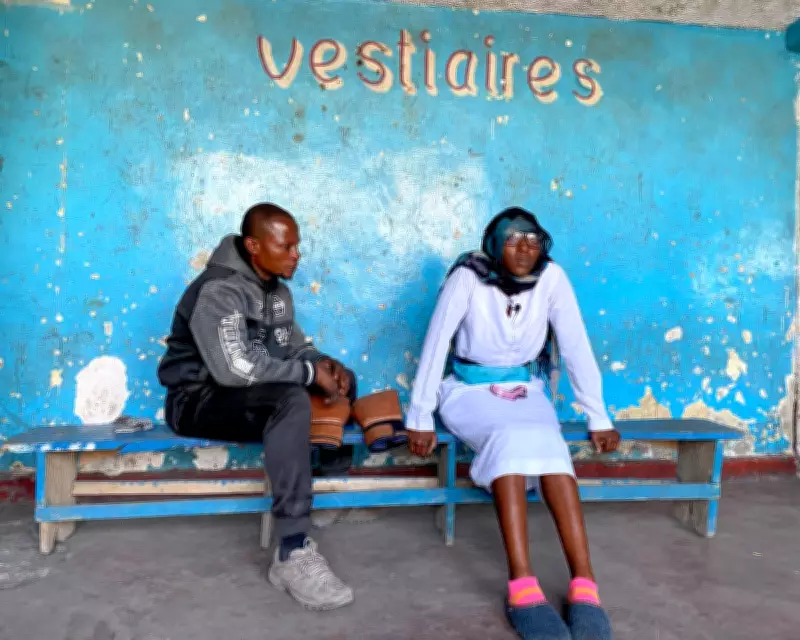
Clarck Ntambwe originally turned to boxing with a singular, vengeful purpose: to learn how to fight so she could kill the men who murdered her father. This revelation comes from Matthew Leutwyler, the director of the powerful new film "Fight Like a Girl," which chronicles Ntambwe's journey from grief to empowerment. The movie is set against the backdrop of the tragic conflict in the Democratic Republic of the Congo and is also inspired by the memory of Leutwyler's close friend, Balezi "Kibomango" Bagunda, a former child soldier turned boxing champion who trained women to fight in the ring.
From Revenge to Resilience
Ntambwe became one of Kibomango's star fighters at the women's boxing club he founded in Goma. Tragically, Kibomango was killed by M23 rebels shortly after the film was completed, while helping Leutwyler evacuate 41 children from a village under attack. When Ntambwe first arrived at the gym, Leutwyler was there filming a documentary about Kibomango's life. "We sat her down and said: 'You cannot join the gym if that's the case. That's not what we do,'" Leutwyler recalls. It took time for Ntambwe to channel her anger into disciplined training.
The film follows the true story of how boxing helped Ntambwe piece together her broken life. Guided by Kibomango, she reached the final of the African Boxing Championships. Ntambwe makes an impressive acting debut, playing the role of Aisha, a serious fighter who mentors a new girl. Now living in Seattle, Ntambwe confirms her initial motivation: "Yes, it is true. At first, when I do boxing, it really was to get revenge on the people who killed my dad. In the gym they could see the anger. But my grandpa had been the first boxing trainer for Kibomango. He taught Kibo how to fight and so I was boxing for me and for my family."

The Inspirational Coach
Leutwyler first encountered Kibomango through Instagram photos of the women he trained. "I started searching and found a five-minute CNN clip on him from years ago. At that time he was teaching ex-child soldiers how to box," Leutwyler says. Kibomango's life story was extraordinary: forced to be a child soldier at 12, a hand grenade blew out his eye, and he later pursued boxing professionally in Russia and Venezuela. "We were incredibly close for five years. He was a legend in Congo and you'd walk with him through the streets and everyone would cheer: 'Champion, Champion!'". Leutwyler emphasizes that Kibomango wasn't training these girls to become pros; many were victims of sexual violence, and he used boxing as a way for them to regain their independence.
Authentic Cast and Performances
The cast blends professional actors with ordinary people from Goma, lending raw authenticity to the film. Ama Qamata, a 27-year-old South African actor known for Netflix's "Blood and Water," delivers a sensitive portrayal of the young female boxer haunted by her past. Qamata recalls her training with Kibomango: "He was very strict during the boxing scenes. He was trying to get me to have that oomph and fire. A lot of my training interactions with him were brutal." She admits she initially hated boxing, feeling unfit, but began to understand its transformative power for women like Ntambwe. "Even the title, 'Fight Like a Girl,' is often associated with being a sissy, but the film shows that despite the things these women have gone through, they're able to come out the other side and fight in a very inspiring way."
A Story of Resilience and Hope
Ntambwe now lives in North Seattle, where gyms are expensive, but she still watches boxing daily and admires Claressa Shields. Watching the film for the first time was emotional: "It was not easy because it's my real life. I remembered my past and how hard it was. It made me cry." Qamata was drawn to Ntambwe's resilience: "I like playing characters that have fight in them because there's a lack of that representation. I want to see more black African female characters who kick arse and are inspiring."

Leutwyler made a conscious decision not to foreground the traumatic conflict in the DRC, even though the country has been torn apart for over 30 years. As Qamata notes, "When we think about war-ridden countries we use numbers and statistics, but real people are living through such conflict. Being in Congo opened up my perspective to the fact that these kids also have friendships, they fall in love, they have things in life that are so normal and relatable."
The Tragic Loss of Kibomango
In January 2025, Leutwyler was with Kibomango when his friend lost his life. The village had been attacked by M23 rebels, and they were trying to evacuate a child who had been shot in the head. Kibomango convinced a doctor to take the child, but the next morning, as Leutwyler stepped out amid gunfire, Kibomango told him to go one way while he went another. "That was the last time I saw him," Leutwyler says. Kibomango did see the film before he died, attending a screening a month prior. "It would have been much better had he been able to see how audiences around the world started responding to it," Leutwyler adds.
For Ntambwe, the film is a blessing: "The western media only focuses on the war between Israel and Iran. They don't see anything happening in Congo. The rebels attack Goma and women are raped and people are dying every day. People need to understand that we are all human. We also bleed. So it's a blessing that, with this movie, people are interested in my story and the story of women in Congo."
"Fight Like a Girl" is in cinemas from Friday. Tickets are available for the 22 May UK Premiere at London's Genesis cinema.