Todd Antony, a New Zealand-born photographer, has captured the raw intensity of buzkashi, an ancient Central Asian sport that dates back to the time of Genghis Khan. The game involves large groups of men on horseback trying to grab the headless body of a goat and drop it over a goal line. There are no teams; it is every man for himself, and matches can last up to six hours.
The Inspiration Behind the Photograph
Antony first encountered buzkashi while researching projects. He decided to return to the basics of light and tone with a black-and-white series, and the sport seemed a perfect fit. He traveled to Tajikistan, where most buzkashi footage originates, and hired a local fixer to navigate the logistical challenges, as match times and locations are often communicated by word of mouth just days in advance.
Capturing the Chaos
The first game Antony attended was the largest, with about 300 riders at its peak. Tajikistan is 93% mountainous, so matches take place in valleys or dried riverbeds, where natural geography contains the action—though not always. Spectators often scatter as riders scythe through the crowd. The goal lines can be as far apart as two football pitches, and the pack alternates direction each time someone scores. Winners receive prizes that increase in value as the game progresses, such as carpets, a camel, or even a car, attracting more players as the match continues.

Antony self-funds his personal projects through his advertising work, applying the same meticulous planning. At one match, he shot from the back of a pickup truck in the middle of the field, with the pack passing within meters, yielding visceral images. He emphasizes that his aim was not to normalize cruelty but to document something deeply ingrained in Tajik culture.
The Art of Control Amid Chaos
Antony observed that riders seek control within absolute chaos to achieve their goal, mirroring his own photographic approach. Wide shots captured cinematic scenes, with dust clouds from horses' hooves and smoke from spectators' charcoal fires creating a beautiful layering effect. He also visited riders' farms, taking portraits of them alone or with their families, who were incredibly hospitable.
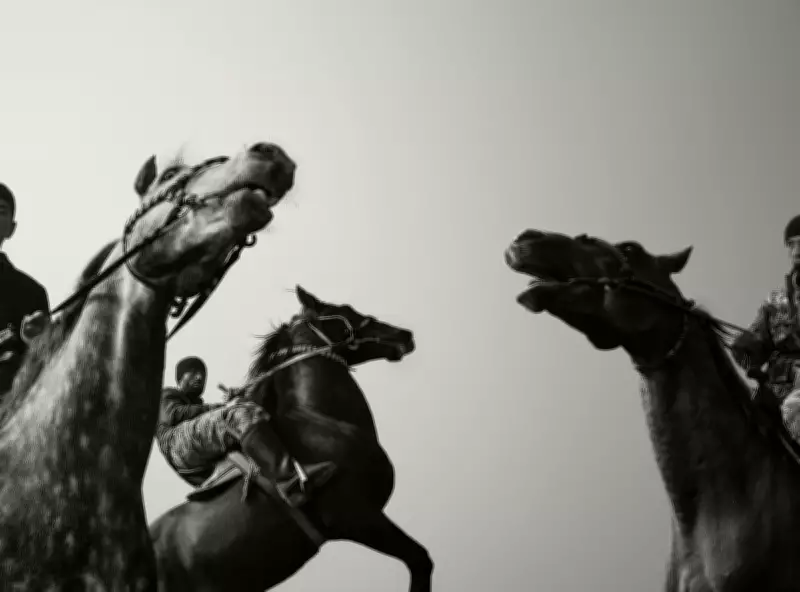
For the award-winning shot, Antony headed into a field with three horses and their riders on a gorgeous day, with a snowy mountain range in the background. As he set up, a wall of fog rolled in. Reacting quickly, he drew inspiration from Richard Avedon, positioning his assistant with a light to the left and a flash near the camera. He sat on the ground, photographing the horses as they interacted, occasionally getting uncomfortably close. The resulting image is a graphic distillation of buzkashi, with a clean background highlighting the horses' stress and the tight cropping reflecting the claustrophobic nature of the match.
About the Photographer
Todd Antony was born in New Zealand in 1975. His high point includes winning the Sony World Photography Awards, as well as shooting at high altitude on Huayna Potosi mountain in Bolivia with the Cholitas Escaladoras. His top tip for photographers: before picking up the camera, ask what the subject is actually about—not what it looks like, but what it means. He advises writing one sentence about the work's intention before shooting, which guides editing, lighting, and lens choice.
Antony's work is featured in the Sony World Photography Awards 2026 exhibition at Somerset House, London, until 4 May. Guardian readers can use code GUARDIAN15 for a 15% discount on tickets.