Britons are being asked to vote for their favourite butterfly for the first time in a national poll organized by Butterfly Conservation. The charity's contest, running until 7 June, allows the public to choose from 60 species that inhabit Britain each summer.
Why a Favourite Butterfly Contest?
Julie Williams, chief executive of Butterfly Conservation, said: "It's clear Britain is a nation of butterfly lovers. From Sir David Attenborough and the royal family to the hundreds of thousands of people who have taken part in our Big Butterfly Count, these incredible insects hold a very special place in our hearts. Now, for the first time ever, we want to find out which of our much-loved butterflies takes the nation's top spot."
A recent survey revealed that butterflies are the most cherished creatures from people's childhoods. The contest follows similar competitions, such as Britain's favourite bird (won by the robin in 2015) and the Guardian's invertebrate of the year.

Contenders for the Crown
Among the 60 species, some stand out as early favourites. The small tortoiseshell, once a common garden visitor, has declined in southern England due to global heating but remains beloved. The purple emperor, described by poet John Masefield as an "oakwood haunting thing," is a charismatic but elusive treetop dweller with a taste for fox scat and horse manure. The brimstone is a classic harbinger of spring.
Five Notable Species
- Purple Emperor (Apatura iris): Britain's most charismatic butterfly, known as "his imperial majesty." It lives in treetops and feeds on animal droppings. Males flash iridescent purple, and the species is thriving due to climate change.
- Small Copper (Lycaena phlaeas): A brilliant copper-coloured butterfly that zips through dry grassland. It is less common than before but found from Land's End to Orkney from April to October. A popular choice for tattoos.
- Small Tortoiseshell (Aglais urticae): The "labrador of the butterfly world," often seen on garden flowers. It has declined drastically in southern and central England but remains common in Northern Ireland and Scotland.
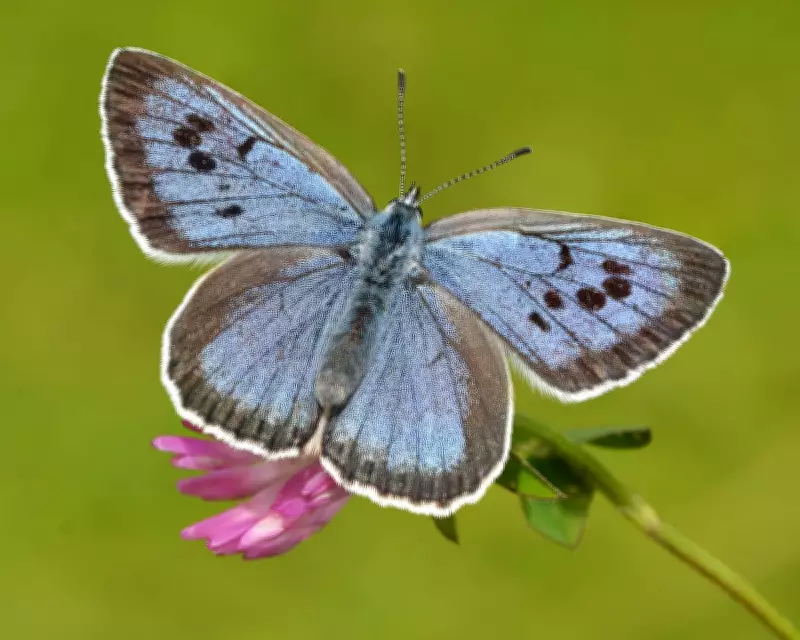
- Large Blue (Phengaris arion): A symbol of hope, extinct in 1979 but reintroduced from Sweden. Thanks to conservation efforts focusing on its ant-dependent lifecycle, it now thrives in Britain more than anywhere else.
- Swallowtail (Papilio machaon britannicus): A spectacular subspecies with tails and tigerish stripes, found only on the Norfolk Broads. It is smaller and darker than its European cousins, breeding in just 20 locations.
Butterfly Conservation encourages everyone to vote and celebrate the beauty and diversity of Britain's butterflies. The winner will be announced after the poll closes on 7 June.